


Black Tiger Shrimp Farming Gains Ground in India’s New Game Plan
Reasons Behind the Strategic Shift
According to Manoj M. Sharma, founder of Mayank Aquaculture, India’s shrimp industry is facing a major challenge from Ecuador, a country producing shrimp on a massive scale. He shared that no one in the world can compete with Ecuador in the production of whiteleg shrimp (vannamei). A key reason Indian farmers are shifting to black tiger shrimp farming is that vannamei shrimp sizes have dropped significantly—from 28 grams in 2019 to just 16 grams in 2024. Vannamei shrimp smaller than 40 pcs/kg are no longer economically viable due to high production costs and uncompetitive market prices.
Characteristics and Benefits of Black Tiger Shrimp Farming
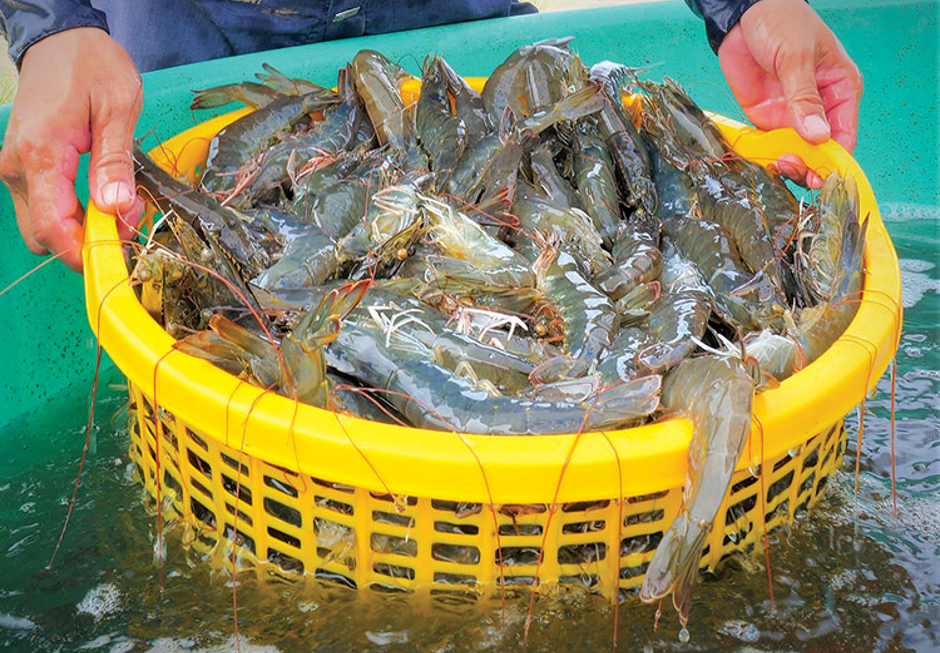
Indian farmers are now focusing on farming black tiger shrimp at low stocking densities, aiming to produce larger-sized shrimp. If successful, black tiger shrimp can reach sizes of 8 to 12 pcs/kg, though the grow-out period may extend from 150 to 200 days. This is a strategy to create high-value products, with profits of no less than USD 4 to 5 per kilogram, offering significant economic efficiency for shrimp farms.
Switching to black tiger shrimp farming is also a way for India’s shrimp sector to avoid direct competition with Ecuador, the global leader in whiteleg shrimp production.
Current Production Situation
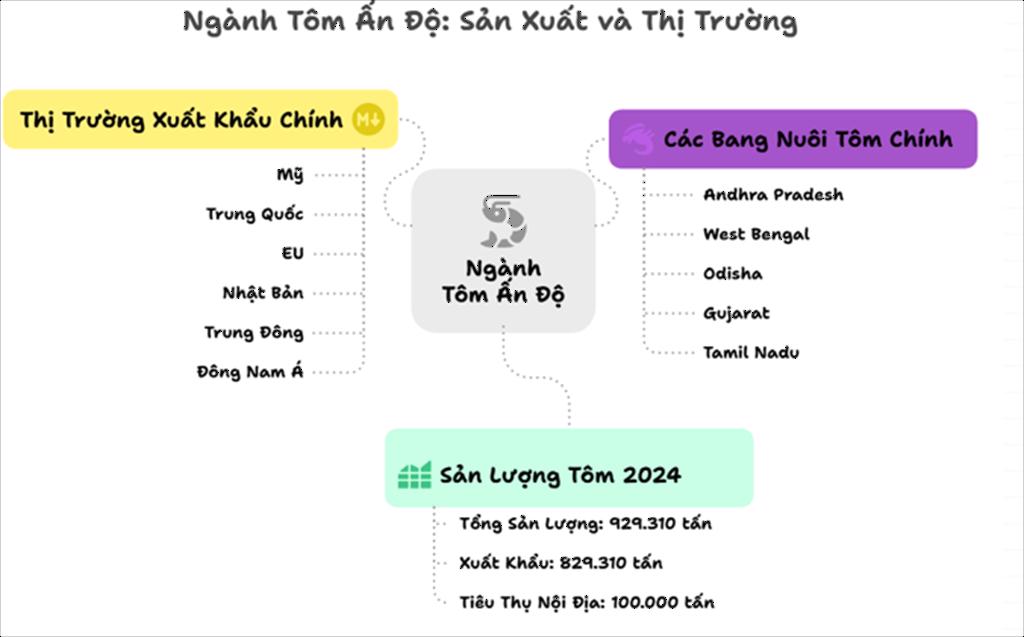
In 2024, India produced a total of 929,310 tons of shrimp, of which black tiger shrimp (monodon) accounted for 55,044 tons. This marks an important shift as India moves toward higher-value shrimp products, helping to reduce risks associated with price competition.
The Importance of Black Tiger Shrimp
Black tiger shrimp is becoming a sustainable path for India’s shrimp industry, enabling higher profits and reducing dependence on price-sensitive whiteleg shrimp. This can be likened to a fashion producer that cannot compete with large retail chains in volume, so they shift to creating unique, high-quality garments—earning more from each product and attracting customers willing to pay for true value.
In summary, black tiger shrimp farming is India’s long-term strategy for sustainable growth, risk reduction, and higher profitability in an intensely competitive global market.
Cost and Profit Comparison: Vannamei vs. Black Tiger Shrimp in India
* Whiteleg Shrimp (Vannamei):
Small sizes (70, 60 pcs/kg): No profit (GP = USD 0.00)
Size 50–40 pcs/kg: Low profit, USD 0.18 → 0.29 per kg
Larger sizes: Clearly better profit:
30 pcs/kg: GP = USD 0.88
25 pcs/kg: GP = USD 1.05
20 pcs/kg: GP = USD 1.40
However, achieving these larger sizes is difficult, making high profits from vannamei unrealistic.
* Black Tiger Shrimp (Monodon):
Smaller than 40 pcs/kg: Loss (GP = -USD 0.41)
From 40 pcs/kg and larger, profits increase with size:
40 pcs/kg: GP = USD 0.82
30 pcs/kg: GP = USD 1.64
25 pcs/kg: GP = USD 2.11
20 pcs/kg: GP = USD 2.34
15 pcs/kg: GP = USD 3.16
10 pcs/kg: GP = USD 6.90 (highest margin)
⇒ The larger the black tiger shrimp, the higher the profit.
Conclusion:
| So sánh | Tôm chân trắng | Tôm sú |
| Size nhỏ (<50) | Gần như không lời | Thậm chí lỗ |
| Size trung (40–30) | Có lời nhưng thấp (~0,3–0,9 USD/kg) | Lời cao hơn rõ rệt (~0,8–2,1 USD/kg) |
| Size lớn (≤20) | Lời cao nhất 1,4 USD nhưng khó nuôi được | Lời cực cao, đến 6,9 USD/kg nếu size 10 |
Nguồn: vasep.com.vn
Aqua Mina's distributor in Japan: REX INDUSTRIES CO., LTD
- Address: 1-9-3 Hishiya-Higashi, Higashi-Osaka 578-0948 JAPAN
- Email: kimakubo@rexind.co.jp
- Phone: +81-(0)72-961-9893
- Website: http://www.rexind.co.jp/e/
WE WORK FOR YOUR SUCCESS!
Ngày đăng : 02/08/2025
1920 View


Other Articles
Ca Mau, Can Tho and An Giang Play a Leading Role in Vietnam’s Shrimp Industry
Protecting rice-shrimp yields against environmental fluctuations caused by prolonged rain
AQUA MINA Turbo Blower: Quiet, Energy-Efficient Air Supply for Aquaculture Ponds
AQUA MINA has accompanied the experimental tank system project at Can Tho University from its very early days
AQUA MINA AMONG 20 OUTSTANDING PRESENTATIONS AT THE WORKSHOP ON APPLYING SCIENCE AND TECHNOLOGY TO IMPROVE THE QUALITY OF VIETNAM’S AQUATIC PRODUCTS
Vietnam’s Shrimp Farming Industry Enters the High-Tech Race
The U.S. market relies heavily on imported shrimp to bridge its domestic supply gap
The 2028 supply crisis: The shrimp industry is projected to face a 400,000-ton material shortage
High profits from high-tech shrimp farming come with persistent risks
Intensifying El Niño Effect: Climate Change Risks Threaten the Global Shrimp Supply Chain
Evaluating Gaps in the Circular Economy Value Chain of the Shrimp Industry
A Comprehensive Overview of the Vietnamese Shrimp Industry



.jpg)