


Domestic market – The long-term stronghold of Vietnamese pangasius
Ms. To Thi Tuong Lan, Deputy General Secretary of the Vietnam Association of Seafood Exporters and Producers (VASEP), said that in July 2025, Vietnam’s seafood export value reached 971 million USD, up 6.1% compared to the same period last year. In the first seven months of 2025, the export value totaled 6.22 billion USD, a strong growth of 17.2%.
Specifically for pangasius, this was the “bright spot” in Vietnam’s seafood export picture for the first seven months of 2025, with export value reaching over 1.2 billion USD, up 11.1% year-on-year.
A key highlight is that in the 20th administrative review (POR20), eight major pangasius processors and exporters from Vietnam, including Vinh Hoan, were subject to an anti-dumping tax rate of 0%, helping to restore confidence in the U.S. market.
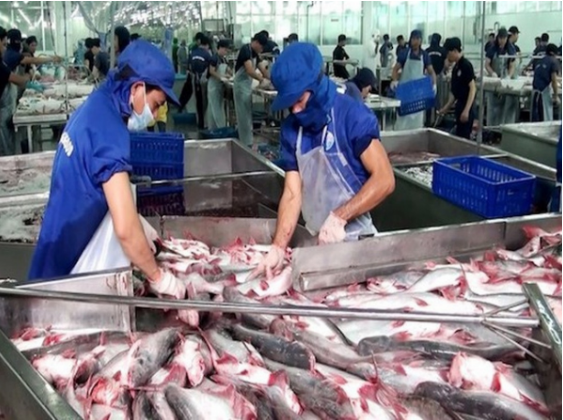
However, Ms. Lan expressed concern that in the upcoming POR22 (August 1, 2024 – July 31, 2025) and POR23 (August 1, 2025 – July 31, 2026), tax rates may increase, as export prices in these two periods are not high, and many companies benefiting from low duties in recent PORs have also joined exports.
She warned that exporters must act responsibly, especially smaller companies that often assume they will never be selected as mandatory respondents, thus exporting at low prices. This not only negatively impacts the market but also carries high risks of facing higher duties, particularly as the U.S. market is flooded with pangasius fillets.
VASEP forecasts that Vietnam’s seafood exports in 2025 could reach around 9–9.5 billion USD, of which pangasius will account for 2 billion USD.
Don’t consider the domestic market as just a “backup plan”
Despite positive signals, Vietnam’s pangasius exports still face challenges and risks from macro factors such as trade conflicts, inflation, exchange rate fluctuations, and tariff policies (especially with the U.S. considering additional tariffs on many partners). These are pushing the pangasius industry into a new cycle of volatility.
In this context, the strategy of “returning to the home market” is being considered by many export sectors, including pangasius. According to VASEP, the domestic market remains modest, accounting for only 5–7% of total pangasius production. Most pangasius is farmed and processed for export, while domestic consumption mainly relies on whole fish or simple fillets with little investment in packaging or branding.
VASEP emphasized that lessons from regional countries show the domestic market should not be treated only as a “backup,” but can serve as a stable pillar if developed properly.
-
In Thailand, about 60% of tilapia production is consumed domestically, thanks to government programs incorporating fish into meals at schools, hospitals, the military, and public institutions.
-
In India, with a population of 1.4 billion, freshwater fish is a major protein source, sustaining production even when exports decline.
Some large companies have started diversifying into value-added products such as fish cakes, fish balls, and packaged fish noodle soup, targeting young consumers, students, workers, and canteens. However, to make the domestic market a true “lifeline,” stronger action is needed through initiatives like incorporating pangasius into school nutrition programs, consumer stimulus packages for seafood, or national media campaigns.
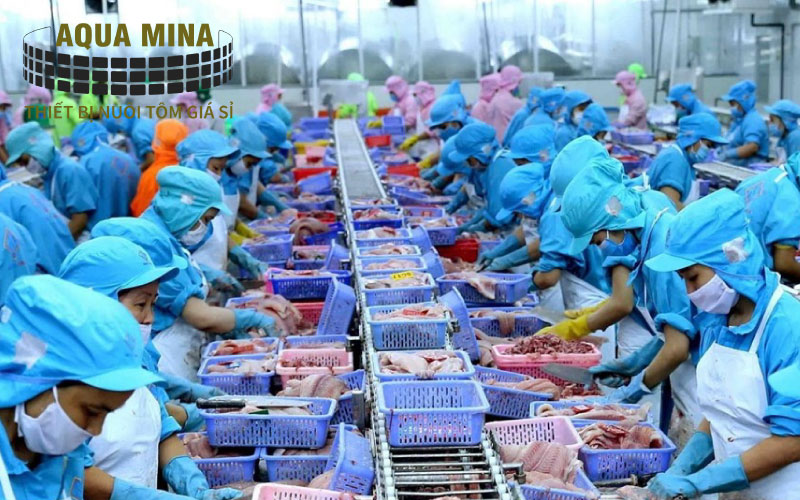
With unpredictable global export markets, relying solely on foreign channels could leave the pangasius industry vulnerable. The domestic market should no longer be seen as optional, but as a vital element to sustain cash flow, maintain production, protect farmers, and stabilize jobs. It is time for Vietnam to regard the domestic market as the “real market” – not merely a short-term solution when exports falter, but as a “long-term stronghold” that strengthens the resilience of the entire pangasius value chain.
Source: nongnghiepmoitruong


Ca Mau, Can Tho and An Giang Play a Leading Role in Vietnam’s Shrimp Industry
Protecting rice-shrimp yields against environmental fluctuations caused by prolonged rain
AQUA MINA Turbo Blower: Quiet, Energy-Efficient Air Supply for Aquaculture Ponds
AQUA MINA has accompanied the experimental tank system project at Can Tho University from its very early days
AQUA MINA AMONG 20 OUTSTANDING PRESENTATIONS AT THE WORKSHOP ON APPLYING SCIENCE AND TECHNOLOGY TO IMPROVE THE QUALITY OF VIETNAM’S AQUATIC PRODUCTS
Vietnam’s Shrimp Farming Industry Enters the High-Tech Race
The U.S. market relies heavily on imported shrimp to bridge its domestic supply gap
The 2028 supply crisis: The shrimp industry is projected to face a 400,000-ton material shortage
High profits from high-tech shrimp farming come with persistent risks
Intensifying El Niño Effect: Climate Change Risks Threaten the Global Shrimp Supply Chain
Evaluating Gaps in the Circular Economy Value Chain of the Shrimp Industry
A Comprehensive Overview of the Vietnamese Shrimp Industry




.jpg)