


Challenges remain for Vietnam’s aquaculture exports: official
.png)
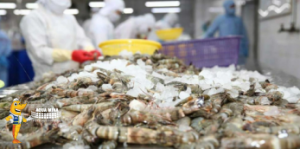
Workers process shrimp for export at Minh Phu Seafood Corp. (Photo: VNA)
The fishery sector's current problems include the traceability of seafood to combat illegal exploitation and ensure food safety on fishing vessels and fishing ports.
In addition, seafood exports face many other barriers such as animal welfare and carbon certificates to ensure environmental safety during the production process of products exported to Europe and the US.
The Ministry of Agriculture and Rural Development has lowered its target for seafood export value for 2024 to 9.5 billion USD from its previous expectation of 10 billion USD.
The fisheries sector is expected to have an output of 9.22 million tonnes of seafood from an aquaculture area of 1.3 million hectares this year.
According to the Department of Fisheries, the seafood export value in 2023 was estimated to reach 9.2 billion USD, or 92% of the plan, down 8% compared to 2022.
Of this year's export value, about 3.45 billion USD were from shrimp, 1.9 billion USD from tra fish, 900 million USD from tuna, and 800 million USD from mollusks.
Total seafood export output in 2023 was estimated at 9.05 million tonnes, an increase of 2% compared to 2022. Exploited seafood output reached 3.68 million tonnes, equal to 2022, while aquaculture output was more than 5.4 million tonnes, an increase of 3.5% compared to 2022.
The world economy has recovered slowly, while the prices of some input products for aquaculture development and logistics costs have remained high, putting pressure on production.
These challenges impacted Vietnam's seafood processing and export activities, causing difficulties for the seafood industry this year.
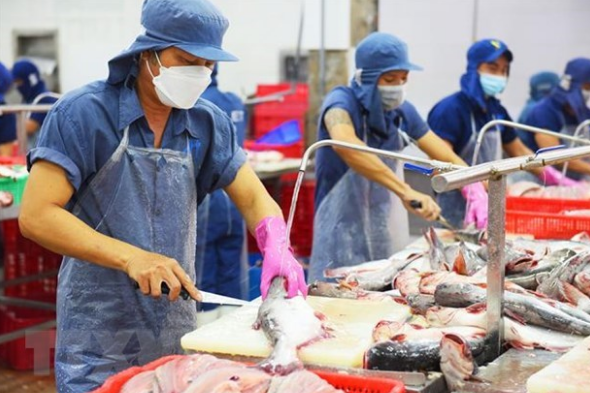
Meanwhile, the European Commission continues to maintain a yellow card warning for Vietnam's seafood. Therefore, in 2024, the task of production and business will become more difficult.
Luan said seafood export revenue decreased in 2023 as the fisheries industry faced challenges such as a lack of standards and regulations for environmental monitoring, and inadequate infrastructure in farming areas. The efficiency of catching activities was still low. Consumption demand decreased in most markets, causing a drop in export turnover.
Vuong Thi Oanh, an official from the Import-Export Department under the Ministry of Industry and Trade, said although the fisheries industry shows signs of recovery, there are still many difficulties in 2024.
Specifically, China, the US, Europe, and Japan were expected to recover from the last months of 2023 because those markets prepare food for festivals at the year end and the new year, while importers' inventories are low. Vietnam is a potential supplier to those markets.
However, competition with rivals also increased, such as with Thailand, Indonesia and China, for processed products and with Ecuador for regular products.
Cre: Vietnam Plus
Ngày đăng : 23/05/2024
1804 View


Other Articles
Ca Mau, Can Tho and An Giang Play a Leading Role in Vietnam’s Shrimp Industry
Protecting rice-shrimp yields against environmental fluctuations caused by prolonged rain
AQUA MINA Turbo Blower: Quiet, Energy-Efficient Air Supply for Aquaculture Ponds
AQUA MINA has accompanied the experimental tank system project at Can Tho University from its very early days
AQUA MINA AMONG 20 OUTSTANDING PRESENTATIONS AT THE WORKSHOP ON APPLYING SCIENCE AND TECHNOLOGY TO IMPROVE THE QUALITY OF VIETNAM’S AQUATIC PRODUCTS
Vietnam’s Shrimp Farming Industry Enters the High-Tech Race
The U.S. market relies heavily on imported shrimp to bridge its domestic supply gap
The 2028 supply crisis: The shrimp industry is projected to face a 400,000-ton material shortage
High profits from high-tech shrimp farming come with persistent risks
Intensifying El Niño Effect: Climate Change Risks Threaten the Global Shrimp Supply Chain
Evaluating Gaps in the Circular Economy Value Chain of the Shrimp Industry
A Comprehensive Overview of the Vietnamese Shrimp Industry





.jpg)