


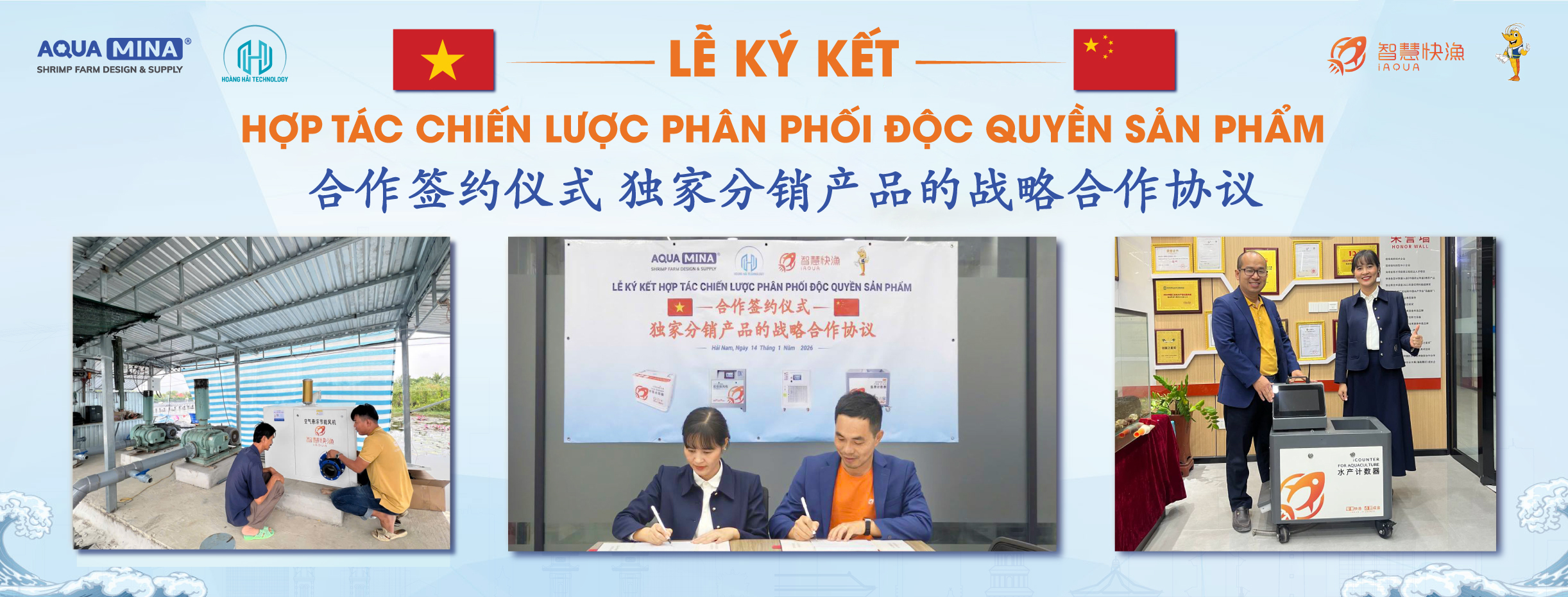
Shrimp Farmers Struggle Amid Unfavorable Weather
To respond to emergency situations where shrimp suffer from thermal shock due to the wide temperature difference between day and night—especially after recent unseasonal rains—Mr. Lang constantly monitors water parameters like pH and salinity. He promptly applies lime to reduce acidity, uses probiotics for bottom treatment, and oxygen tablets to mitigate heat stress.
Sudden environmental changes in ponds during the hot season also weaken shrimp immunity, making them vulnerable to diseases like white spot syndrome and acute hepatopancreatic necrosis. Recently, Mr. Do Van Sum from Cai Nua Hamlet, Binh Minh Commune (Vinh Thuan District), has been monitoring his shrimp ponds around the clock. His shrimp, less than two months old, showed signs of floating, lethargy, and loss of appetite. Many had red bodies, empty digestive tracts, and gradually died.
Mr. Sum said, “The weather this year is extremely harsh, with prolonged heatwaves and rapidly spreading diseases. Of 10 nearby farmers, 8 have suffered almost total loss in their first stocking. If the shrimp survive, I can harvest in about half a month. But this first crop is a complete loss—there's no return on investment.”
According to the Provincial Department of Animal Husbandry and Veterinary Medicine, prolonged heat and sudden temperature fluctuations weaken shrimp immunity, making it easier for diseases to spread. As of April 15, the province recorded 152.45 hectares of brackish water shrimp affected; 134.75 hectares were infected, while 17.7 hectares suffered environmental stress-related losses. These cases are concentrated in districts like An Bien, An Minh, Hon Dat, and Go Quao.
White spot disease, caused by a virus, accounts for nearly 94% of the infected area. Other diseases like acute hepatopancreatic necrosis also appeared in shrimp aged 30–40 days, causing gradual death, losses, reduced productivity, and early harvests.
The outbreak occurred during the peak dry-season heat, starting from early March 2025. Some households did harvest shrimp, but yields were low, just enough to partially cover seed and pond preparation costs. Most farmers with diseased shrimp suffered 100% losses and could not recover their investment. Veterinary authorities have distributed 12,720 kg of chlorine to 55 shrimp-farming households affected by white spot and acute hepatopancreatic necrosis for disease control.
Proactively Preventing Shrimp Diseases
To reduce risk and minimize environmental stress on shrimp, many farmers have invested in equipment such as oxygen aerators, paddlewheel aerators, shade nets, and continuous water pumping. They also use probiotics to stabilize the environment ad boost shrimp immunity.
Mr. Trinh Hoang Son, a shrimp farmer in Van Thanh Hamlet, Tho Son Commune (Hon Dat District), said: “Recently, many nearby ponds experienced sporadic shrimp deaths, showing signs of white spot and acute hepatopancreatic necrosis. These diseases often occur when weather changes suddenly and pond temperature is unstable. To reduce risk, I measure oxygen levels twice a day, change water frequently—it’s costly in electricity and water treatment chemicals. This crop’s costs are high, shrimp prices are falling, and any losses will be significant.”
According to the Department of Agriculture and Environment of Kien Giang Province, unfavorable weather conditions are expected to persist throughout the brackish water shrimp season of 2025. The risk of further losses is very high.
Nguyen Dinh Xuyen, Deputy Head of the Provincial Livestock and Veterinary Sub-department, stated that to minimize losses during the hot season, the sector has worked with local authorities to advise farmers on disease prevention. Farmers in shrimp–rice areas are advised to reduce stocking density, stagger stocking times, and avoid dense stocking during peak heat. They are also encouraged to thoroughly disinfect ponds before new stocking.
For industrial shrimp farms, to minimize heat-related losses, authorities recommend adding more paddlewheel aerators and continuous aeration to ensure adequate oxygen supply. Farmers should also use probiotics to stabilize the pond environment and supplement shrimp feed with minerals, gut probiotics, and vitamin C to enhance resistance.
In addition to technical disease prevention, authorities are increasing inspections of low-quality shrimp seed vendors and strictly handling cases where infected shrimp are not reported and wastewater is discharged into canals, spreading disease. The department continues to offer free shrimp disease testing and provide chlorine when new outbreaks arise.
According to the Department of Agriculture and Environment, the province has stocked 127,726 hectares of brackish water shrimp—reaching 93.2% of the 2025 plan. Of this, industrial shrimp farming accounts for 1,560 hectares, shrimp–rice systems 103,878 hectares, and improved extensive farming 22,288 hectares. The estimated harvest to date is 15,232 tons.
Source: vietlinh.vn
Aqua Mina's distributor in Japan: REX INDUSTRIES CO., LTD
- Address: 1-9-3 Hishiya-Higashi, Higashi-Osaka 578-0948 JAPAN
- Email: kimakubo@rexind.co.jp
- Phone: +81-(0)72-961-9893
- Website: http://www.rexind.co.jp/e/
WE WORK FOR YOUR SUCCESS!
Ngày đăng : 15/05/2025
2186 View


Other Articles
Ca Mau, Can Tho and An Giang Play a Leading Role in Vietnam’s Shrimp Industry
Protecting rice-shrimp yields against environmental fluctuations caused by prolonged rain
AQUA MINA Turbo Blower: Quiet, Energy-Efficient Air Supply for Aquaculture Ponds
AQUA MINA has accompanied the experimental tank system project at Can Tho University from its very early days
AQUA MINA AMONG 20 OUTSTANDING PRESENTATIONS AT THE WORKSHOP ON APPLYING SCIENCE AND TECHNOLOGY TO IMPROVE THE QUALITY OF VIETNAM’S AQUATIC PRODUCTS
Vietnam’s Shrimp Farming Industry Enters the High-Tech Race
The U.S. market relies heavily on imported shrimp to bridge its domestic supply gap
The 2028 supply crisis: The shrimp industry is projected to face a 400,000-ton material shortage
High profits from high-tech shrimp farming come with persistent risks
Intensifying El Niño Effect: Climate Change Risks Threaten the Global Shrimp Supply Chain
Evaluating Gaps in the Circular Economy Value Chain of the Shrimp Industry
A Comprehensive Overview of the Vietnamese Shrimp Industry





.jpg)