



Hung Yen: Promoting High-Tech Cooperative Shrimp Farming Models
Founded in 2021, the Tien Dat Youth Aquaculture and Trade Service Cooperative in Thai Ninh and Dong Thai Ninh communes has become a model in applying high technology to production. By shifting from traditional farming methods to a closed, modern model, the Cooperative not only improves economic efficiency but also contributes to building a sustainable farming area.
From the beginning of its operation, cooperative members invested in tent-based shrimp farming systems, strictly adhering to technical processes. The case of Mr. Giang Van Trieu from Thai Ninh commune is a clear example. Previously, his family practiced extensive shrimp farming, heavily dependent on weather, which led to high risks and unstable income. In 2024, after joining the Cooperative, he boldly converted 2,000 m² of land to high-tech shrimp farming. With the Cooperative’s support in technology, disease prevention, and environmental protection, he can now produce 3–4 crops per year instead of only 1. Yields have multiplied, bringing stable and superior income.
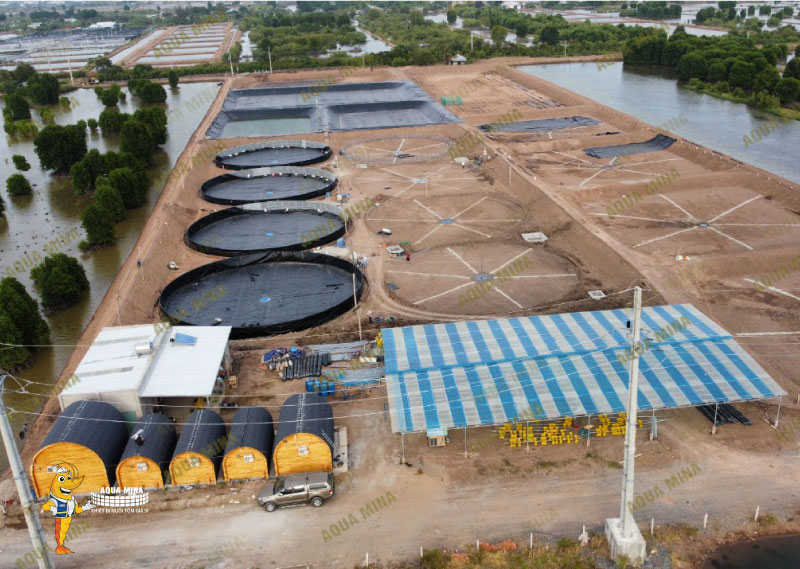
Not only Mr. Trieu but many other members also witnessed significant results after applying high technology. Mr. Ha Van Hiep (Dong Thai Ninh commune) shared that the Cooperative has established safe production regulations, enabling households to coordinate in environmental management, water quality control, seed, feed, and probiotic monitoring. This linkage has facilitated infrastructure improvements, environmentally friendly water treatment, and the installation of modern equipment such as paddle wheel aerators and automatic feeders, helping to reduce labor and increase productivity.
Thanks to innovation, many households now earn billions of VND annually. Beyond high profits, the high-tech shrimp farming model helps control diseases, ensure product quality, and enhance market reputation. Mr. Nguyen Xuan Su, Director of the Cooperative, shared that the Cooperative currently has 7 members, registered to operate in 31 aquaculture-related sectors. While farming areas used to be small and mainly extensive, the Cooperative has now expanded to dozens of hectares of high-tech shrimp farms.
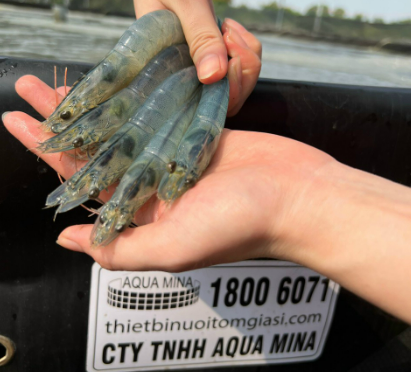
A key feature of this model is that shrimp can grow year-round, even during winter or under extreme heat. Members not only expand production scale but also support each other in capital, seed, and technical expertise, ensuring stable production schedules. As a result, average productivity reaches 10–15 tons/ha, with revenues of VND 2–3 billion/ha per crop. Each year, the Cooperative supplies over 100 tons of whiteleg shrimp to the market, strengthening the brand of clean, high-quality shrimp. This production linkage and high-tech application model has proven its effectiveness, creating a foundation for shrimp farming in Thai Ninh to develop sustainably. It is also an important solution that helps farmers both increase income and protect the ecological environment, gradually building a modern farming zone that meets increasingly strict market demands.
Source: nguoinuoitom


Ca Mau, Can Tho and An Giang Play a Leading Role in Vietnam’s Shrimp Industry
Protecting rice-shrimp yields against environmental fluctuations caused by prolonged rain
AQUA MINA Turbo Blower: Quiet, Energy-Efficient Air Supply for Aquaculture Ponds
AQUA MINA has accompanied the experimental tank system project at Can Tho University from its very early days
AQUA MINA AMONG 20 OUTSTANDING PRESENTATIONS AT THE WORKSHOP ON APPLYING SCIENCE AND TECHNOLOGY TO IMPROVE THE QUALITY OF VIETNAM’S AQUATIC PRODUCTS
Vietnam’s Shrimp Farming Industry Enters the High-Tech Race
The U.S. market relies heavily on imported shrimp to bridge its domestic supply gap
The 2028 supply crisis: The shrimp industry is projected to face a 400,000-ton material shortage
High profits from high-tech shrimp farming come with persistent risks
Intensifying El Niño Effect: Climate Change Risks Threaten the Global Shrimp Supply Chain
Evaluating Gaps in the Circular Economy Value Chain of the Shrimp Industry
A Comprehensive Overview of the Vietnamese Shrimp Industry












.jpg)
