

Shrimp industry enterprises proactively adapt to global fluctuations
Enhancing Seed Quality to Reach New Heights
Amid ongoing fluctuations in export markets, uneven recovery in consumption demand, and rising logistics costs, Vietnam’s shrimp industry is facing mounting pressure across the entire value chain. These impacts are not limited to the consumption stage but extend to seed quality, farming technology, and equipment supply.
In an interview with Industry and Trade Newspaper, Ms. Bui Thi Tien Duc, Deputy Director of Communications at Viet Uc Seafood Group, stated that export market fluctuations—particularly global oversupply and price pressure—are directly affecting the entire shrimp value chain.
“Currently, demand for shrimp seed is no longer stable as before but fluctuates over time as farmers become more cautious. However, this also presents an opportunity for market filtering, as farmers increasingly prioritize high-quality seed with strong adaptability and clear traceability to minimize risks,” she said.
From a market perspective, demand in major regions such as the U.S. and EU is expected to recover, but with increasingly stringent requirements for sustainability and traceability. Meanwhile, China remains a major market, though policy fluctuations and stricter quality control are becoming more evident.
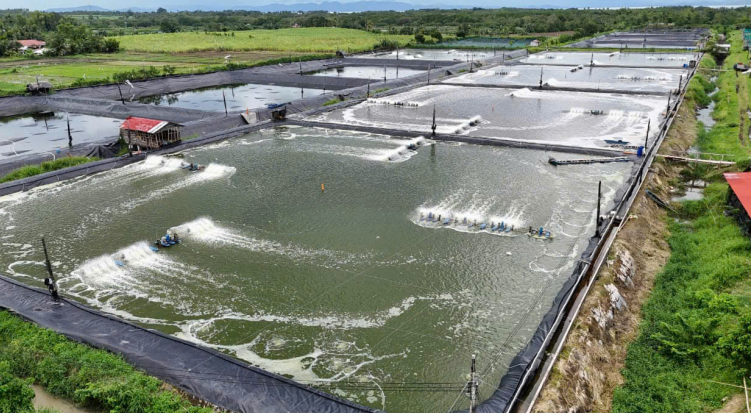
To enhance competitiveness, representatives from Viet Uc emphasized that Vietnam’s shrimp industry must focus on several key factors, starting with seed quality—the foundation determining the efficiency of the entire value chain. Disease control and the development of sustainable farming models also play a crucial role in minimizing risks and optimizing productivity.
In response to stricter international requirements, traceability and supply chain transparency have become mandatory. Additionally, the industry needs to invest in deep processing to increase product value, gradually moving away from price-based competition while building a national brand to strengthen its global position.
Technology Application and Market Expansion
If seed quality is the foundation, farming technology and equipment are becoming decisive factors for production efficiency. Innovations in farming equipment not only increase productivity but also optimize costs, save energy, and reduce risks for farmers—especially amid global market volatility.
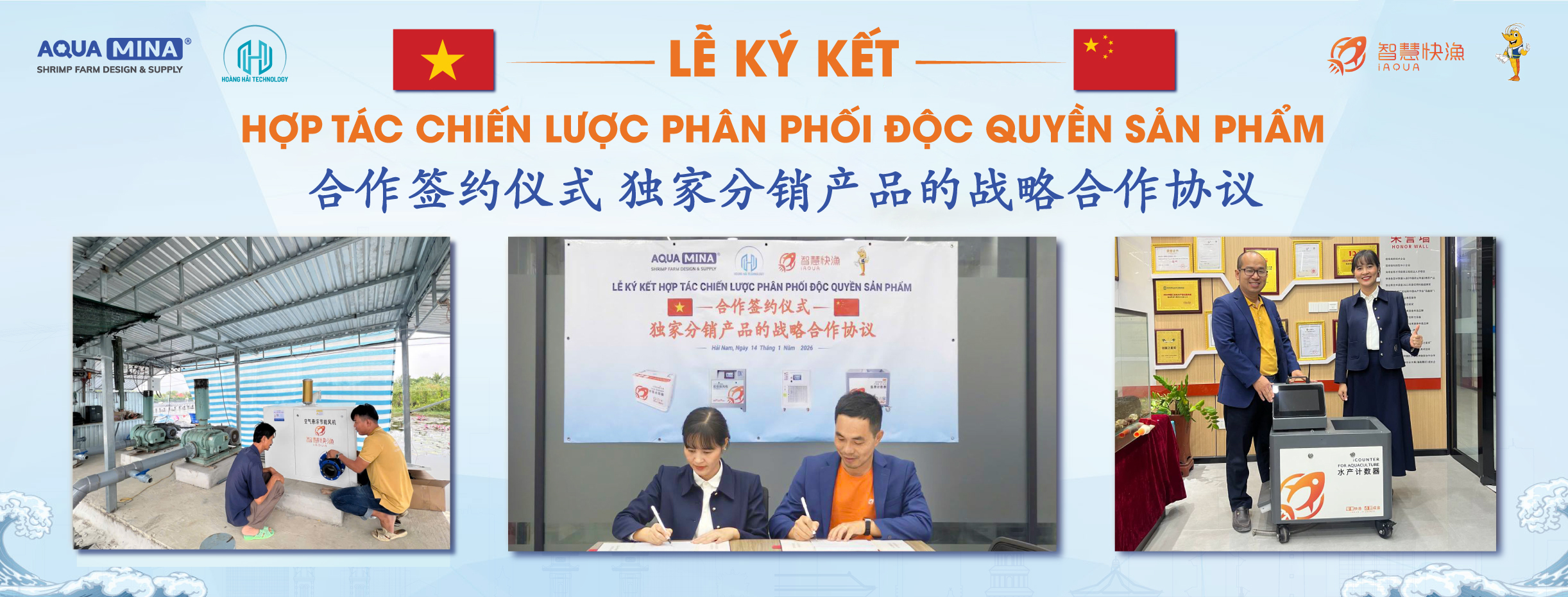
Speaking with Industry and Trade Newspaper, Ms. Truong Thi Le Dung, CEO of AQUA MINA Co., Ltd., stated that recent geopolitical fluctuations are creating significant challenges for export activities.
“Previously, shipping a container from Vietnam to this region took about 40–45 days. Now, transportation time has been extended due to war risk insurance requirements, and some routes have even been temporarily suspended,” she explained.
In response, Aqua Mina has adjusted its strategy toward greater flexibility. The company is shifting focus to Southeast Asian markets such as the Philippines, Thailand, and Indonesia, while also expanding its domestic presence, currently covering more than 54 provinces and cities.
Energy-efficient products and the application of advanced technologies, including artificial intelligence, are identified as long-term directions to improve farming efficiency and reduce costs for domestic farmers.
According to company representatives, investing in technology remains a significant challenge for small and medium-sized enterprises. To ensure economic efficiency, businesses must adopt a balanced approach—developing technology at an appropriate level that allows for commercialization while creating future competitive advantages without overburdening financial and human resources.
This balance between technical innovation and business strategy will help Vietnam’s shrimp industry gradually improve production capacity and prepare for future export opportunities.
.jpg)
Enhancing seed quality, effective disease control, technological application, and cost optimization will be key factors in maintaining competitiveness. Additionally, strong collaboration among stakeholders across the value chain plays a crucial role in reducing risks and improving overall efficiency.
With coordinated improvements across all segments, Vietnam’s shrimp industry will not only overcome current challenges but also achieve sustainable growth and strengthen its position in the global market.
Source: congthuong
AQUA MINA CO., LTD
– Address: 685 Le Duc Anh Street, Quarter 39, Binh Hung Hoa Ward, Ho Chi Minh City
– Phone: 1800 6071 (Toll-free hotline)
– Email: sales@aquamina.com.vn or oversea@aquamina.com.vn
– Aqua Mina’s Official Distributor in Japan: REX INDUSTRIES CO., LTD
– Address: 1-9-3 Hishiya-Higashi, Higashi-Osaka 578-0948, JAPAN
– Email: kimakubo@rexind.co.jp
– Phone: +81-(0)72-961-9893
– Website: www.rexind.co.jp/e/

WE WORK FOR THE SUCCESS
Ngày đăng : 23/03/2026
1474 View


Other Articles
Ca Mau, Can Tho and An Giang Play a Leading Role in Vietnam’s Shrimp Industry
Protecting rice-shrimp yields against environmental fluctuations caused by prolonged rain
AQUA MINA Turbo Blower: Quiet, Energy-Efficient Air Supply for Aquaculture Ponds
AQUA MINA has accompanied the experimental tank system project at Can Tho University from its very early days
AQUA MINA AMONG 20 OUTSTANDING PRESENTATIONS AT THE WORKSHOP ON APPLYING SCIENCE AND TECHNOLOGY TO IMPROVE THE QUALITY OF VIETNAM’S AQUATIC PRODUCTS
Vietnam’s Shrimp Farming Industry Enters the High-Tech Race
The U.S. market relies heavily on imported shrimp to bridge its domestic supply gap
The 2028 supply crisis: The shrimp industry is projected to face a 400,000-ton material shortage
High profits from high-tech shrimp farming come with persistent risks
Intensifying El Niño Effect: Climate Change Risks Threaten the Global Shrimp Supply Chain
Evaluating Gaps in the Circular Economy Value Chain of the Shrimp Industry
A Comprehensive Overview of the Vietnamese Shrimp Industry


.jpg)