

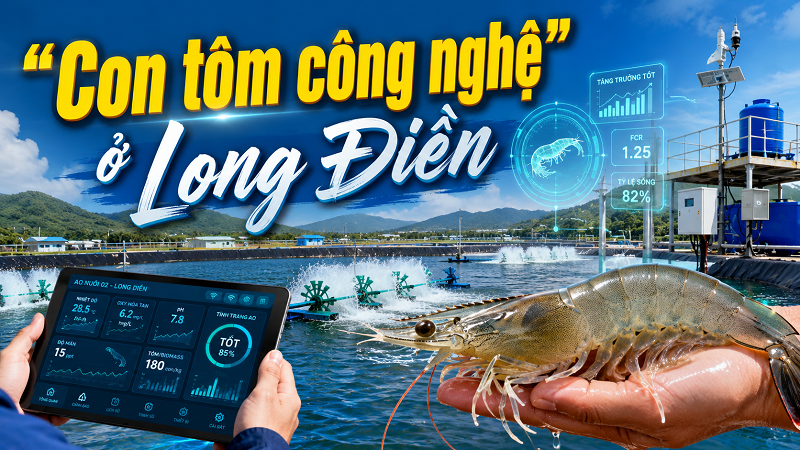
“High-tech shrimp farming” in Long Điền
In the past, many local households in Long Dien Commune (HCMC) primarily farmed shrimp using an improved extensive model with low density, which was highly dependent on natural conditions. However, over the last 5 years, they have gradually shifted to semi-intensive/intensive earthen ponds, and now, to the high-tech, plastic-lined pond model.
1. A Green Environment from Clean Technology
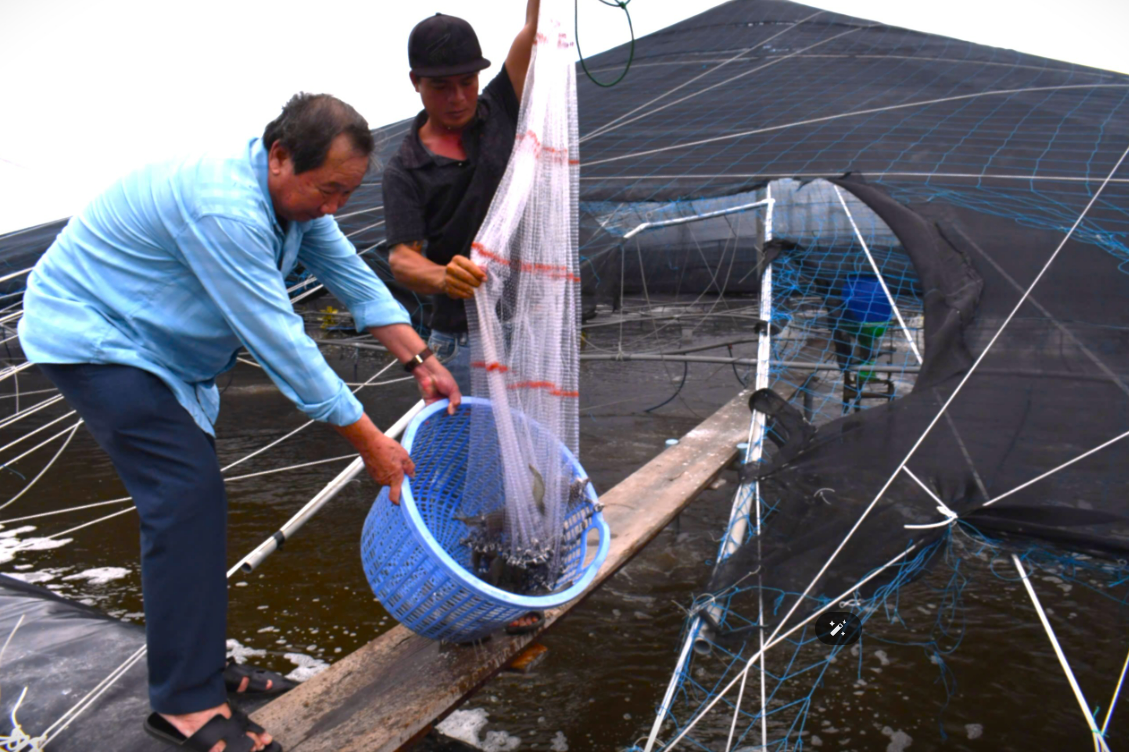
The Cho Ben Cooperative (Long Dien Commune, HCMC) is a prime example of a concentrated, clean production shrimp farming model that delivers high economic efficiency. Shifting from extensive ponds that relied heavily on the weather, many shrimp farming households have transitioned to high-tech shrimp farming using plastic-lined pond systems, automated environmental monitoring equipment, and modern farming processes.
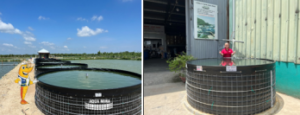
Established and operational since early December 2021 with 11 members, the Cho Ben Cooperative focuses on developing aquaculture toward clean and sustainable production. Currently, the cooperative cultivates an area of 3 hectares, allocating 8 ponds for whiteleg shrimp farming ($1,000\text{ m}^2$ per pond), 1 nursery pond, and utilizing the remaining area for settling ponds to ensure a proactive water supply and strict control over the farming environment.
According to Mr. Huynh Van Thuyết, Director of the Cho Ben Cooperative, with support from various government levels, sectors, and the local community, the cooperative has linked production and product consumption through the CP.Biotic Farming biosecure shrimp farming model. This model provides excellent control over the water environment, prevents harmful shrimp diseases, shortens the farming cycle, and yields high profits.
2. High-Tech Shrimp Farming Helps Cooperatives Proactively Control the Environment and Mitigate Diseases
Right from the start of the shrimp farming model, the cooperative clearly defined its orientation toward safe production, compliance with technical processes, and focusing on output partnerships. Every year, the cooperative organizes 3 shrimp crops, with an average yield reaching 70 tons per crop. With traders purchasing at around 155,000 VND/kg, after deducting investment costs, the cooperative achieves an annual profit of over 10 billion VND.
Mr. Thuyet shared that with this technology, water is channeled into discharge ponds and treated with chemicals through a settling system to eliminate suspended organic matter and heavy metals. Afterward, the water is completely disinfected before being supplied to the farming ponds. Wastewater from the farming ponds is recirculated through a system of settling ponds and filtration basins.
3. Modern Technology Contributes to Building a Clean, Sustainable Shrimp Farming Zone in HCMC
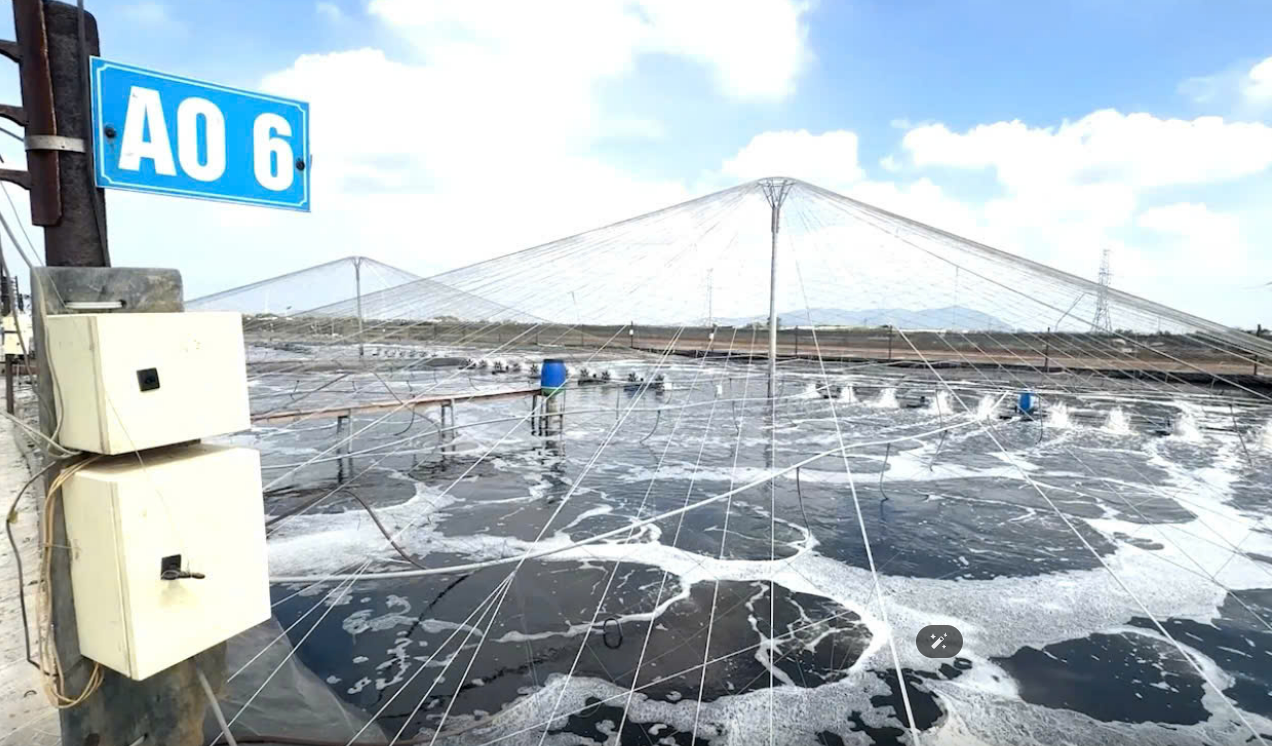
Thanks to the application of high technology in shrimp farming, the cooperative can successfully control the farming environment. When farming shrimp in plastic-lined ponds, the water supply must always be kept in motion. Therefore, the entire water system in the farm supplying the ponds must be proactively managed to prevent industrial pollution, and additional paddlewheel aerators must be installed to provide sufficient oxygen for the shrimp. Every parameter, such as pH, sulfur, $\text{NH}_3$, or $\text{H}_2\text{S}$... in the water must be monitored and recorded daily, Mr. Thuyet said.
High Economic Efficiency
According to Mr. Thuyet, compared to traditional shrimp farming in earthen ponds, high-tech farming in plastic-lined ponds helps solve weather-related problems, climate change, and water source issues. Through several years of practical experience, Mr. Thuyet noted that the success rate of farming always stands above 95%.
4. Coordinated Pond Designs Ensure Optimal Conditions for Shrimp Growth
The economic efficiency from the concentrated shrimp farming model not only helps members of the Cho Ben Cooperative stabilize their income but also contributes to creating regular employment for local laborers, gradually forming an organized aquaculture production zone and limiting fragmented, small-scale production.
5. Plastic-Lined Pond Systems Help Control Water Quality and Boost Shrimp Farming Productivity
Mr. Le Minh Kha, Head of the Economic Division of Long Dien Commune, HCMC, stated that developing high-tech shrimp farming combined with environmental management, disease control, and production linkages is an important solution to elevate economic efficiency, build a stable raw material zone, and drive towards the sustainable development of the local aquaculture sector.
Source: nld
AQUA MINA CO., LTD

WE WORK FOR THE SUCCESS


Ca Mau, Can Tho and An Giang Play a Leading Role in Vietnam’s Shrimp Industry
Protecting rice-shrimp yields against environmental fluctuations caused by prolonged rain
AQUA MINA Turbo Blower: Quiet, Energy-Efficient Air Supply for Aquaculture Ponds
AQUA MINA has accompanied the experimental tank system project at Can Tho University from its very early days
AQUA MINA AMONG 20 OUTSTANDING PRESENTATIONS AT THE WORKSHOP ON APPLYING SCIENCE AND TECHNOLOGY TO IMPROVE THE QUALITY OF VIETNAM’S AQUATIC PRODUCTS
Vietnam’s Shrimp Farming Industry Enters the High-Tech Race
The U.S. market relies heavily on imported shrimp to bridge its domestic supply gap
The 2028 supply crisis: The shrimp industry is projected to face a 400,000-ton material shortage
High profits from high-tech shrimp farming come with persistent risks
Intensifying El Niño Effect: Climate Change Risks Threaten the Global Shrimp Supply Chain
Evaluating Gaps in the Circular Economy Value Chain of the Shrimp Industry
A Comprehensive Overview of the Vietnamese Shrimp Industry


.jpg)