

Integrating Sea Cucumber Farming with Solar Power Generation
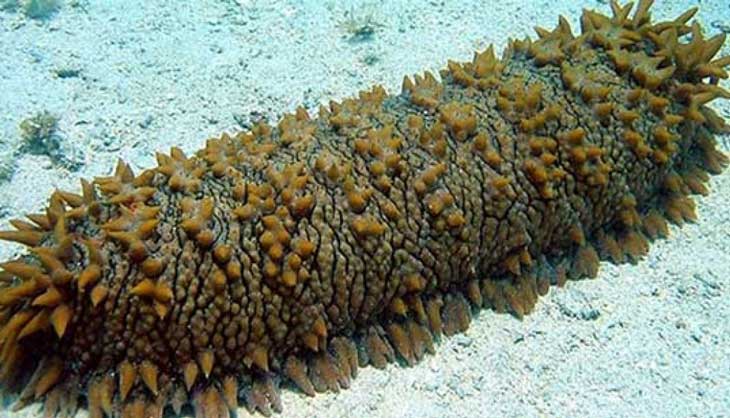
Sea cucumbers are a prized ingredient in both cuisine and medicine.
A research team from the Yantai Institute of Coastal Zone Research under the Chinese Academy of Sciences conducted a year-long study to explore the effects of photovoltaic (PV) farms on sea cucumber aquaculture. The study focused on how shading from solar panels influences the environment and the growth of sea cucumbers (Apostichopus japonicus). The results of this integrated approach are highly promising. According to the researchers, PV panels reduced light intensity by 80.5% and water temperature by 1.2°C, creating more favorable conditions for sea cucumber development.
Sea cucumbers are marine animals related to starfish and sea urchins. They have elongated bodies and live on the seafloor. As a highly valuable resource in both gastronomy and medicine, sea cucumbers face significant challenges in aquaculture. Elevated water temperatures can trigger mass mortality events or cause them to enter a summer dormancy state, slowing their growth. This new method of using PV panels to provide shade is proving beneficial for their development, according to findings published in Aquaculture Reports.
The research team conducted their study at a 200 MW solar power station in the eastern part of China’s Yellow River Delta — a region with a high density of ponds equipped with PV panel coverage. The height of the panels above the water varies seasonally but is maintained at a minimum of 1.5 meters. The researchers compared six ponds: three equipped with PV panels providing partial shading, and three without. Each pond measured 6.7 hectares in area and 1.5 meters deep. The study was conducted from March 2023 to February 2024. The team monitored water temperature, light intensity, and various key environmental parameters.
The study found that PV panels significantly reduced light intensity by 80.5% and water temperature by 1.2°C in shaded ponds compared to unshaded ones. Integrating PV panels with sea cucumber farming may help address several challenges in aquaculture. The shading effect reduces water temperature, potentially preventing heat-related mortality during the summer months. Additionally, the cooler environment shortens summer dormancy periods — by about 12 days in near-mature individuals and one day in mature sea cucumbers. Less time spent in dormancy allows more time for growth. Preliminary data suggests that this can boost production: farmers recorded yields of 900 kg per 10,000 m² in shaded ponds, compared to 750 kg per 10,000 m² in unshaded ponds.
While integrating PV panels did not negatively impact water quality, plankton composition, or the digestive activity of sea cucumbers, the researchers noted seasonal increases in dinoflagellates and decreases in zooplankton. They emphasized the importance of continuous monitoring to prevent potential ecological imbalances.
Source: vnexpress.net
Aqua Mina's distributor in Japan: REX INDUSTRIES CO., LTD
- Address: 1-9-3 Hishiya-Higashi, Higashi-Osaka 578-0948 JAPAN
- Email: kimakubo@rexind.co.jp
- Phone: +81-(0)72-961-9893
- Website: http://www.rexind.co.jp/e/
WE WORK FOR YOUR SUCCESS!
Ngày đăng : 04/07/2025
2168 View


Other Articles
Ca Mau, Can Tho and An Giang Play a Leading Role in Vietnam’s Shrimp Industry
Protecting rice-shrimp yields against environmental fluctuations caused by prolonged rain
AQUA MINA Turbo Blower: Quiet, Energy-Efficient Air Supply for Aquaculture Ponds
AQUA MINA has accompanied the experimental tank system project at Can Tho University from its very early days
AQUA MINA AMONG 20 OUTSTANDING PRESENTATIONS AT THE WORKSHOP ON APPLYING SCIENCE AND TECHNOLOGY TO IMPROVE THE QUALITY OF VIETNAM’S AQUATIC PRODUCTS
Vietnam’s Shrimp Farming Industry Enters the High-Tech Race
The U.S. market relies heavily on imported shrimp to bridge its domestic supply gap
The 2028 supply crisis: The shrimp industry is projected to face a 400,000-ton material shortage
High profits from high-tech shrimp farming come with persistent risks
Intensifying El Niño Effect: Climate Change Risks Threaten the Global Shrimp Supply Chain
Evaluating Gaps in the Circular Economy Value Chain of the Shrimp Industry
A Comprehensive Overview of the Vietnamese Shrimp Industry


.jpg)