

Techniques for Raising Eel Fry
Preparation of Eel Fry Tanks
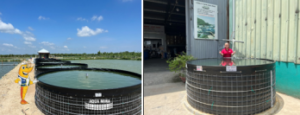
Eel tanks should be designed in a rectangular or elliptical shape, with a height of around 0.8 – 1m. Since eels tend to burrow, using tarpaulin-lined tanks will help prevent eels from escaping. The tanks should have a cover to avoid direct sunlight, and it is essential to maintain a stable temperature between 23°C-28°C, as eels thrive in this range.
Fry Stage (30-35 days)
Newly hatched eels are very weak and feed mainly on small zooplankton like water fleas (daphnia) and mosquito larvae for the first 5 days. From the 10th day, they can be fed chopped earthworms. By the 15th day, their condition improves, and minced small fish can be introduced. By day 30, they can start consuming chopped apple snails. At 30-35 days old, the eels typically weigh 25-30g each and measure around 10-15cm in length, making them ready to be transferred to grow-out ponds.
Stocking Density
For every 1m², around 50-80 eel fry should be stocked. Ensure to select healthy, non-injured fry and soak them in saltwater for 10-15 minutes before transferring them to the grow-out pond.
3 Key Stages in Raising Eels for Meat
1. Stage 1: Eels Weighing 33-60g Each
At this stage, eels require a high-protein diet (40% protein), which can be a mix of small fish, boiled and ground snails. As such food may be hard to digest, it is important to supplement with digestive enzymes.
2. Stage 2: Eels Weighing 90-200g Each
Eels at this stage are stronger, have a larger appetite, and grow rapidly. The protein level in their diet can be reduced to 40%, including industrial pellet feed. You can feed them a combination of 65% ground small fish, clams, and snails; 30% protein-rich feed; and 5% digestive enzymes and vitamin C. Additionally, blending green vegetables and roots into their food will help boost their immunity.
3. Stage 3: Eels Weighing Over 200g Each
By this point, eels require more space for optimal growth. If possible, prepare additional tanks to reduce overcrowding. Water changes should be more frequent, and the same feeding formula from the previous stage can be followed, only increasing the quantity of food.
Eels are nocturnal animals, burrowing and feeding mostly at night. Only about 30% of their feeding happens during the day, with 70% occurring after dark, so feeding schedules should be adjusted accordingly.

Contact AQUA MINA for consultation and supply of aquaculture round tanks and aquaculture equipment for high-tech shrimp farming.
- Address: 685 National Highway 1A, Binh Hung Hoa Ward, Binh Tan District, Ho Chi Minh City
- Phone: 1800 6071 (Toll-free hotline)
- Email: sales@aquamina.com.vn or oversea@aquamina.com.vn
Aqua Mina's distributor in Japan:
REX INDUSTRIES CO., LTD
- Address: 1-9-3 Hishiya-Higashi, Higashi-Osaka 578-0948 JAPAN
- Email: kimakubo@rexind.co.jp
- Phone: +81-(0)72-961-9893
- Website: www.rexind.co.jp/e/](http://www.rexind.co.jp/e/
WE WORK FOR YOUR SUCCESS
Ngày đăng : 26/10/2024
2945 View


Other Articles
Ca Mau, Can Tho and An Giang Play a Leading Role in Vietnam’s Shrimp Industry
Protecting rice-shrimp yields against environmental fluctuations caused by prolonged rain
AQUA MINA Turbo Blower: Quiet, Energy-Efficient Air Supply for Aquaculture Ponds
AQUA MINA has accompanied the experimental tank system project at Can Tho University from its very early days
AQUA MINA AMONG 20 OUTSTANDING PRESENTATIONS AT THE WORKSHOP ON APPLYING SCIENCE AND TECHNOLOGY TO IMPROVE THE QUALITY OF VIETNAM’S AQUATIC PRODUCTS
Vietnam’s Shrimp Farming Industry Enters the High-Tech Race
The U.S. market relies heavily on imported shrimp to bridge its domestic supply gap
The 2028 supply crisis: The shrimp industry is projected to face a 400,000-ton material shortage
High profits from high-tech shrimp farming come with persistent risks
Intensifying El Niño Effect: Climate Change Risks Threaten the Global Shrimp Supply Chain
Evaluating Gaps in the Circular Economy Value Chain of the Shrimp Industry
A Comprehensive Overview of the Vietnamese Shrimp Industry


.jpg)