

Caring for Shrimp During the Winter Crop
Stabilizing Temperature
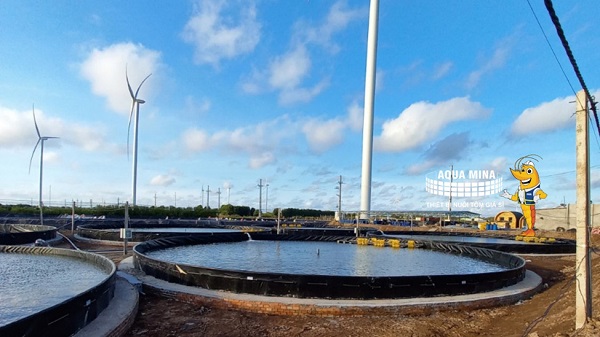
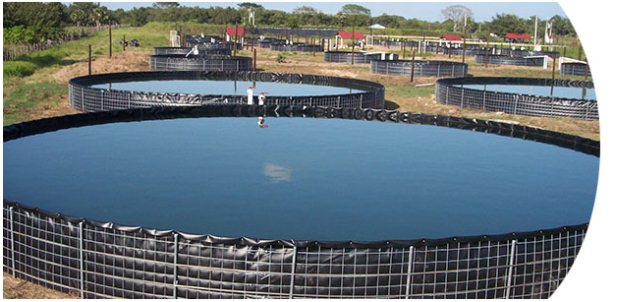
This is the most critical factor in ensuring a successful crop. To maintain temperatures within the tolerable range for Pacific white shrimp (Litopenaeus vannamei), nursery and grow-out ponds must be equipped with covers made from tarpaulin or other polymer materials. These covers should completely enclose the ponds to block drafts and external temperature fluctuations. Pond water levels should be maintained at 1.5 meters, and water color should remain stable throughout the crop cycle.
Feed Management
After stocking, shrimp should be fed entirely with commercial feeds. Additionally, supplements such as minerals, probiotics, and vitamins (C, E, etc.) should be provided to enhance shrimp immunity.
Feed 0.6–0.8 kg per 100,000 PL12 shrimp per day, increasing every two days by 0.2–0.3 kg per 100,000 shrimp.
From day 30 onward, use feeding trays and other techniques, such as regularly sampling shrimp to monitor growth, examining gut contents, and observing water color changes. Use experience-based observations (e.g., weather conditions, molting stages, sand presence in trays, shrimp jumping at night due to noise or light) to assess shrimp health and adjust feeding quantities accordingly.
Feed four times daily at 7 a.m., 11 a.m., 4 p.m., and 9 p.m. Feeding trays are essential for monitoring feed consumption, shrimp health, survival rates, and pond bottom conditions.
Pond Environment Management
Water introduced or added to ponds should pass through fine mesh filters, and levels of heavy metals (e.g., Cu, Zn, Fe) and harmful gases (H₂S, NH₃, SO₂) must be checked.
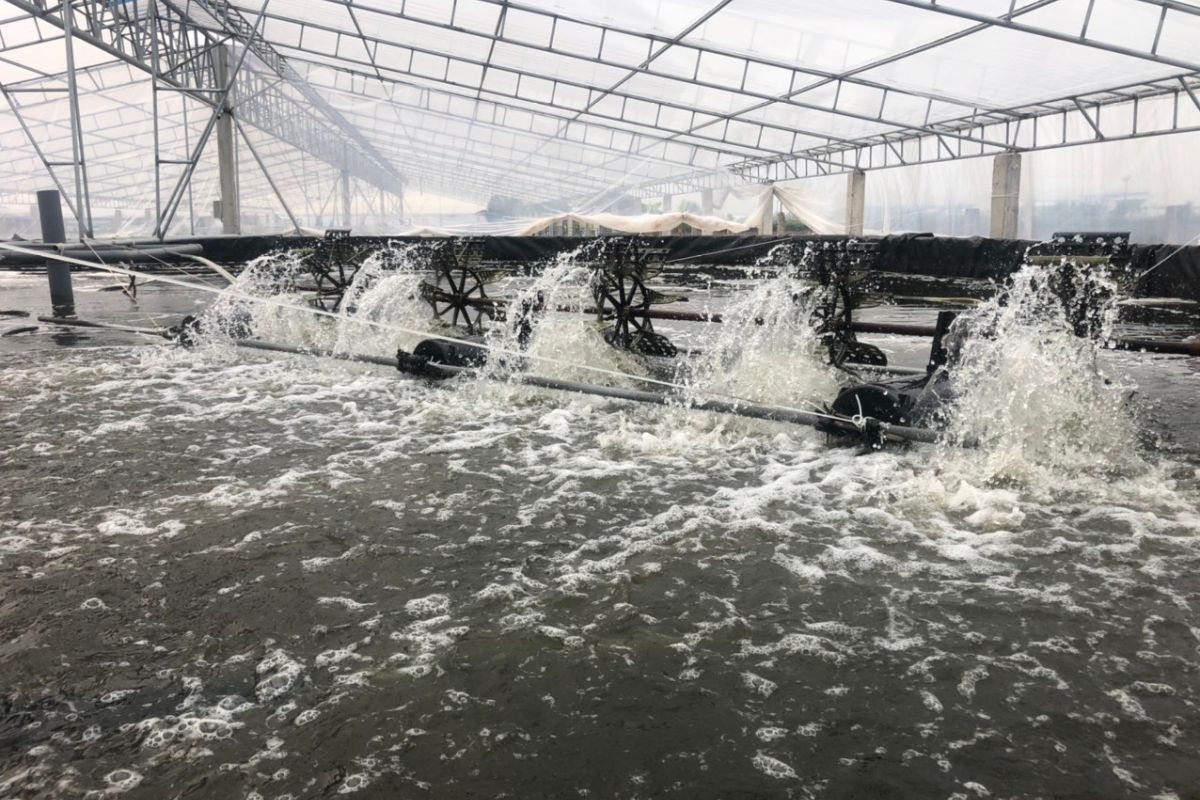
Since indoor shrimp farming limits oxygen diffusion from the air, aerators should be operated strategically to ensure sufficient dissolved oxygen levels.
Regularly apply probiotics to minimize environmental pollution.
Maintain maximum water levels to stabilize temperatures.
Monitor and address early-stage water color instability.
Due to the high stocking density and uniform growth of shrimp, molting often occurs simultaneously, causing alkalinity levels to fluctuate. Agricultural lime should be added regularly to stabilize alkalinity.
Harvesting
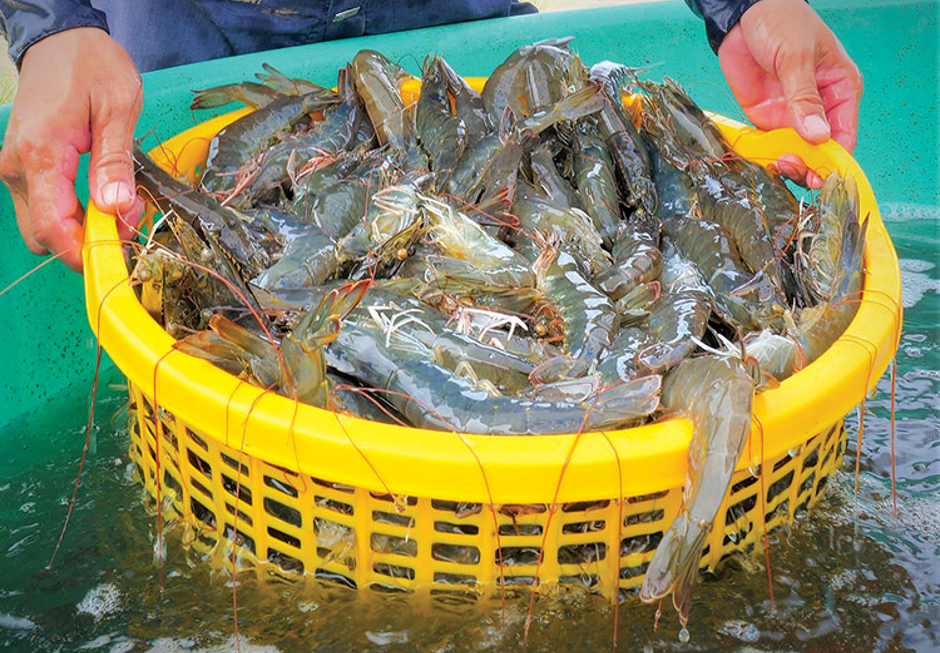
Harvest when shrimp reach 50–60 pieces per kilogram. Before harvesting, monitor the molting cycle to avoid soft-shell shrimp.
Consistently monitor environmental factors to ensure they remain within suitable ranges. If abnormalities occur in the pond, report them to relevant authorities for timely intervention.
By MSc. Nguyen Trung, Hai Phong Agricultural Extension Center
Contact AQUA MINA for consultation and supply of aquaculture round tanks and aquaculture equipment for high-tech shrimp farming.
- Address: 685 National Highway 1A, Binh Hung Hoa Ward, Binh Tan District, Ho Chi Minh City
- Phone: 1800 6071 (Toll-free hotline)
- Email: sales@aquamina.com.vn or oversea@aquamina.com.vn
Aqua Mina's distributor in Japan:
REX INDUSTRIES CO., LTD
- Address: 1-9-3 Hishiya-Higashi, Higashi-Osaka 578-0948 JAPAN
- Email: kimakubo@rexind.co.jp
- Phone: +81-(0)72-961-9893
- Website: http://www.rexind.co.jp/e/
WE WORK FOR YOUR SUCCESS!
Ngày đăng : 09/12/2024
2343 View


Other Articles
Ca Mau, Can Tho and An Giang Play a Leading Role in Vietnam’s Shrimp Industry
Protecting rice-shrimp yields against environmental fluctuations caused by prolonged rain
AQUA MINA Turbo Blower: Quiet, Energy-Efficient Air Supply for Aquaculture Ponds
AQUA MINA has accompanied the experimental tank system project at Can Tho University from its very early days
AQUA MINA AMONG 20 OUTSTANDING PRESENTATIONS AT THE WORKSHOP ON APPLYING SCIENCE AND TECHNOLOGY TO IMPROVE THE QUALITY OF VIETNAM’S AQUATIC PRODUCTS
Vietnam’s Shrimp Farming Industry Enters the High-Tech Race
The U.S. market relies heavily on imported shrimp to bridge its domestic supply gap
The 2028 supply crisis: The shrimp industry is projected to face a 400,000-ton material shortage
High profits from high-tech shrimp farming come with persistent risks
Intensifying El Niño Effect: Climate Change Risks Threaten the Global Shrimp Supply Chain
Evaluating Gaps in the Circular Economy Value Chain of the Shrimp Industry
A Comprehensive Overview of the Vietnamese Shrimp Industry


.jpg)