



How to Ferment Rice Bran for Shrimp Feed
Starchy feeds like rice bran, corn bran, and wheat flour (cassava flour) already contain essential nutrients for animal feed. To enhance their effectiveness, it’s important to find the right method for fermenting rice bran for shrimp, fish, buffalo, cows, and more.
* Instructions for Fermenting Rice Bran for Shrimp and Fish Feed
I. Ingredients:
- 20 kg of rice bran, corn bran, or cassava flour (tapioca). Note: Do not use moldy bran.
- 100 ml of molasses.
- 20 ml of biological product (EM original).
- 6-7 liters of clean water.
II. How to Ferment Rice Bran for Shrimp and Fish:
- Step 1: Spray about 6-7 liters of clean water evenly over 20 kg of rice bran and knead thoroughly by hand until smooth.
- Step 2: Mix the biological product: 20 ml of EM original + 100 ml of molasses into 250 ml of clean water.
- Step 3: Spray the mixture of biological product and molasses evenly over the rice bran from Step 1. Mix well, then cover and ferment the mixture for 3-4 days, after which it’s ready to use.
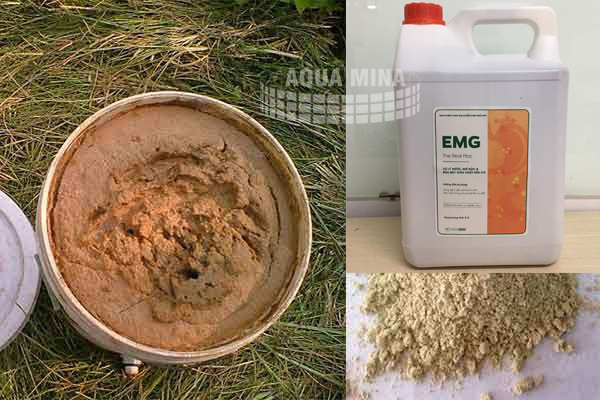
The fermented feed will have a slightly sour, pleasant aroma and is a rich source of nutrients for shrimp, fish, buffalo, cows, chickens, ducks, and more.
Note:
- The fermented feed provides the best nutritional value within 5-7 days. The longer it is stored, the sourer it becomes, losing nutritional value.
III. Why Ferment Rice Bran with EM for Shrimp Feed
- Rice bran, corn, and cassava are inexpensive ingredients that help reduce investment costs.
- It strengthens the immune system of shrimp, fish, etc., reducing the risk of digestive diseases.
- When rice bran, corn, and cassava are combined with EMG (Effective Microorganisms), the feed becomes highly nutritious. This is due to the presence of yeast, photosynthetic bacteria, Bacillus mesentericus, and Bacillus subtilis (gram-positive bacteria that break down starch in the bran and work in harmony with the biological product), and Bacillus megaterium, a nutrient bacterium that interacts with molasses.
This explains why many farmers ferment rice bran to feed shrimp, fish, pigs, cows, goats, chickens, and ducks. It is a low-cost, homemade feed with high nutritional value, promoting healthy animal growth and providing economic benefits.
Ngày đăng : 19/09/2024
3467 View


Other Articles
Ca Mau, Can Tho and An Giang Play a Leading Role in Vietnam’s Shrimp Industry
Protecting rice-shrimp yields against environmental fluctuations caused by prolonged rain
AQUA MINA Turbo Blower: Quiet, Energy-Efficient Air Supply for Aquaculture Ponds
AQUA MINA has accompanied the experimental tank system project at Can Tho University from its very early days
AQUA MINA AMONG 20 OUTSTANDING PRESENTATIONS AT THE WORKSHOP ON APPLYING SCIENCE AND TECHNOLOGY TO IMPROVE THE QUALITY OF VIETNAM’S AQUATIC PRODUCTS
Vietnam’s Shrimp Farming Industry Enters the High-Tech Race
The U.S. market relies heavily on imported shrimp to bridge its domestic supply gap
The 2028 supply crisis: The shrimp industry is projected to face a 400,000-ton material shortage
High profits from high-tech shrimp farming come with persistent risks
Intensifying El Niño Effect: Climate Change Risks Threaten the Global Shrimp Supply Chain
Evaluating Gaps in the Circular Economy Value Chain of the Shrimp Industry
A Comprehensive Overview of the Vietnamese Shrimp Industry









.jpg)