



Measures sought to boost Mekong Delta shrimp sector growth
Data from the Vietnam Directorate of Fisheries under the Ministry of Agriculture and Rural Development (MARD), last year, showed the total brackish water shrimp farming area was 747,000 hectares, with total output of over 1 million tonnes, up 8.5% year on year.
Currently, the country has 2,294 hectares of shrimp fry farming area, with last year’s production of 159.5 billion shrimp fry.
This year, the country aims to expand shrimp farming area to 750,000 hectares and an output of more than 1 million tonnes. The sector expected 4.3 billion USD from shrimp exports, the same as last year’s revenue.

Participants discussed issues related to the quality and food safety management of shrimp products, trade and market promotion activities, production in value chain, the sustainability of the sector, and shrimp fry quarantine.
Truong Dinh Hoe, General Secretary of the Vietnam Association of Seafood Exporters and Producers (VASEP), said that amid difficulties in export markets, more efforts are needed to meet the goal of 4.3 billion USD in export revenue.
MARD Deputy Minister Phung Duc Tien held that in order to reach the target, localities with shrimp farms should connect with each other and with associations and sectors engaging in the production chain to ensure the smooth operation of the whole chain, while strengthening food safety inspection to enhance the quality of the products for domestic consumption and export.
“Besides, it is necessary to strictly implement regulations in farming conditions, farming registration, and quality of animal feed and fry, and improve the weather and environment forecast accuracy to avoid risks for farmers”, he said.
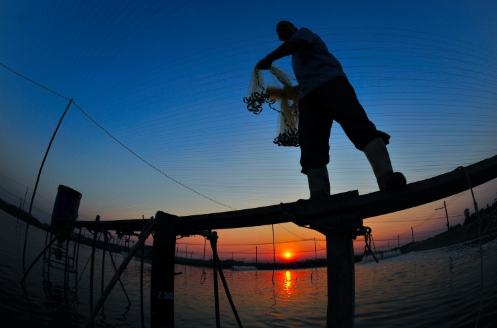
Tien advised businesses and farmers to build suitable plans and prepare conditions to become proactive in production amid extreme weather and environmental conditions such as drought, saltwater intrusion, and shrimp diseases, as well as a hike and input material costs. “They should connect to each other in production in chain to cut costs, while applying high production standards such as VietGAP, GlobalGAP and ASC”, he added.
Cre: Vietnam plu


Ca Mau, Can Tho and An Giang Play a Leading Role in Vietnam’s Shrimp Industry
Protecting rice-shrimp yields against environmental fluctuations caused by prolonged rain
AQUA MINA Turbo Blower: Quiet, Energy-Efficient Air Supply for Aquaculture Ponds
AQUA MINA has accompanied the experimental tank system project at Can Tho University from its very early days
AQUA MINA AMONG 20 OUTSTANDING PRESENTATIONS AT THE WORKSHOP ON APPLYING SCIENCE AND TECHNOLOGY TO IMPROVE THE QUALITY OF VIETNAM’S AQUATIC PRODUCTS
Vietnam’s Shrimp Farming Industry Enters the High-Tech Race
The U.S. market relies heavily on imported shrimp to bridge its domestic supply gap
The 2028 supply crisis: The shrimp industry is projected to face a 400,000-ton material shortage
High profits from high-tech shrimp farming come with persistent risks
Intensifying El Niño Effect: Climate Change Risks Threaten the Global Shrimp Supply Chain
Evaluating Gaps in the Circular Economy Value Chain of the Shrimp Industry
A Comprehensive Overview of the Vietnamese Shrimp Industry












.jpg)
