

Tilapia to expand to brackish water and estuarine sites in the Philippines
The University of the Philippines Visayas (UPV), with support from the Philippine Council for Agriculture, Aquatic andNatural Resources Research and Development of the Department of Science and Technology (DOST-PCAARRD), has developed a UPV Saline tolerant Population of improved Nilotica (SPIN) tilapia strain.
The strain was designed to thrive in brackish water and estuarine environments to prevent mass mortalities due to saltwater intrusions, caused by the rising seawater levels in tilapia-producing areas.
Tilapia is the second largest aquaculture-produced fish species in the Philippines with a total production of 281,114 metric tons valued at PHP 24.26 billion (USD 432 million) in 2021. However, the industry is currently exhibiting minimal or slow growth due to the saturated production systems in lakes and cages. To expand production, tilapia farming is expected to expand to estuarine and brackish coastal areas.
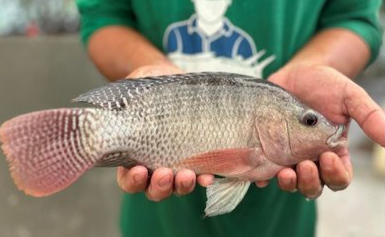
Aside from the UPV SPIN, two other saline-tolerant tilapia strains were also developed in the Philippines: the Bureau of Fisheries and Aquatic Resources-Brackishwater Enhanced Selected Tilapia (BFAR-BEST), and the BFAR-Molobicus strain.
“UPV tested the growth and production performance of these Philippine-developed saline-tolerant tilapia strains in saline and brackishwater ecosystems. Results showed that UPV SPIN and BFAR BEST exhibited faster growth and high survival rates in brackish water, high-saline pond systems as well as in brackish water estuarine earthen ponds. These strains attained the harvestable size of 250 grams in about 100 days. On the other hand, UPV SPIN showed the best growth performance in estuarine cage culture sites compared to two other tilapia strains, researchers said.
Cre: Hatchery Feed Management


Ca Mau, Can Tho and An Giang Play a Leading Role in Vietnam’s Shrimp Industry
Protecting rice-shrimp yields against environmental fluctuations caused by prolonged rain
AQUA MINA Turbo Blower: Quiet, Energy-Efficient Air Supply for Aquaculture Ponds
AQUA MINA has accompanied the experimental tank system project at Can Tho University from its very early days
AQUA MINA AMONG 20 OUTSTANDING PRESENTATIONS AT THE WORKSHOP ON APPLYING SCIENCE AND TECHNOLOGY TO IMPROVE THE QUALITY OF VIETNAM’S AQUATIC PRODUCTS
Vietnam’s Shrimp Farming Industry Enters the High-Tech Race
The U.S. market relies heavily on imported shrimp to bridge its domestic supply gap
The 2028 supply crisis: The shrimp industry is projected to face a 400,000-ton material shortage
High profits from high-tech shrimp farming come with persistent risks
Intensifying El Niño Effect: Climate Change Risks Threaten the Global Shrimp Supply Chain
Evaluating Gaps in the Circular Economy Value Chain of the Shrimp Industry
A Comprehensive Overview of the Vietnamese Shrimp Industry


.jpg)