

Impact and Harm of Toxic Gases NH3-NO2 in Shrimp Ponds
1. Sources
The primary sources of toxic gases NH3 and NO2 in shrimp ponds are nitrogen compounds derived from:
- Shrimp Waste: During feeding, shrimp absorb only 25% of the protein in their food. The remaining 75% is excreted as waste.
- Feed: Some protein in the feed dissolves into the water. Excess feed that is not consumed falls to the pond bottom, leading to pollution.
- Decomposing Shrimp and Algae: Dead shrimp and fallen algae decompose, releasing nitrogen compounds.
- Contaminated Water Sources: Water from rivers that enter the pond may carry decomposing plant and animal matter, as well as excess fertilizers like urea and NPK.
2. Mechanism
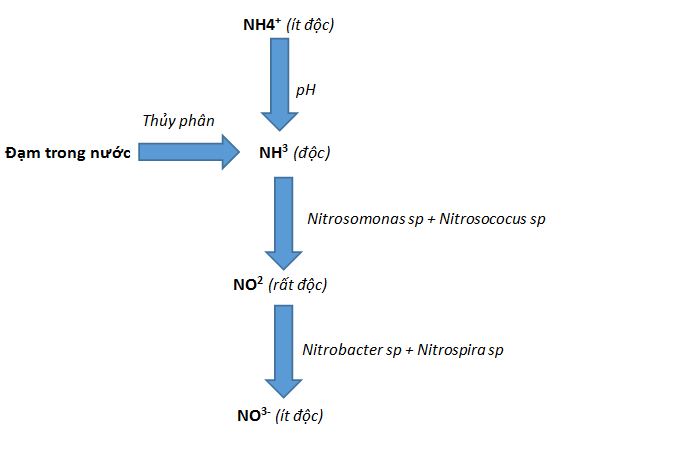
- When pH is between 7.5 and 8.5, ammonia (NH4+) predominates. Although the environment is suboptimal, it does not severely affect shrimp.
- When pH exceeds 9, ammonia (NH3) becomes dominant, which has a significant negative impact on shrimp.
- Specifically, the bacteria Nitrobacter sp. and Nitrosomonas sp. are aerobic microorganisms that thrive and function effectively in high dissolved oxygen environments.
- Dissolved Oxygen's Role: High levels of dissolved oxygen are critical for detoxifying NH3. Adequate oxygen accelerates the nitrification process. This process occurs naturally but relies on low bacterial populations and low dissolved oxygen in natural settings, leading to slow nitrate formation. This slow process causes NH3 and NO2 levels to rise quickly, resulting in high concentrations in the pond. Consequently, shrimp growth is slowed, and mortality risk increases.
3. Symptoms of Toxic Gas Impact on Shrimp
- Slow growth.
- Shrimp gathering near the surface or gasping for air.
- Disease outbreaks and mass mortality.
4. Management Strategies
- Use Beneficial Bacteria: Apply beneficial bacteria at the start and regularly to increase beneficial microorganism levels in the pond.
- Increase Dissolved Oxygen: Ensure high levels of dissolved oxygen.
- Maintain pH Balance: Keep pH levels within the acceptable range, avoiding extremes.
- Prevent Overfeeding: Adjust feeding amounts, especially in cooler temperatures, to avoid excess feed.
- Regular Water Changes: Perform water changes periodically to manage toxin levels.
Ngày đăng : 14/08/2024
2132 View


Other Articles
Ca Mau, Can Tho and An Giang Play a Leading Role in Vietnam’s Shrimp Industry
Protecting rice-shrimp yields against environmental fluctuations caused by prolonged rain
AQUA MINA Turbo Blower: Quiet, Energy-Efficient Air Supply for Aquaculture Ponds
AQUA MINA has accompanied the experimental tank system project at Can Tho University from its very early days
AQUA MINA AMONG 20 OUTSTANDING PRESENTATIONS AT THE WORKSHOP ON APPLYING SCIENCE AND TECHNOLOGY TO IMPROVE THE QUALITY OF VIETNAM’S AQUATIC PRODUCTS
Vietnam’s Shrimp Farming Industry Enters the High-Tech Race
The U.S. market relies heavily on imported shrimp to bridge its domestic supply gap
The 2028 supply crisis: The shrimp industry is projected to face a 400,000-ton material shortage
High profits from high-tech shrimp farming come with persistent risks
Intensifying El Niño Effect: Climate Change Risks Threaten the Global Shrimp Supply Chain
Evaluating Gaps in the Circular Economy Value Chain of the Shrimp Industry
A Comprehensive Overview of the Vietnamese Shrimp Industry


.jpg)