

Why modern farms prioritize lining ponds with HDPE geomembrane?
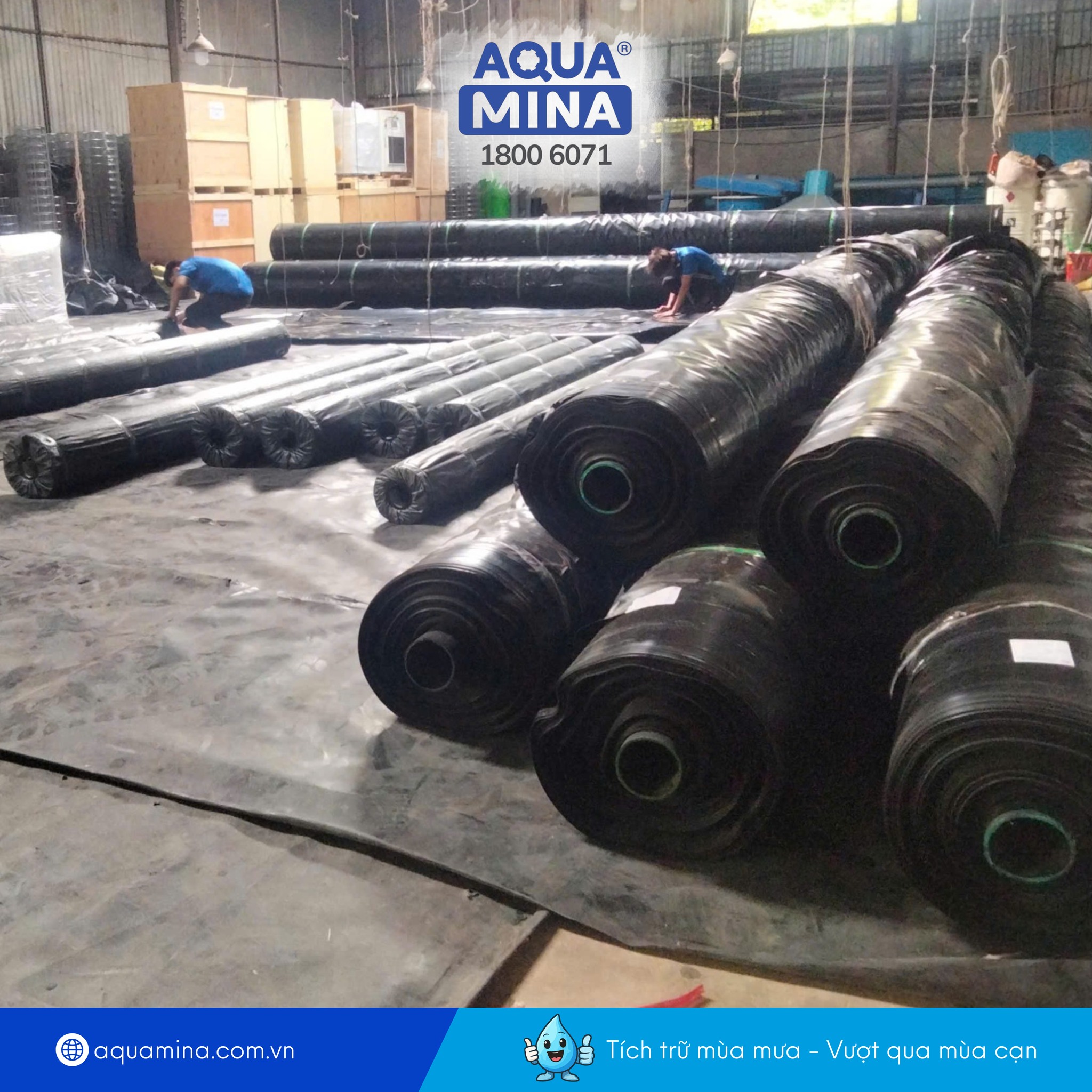
What is HDPE geomembrane? HDPE (High-Density Polyethylene) geomembrane is a high-density polyethylene plastic material specially manufactured for waterproofing water containment structures. In aquaculture, HDPE geomembranes are used to line the bottom and banks of ponds, helping to create a clean, stable, and easily manageable culture environment. With UV resistance, chemical corrosion resistance, and a long lifespan, HDPE geomembranes are increasingly applied in shrimp and fish farming, breeding, and water treatment models.
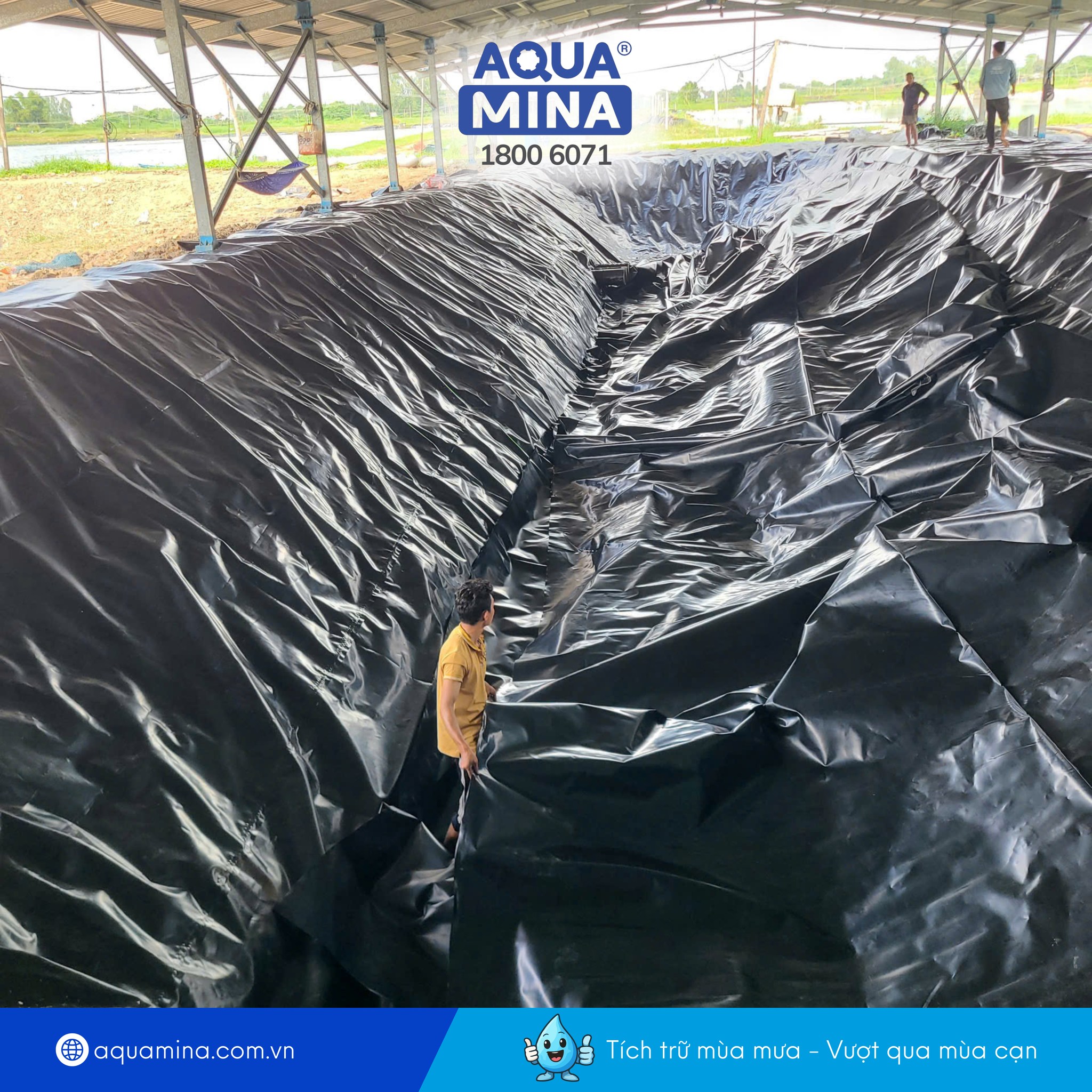
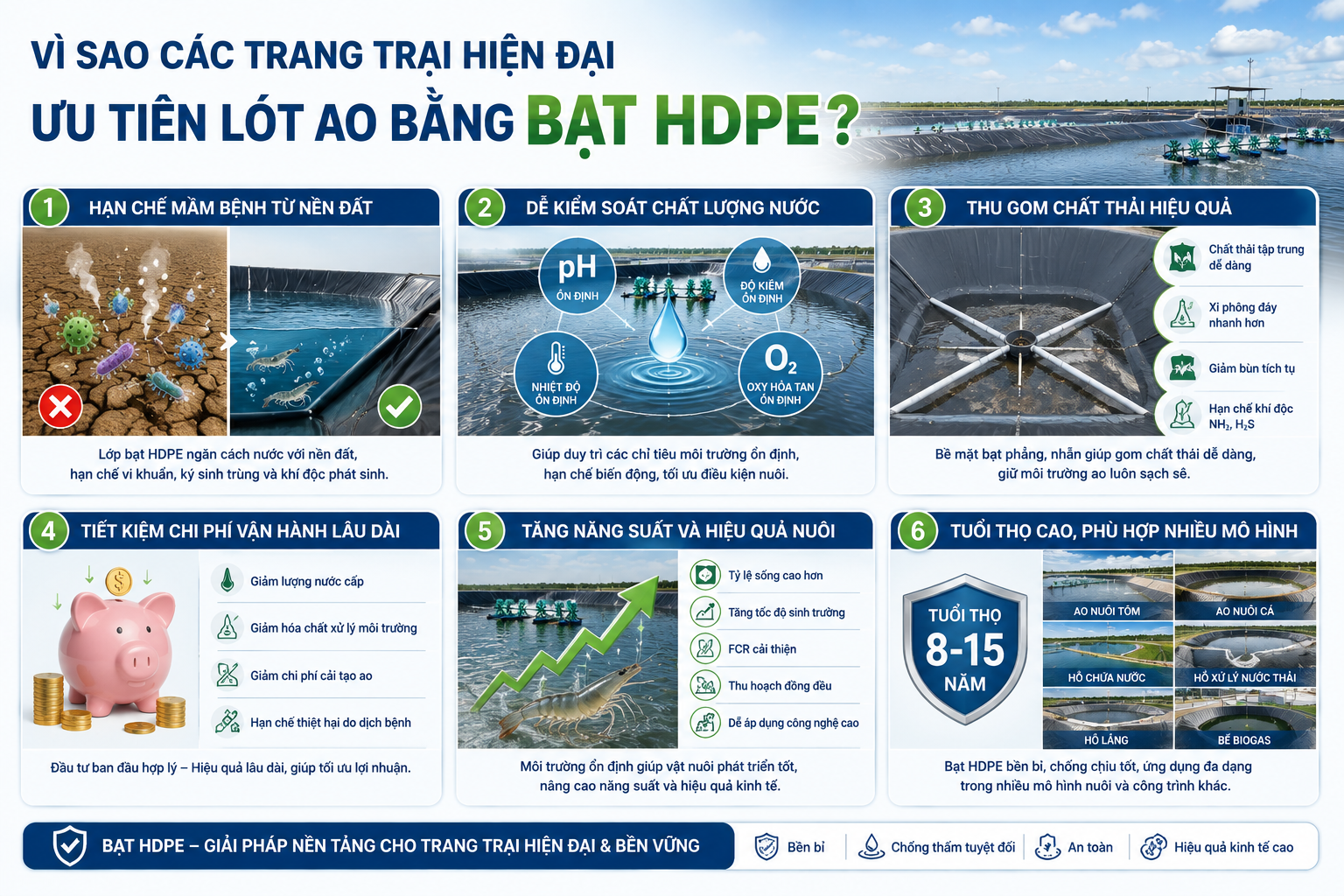
1. Limiting pathogens from the soil Traditional earthen ponds often harbor bacteria, parasites, and residual pathogens from previous culture cycles. When using HDPE geomembranes, the isolation layer between water and soil helps to:
-
Reduce the risk of pathogen spread.
-
Limit toxic gases generated from bottom sludge.
-
Decrease the growth of harmful microorganisms. As a result, the culture environment remains more stable, contributing to higher survival rates for farmed species.
2. Easier water quality control Water quality is one of the decisive factors for a successful culture cycle. HDPE-lined ponds help to:
-
Prevent water seepage into the soil.
-
Easily control pH, alkalinity, and environmental parameters.
-
Minimize water loss during the dry season.
-
Keep external polluted water from seeping into the pond. This is particularly important for high-density farming models.
3. Efficient waste collection The flat and smooth surface of a lined pond bottom helps to:
-
Facilitate easy waste concentration.
-
Speed up bottom siphoning.
-
Reduce accumulated sludge.
-
Limit the generation of toxic gases such as NH3 and H2S. Consequently, farmers save labor on pond cleaning and reduce environmental treatment costs.
4. Saving long-term operating costs The initial investment cost for HDPE geomembranes may be higher than traditional earthen ponds. However, in the long run, farmers save significantly due to:
-
Reduced water replenishment.
-
Reduced environmental treatment chemicals.
-
Lower pond renovation costs after each culture cycle.
-
Minimized disease-related losses. This is an investment that delivers sustainable economic efficiency.
5. Increasing productivity and farming efficiency When the environment is well-controlled, farmed animals grow healthier. Many farms report benefits such as:
-
Higher survival rates.
-
Accelerated growth speed.
-
Improved Feed Conversion Ratio (FCR).
-
Uniform harvest.
-
Easier application of high-tech farming models. This is why large-scale farms prioritize investing in HDPE-lined ponds from the beginning.
6. High durability, suitable for various models High-quality HDPE geomembranes can last from 8–15 years (or longer depending on construction and operational conditions). In addition to shrimp ponds, this material is also applied to:
-
Fish ponds.
-
Water reservoirs.
-
Wastewater treatment ponds.
-
Settling ponds.
-
Agricultural irrigation water reservoirs.
-
Biogas digesters and other waterproofing structures. Thanks to its high durability, it is a preferred solution chosen by many modern enterprises and farms.
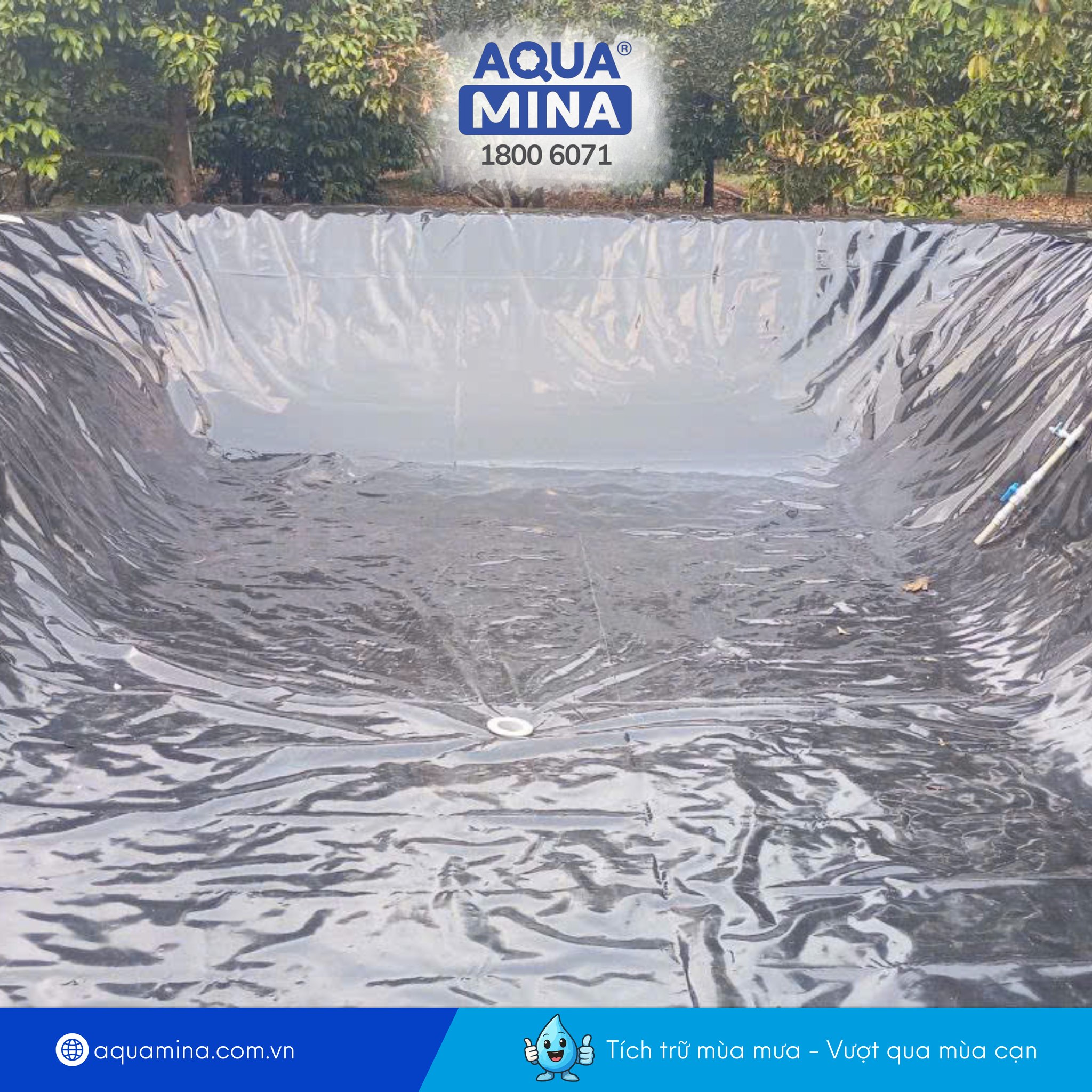
When should you invest in HDPE pond lining? You should consider using HDPE geomembranes if you want to:
-
Transition to high-tech farming models.
-
Farm at high densities.
-
Frequently encounter disease issues.
-
Deal with water-seeping ponds.
-
Reduce operating costs over many years.
-
Aim for sustainable production and increased productivity.
Conclusion In the context of aquaculture increasingly demanding high productivity, quality, and risk control capabilities, HDPE geomembranes have become an almost indispensable solution for modern farms. Investing in HDPE pond lining not only helps control the culture environment better but also reduces operating costs, limits diseases, and builds a foundation to apply advanced farming technologies. This is a long-term investment that brings sustainable value to farmers.
AQUA MINA CO., LTD
WE WORK FOR THE SUCCESS


Ca Mau, Can Tho and An Giang Play a Leading Role in Vietnam’s Shrimp Industry
Protecting rice-shrimp yields against environmental fluctuations caused by prolonged rain
AQUA MINA Turbo Blower: Quiet, Energy-Efficient Air Supply for Aquaculture Ponds
AQUA MINA has accompanied the experimental tank system project at Can Tho University from its very early days
AQUA MINA AMONG 20 OUTSTANDING PRESENTATIONS AT THE WORKSHOP ON APPLYING SCIENCE AND TECHNOLOGY TO IMPROVE THE QUALITY OF VIETNAM’S AQUATIC PRODUCTS
Vietnam’s Shrimp Farming Industry Enters the High-Tech Race
The U.S. market relies heavily on imported shrimp to bridge its domestic supply gap
The 2028 supply crisis: The shrimp industry is projected to face a 400,000-ton material shortage
High profits from high-tech shrimp farming come with persistent risks
Intensifying El Niño Effect: Climate Change Risks Threaten the Global Shrimp Supply Chain
Evaluating Gaps in the Circular Economy Value Chain of the Shrimp Industry
A Comprehensive Overview of the Vietnamese Shrimp Industry


.jpg)