


Turkey: A strategic stepping stone for Vietnamese products to expand into Middle Eastern and European markets
Turkey: A Billion-Dollar Transit Hub and the Halal Key for Vietnamese Agri-Seafood
While Turkey offers immense geo-economic advantages, experts emphasize that turning this potential into actual orders requires Vietnamese enterprises to standardize quality, build systematic strategies, and crucially, master Halal standards.
The Gateway Connecting Three Continents
At a seminar on the Turkish market on July 21, the Trade Promotion Agency highlighted Turkey as the golden gateway linking Europe, the Middle East, and North Africa. Boasting a domestic market of 86 million people with a growing middle class, a Customs Union with the EU, and nearly 40 FTAs, Turkey serves as an ideal logistics launchpad for Vietnamese goods.
Data from the first half of 2026 reveals highly optimistic trends: bilateral trade turnover reached $1.39 billion, with Vietnamese exports surging by 32%. The trade structure between the two nations is deeply complementary. Turkey's high demand for raw agricultural and seafood materials for its processing and re-export sectors allows Vietnam to integrate deeper into regional supply chains. Furthermore, diversifying into this market helps Vietnamese goods mitigate risks stemming from rising protectionism in traditional markets.

Overcoming the Halal Barrier to Seize Opportunities
According to the Vietnam Academy of Social Sciences, the potential for Vietnamese goods in Turkey spans multiple sectors:
-
Agriculture & Spices: Coffee, pepper, cinnamon, and star anise show massive potential. Specialty rice (such as ST25 and glutinous rice) and cashews are gaining traction due to the growing Asian expatriate community.
-
Fruits & Vegetables: Fresh fruits (dragon fruit, pomelo, coconut) and dried fruits/juices cater perfectly to the rising healthy snacking trend.
-
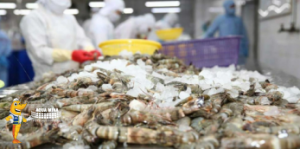
Seafood: Vietnam is currently the number one supplier of pangasius to Turkey. Frozen shrimp also enjoys substantial growth room within the HORECA (Hotel, Restaurant, Café) sector.
However, the ticket to enter this market is strict. Turkey is establishing itself as a regional Halal trade hub. Tightening Halal certification is not a negative trade barrier, but a move to enhance market reliability. Alongside phytosanitary and traceability requirements, Halal certification has become a prerequisite. Enterprises that proactively standardize their production processes and secure this certification early will hold a distinct competitive edge.
AQUA MINA CO., LTD
WE WORK FOR THE SUCCESS


Ca Mau, Can Tho and An Giang Play a Leading Role in Vietnam’s Shrimp Industry
Protecting rice-shrimp yields against environmental fluctuations caused by prolonged rain
AQUA MINA Turbo Blower: Quiet, Energy-Efficient Air Supply for Aquaculture Ponds
AQUA MINA has accompanied the experimental tank system project at Can Tho University from its very early days
AQUA MINA AMONG 20 OUTSTANDING PRESENTATIONS AT THE WORKSHOP ON APPLYING SCIENCE AND TECHNOLOGY TO IMPROVE THE QUALITY OF VIETNAM’S AQUATIC PRODUCTS
Vietnam’s Shrimp Farming Industry Enters the High-Tech Race
The U.S. market relies heavily on imported shrimp to bridge its domestic supply gap
The 2028 supply crisis: The shrimp industry is projected to face a 400,000-ton material shortage
High profits from high-tech shrimp farming come with persistent risks
Intensifying El Niño Effect: Climate Change Risks Threaten the Global Shrimp Supply Chain
Evaluating Gaps in the Circular Economy Value Chain of the Shrimp Industry
A Comprehensive Overview of the Vietnamese Shrimp Industry




.jpg)