



Inauguration of De Heus's first marine fish feed plant in Vietnam
The inauguration ceremony was attended by Deputy Minister of Agriculture and Environment Vo Van Hung, Consul General of the Netherlands in Ho Chi Minh City Raïssa Marteaux, Vinh Long provincial leaders, and various industry partners.
International Standard Technology Spanning 29,300 m², the facility features a fully automated production line equipped with machinery imported from Europe and the US. The plant strictly adheres to international quality and responsible aquaculture standards, including ISO 22000, ASC Feed, and BAP. Additionally, it integrates eco-friendly solutions to optimize raw material usage and reduce energy consumption.
Experts highlight that feed accounts for the largest share of aquaculture costs, directly dictating growth rates and economic returns. A dedicated domestic plant for marine and cold-water fish feed will help farmers access tailored nutritional solutions, boost productivity, and reduce reliance on imported feed.
Sustainable Development Strategy During the event, Johan van den Ban, General Director of De Heus Vietnam and Asia, stated that this investment aligns with the company’s long-term strategy in Vietnam. By providing comprehensive nutritional and technical solutions, De Heus aims to help farmers enhance product quality and market competitiveness.
Chairman of the Vinh Long Provincial People's Committee, Tran Tri Quang, emphasized that the plant is a critical link in the aquaculture supply chain, reinforcing the province's position in attracting agricultural investments and boosting the Mekong Delta's value chain. Dutch Consul General Raïssa Marteaux also noted that the project deepens the traditional economic and innovative partnership between Vietnam and the Netherlands.
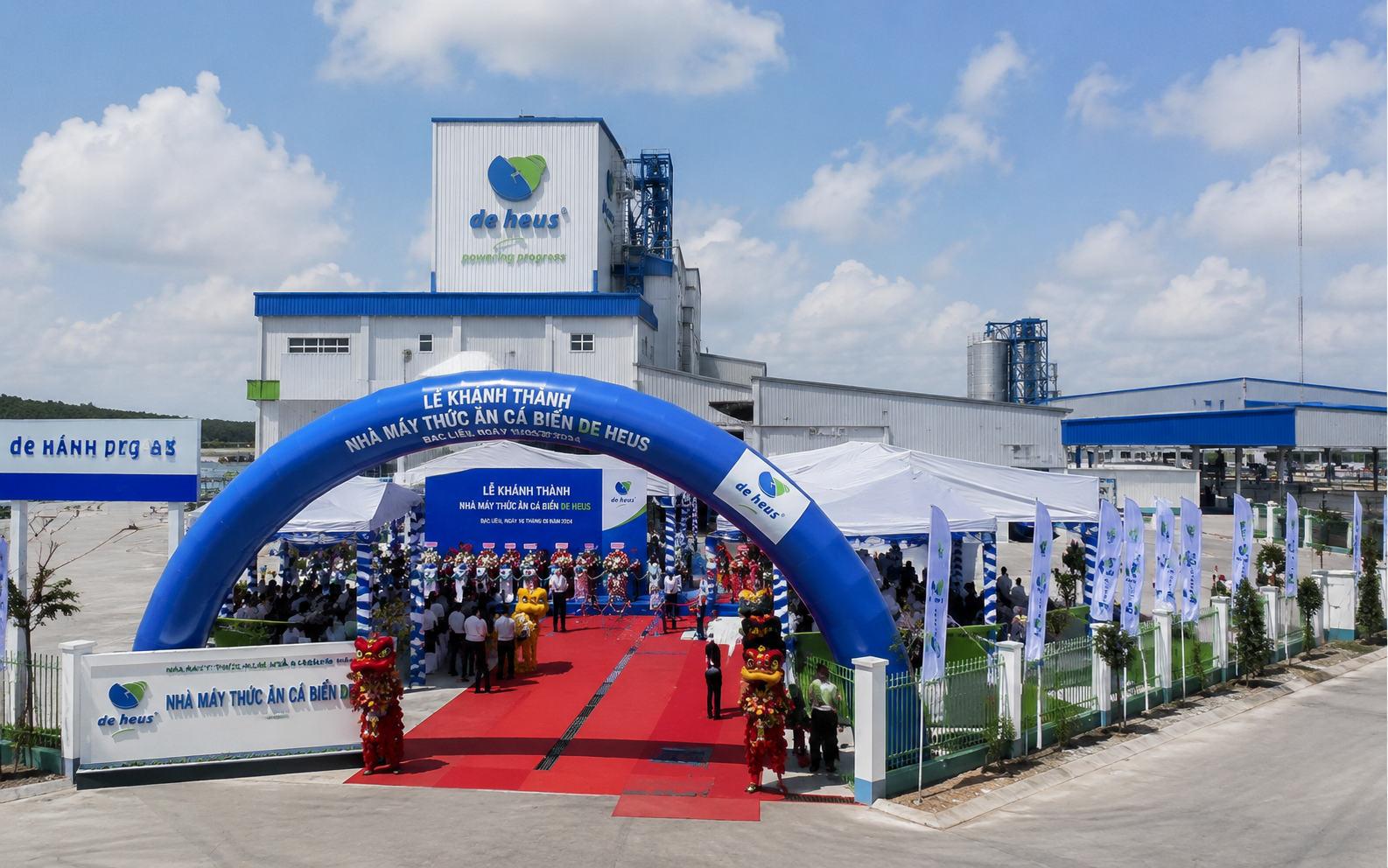
New Momentum for the Marine Economy In his directive speech, Deputy Minister Vo Van Hung highlighted that the project exemplifies Vietnam's shift toward an agriculture-based economy driven by high technology. With over 3,260 km of coastline and a marine area exceeding 1 million km², Vietnam holds immense potential for industrial marine aquaculture. Moving forward, the Ministry will focus on three main orientations:
-
Institutional Improvement: Fostering a transparent and stable investment environment.
-
Technological Innovation: Promoting digital and green transformation to enhance competitiveness.
-
Modern Value Chains: Strengthening the synergy between the State, enterprises, scientists, banks, and farmers.
The Ministry affirmed its commitment to supporting domestic and foreign enterprises in long-term production, while urging local authorities to continue improving infrastructure to maximize the impact of high-tech projects.
AQUA MINA CO., LTD
WE WORK FOR THE SUCCESS


Ca Mau, Can Tho and An Giang Play a Leading Role in Vietnam’s Shrimp Industry
Protecting rice-shrimp yields against environmental fluctuations caused by prolonged rain
AQUA MINA Turbo Blower: Quiet, Energy-Efficient Air Supply for Aquaculture Ponds
AQUA MINA has accompanied the experimental tank system project at Can Tho University from its very early days
AQUA MINA AMONG 20 OUTSTANDING PRESENTATIONS AT THE WORKSHOP ON APPLYING SCIENCE AND TECHNOLOGY TO IMPROVE THE QUALITY OF VIETNAM’S AQUATIC PRODUCTS
Vietnam’s Shrimp Farming Industry Enters the High-Tech Race
The U.S. market relies heavily on imported shrimp to bridge its domestic supply gap
The 2028 supply crisis: The shrimp industry is projected to face a 400,000-ton material shortage
High profits from high-tech shrimp farming come with persistent risks
Intensifying El Niño Effect: Climate Change Risks Threaten the Global Shrimp Supply Chain
Evaluating Gaps in the Circular Economy Value Chain of the Shrimp Industry
A Comprehensive Overview of the Vietnamese Shrimp Industry












.jpg)
