

RHODO USAGE INSTRUCTIONS AQUA MINA'S RHODOPSEUDOMONAS BACTERIA PRODUCT
Aqua Mina provides guidance on the method of cultivating Rhodo | Purple bacteria.
.jpg)
Incubation Guidelines:
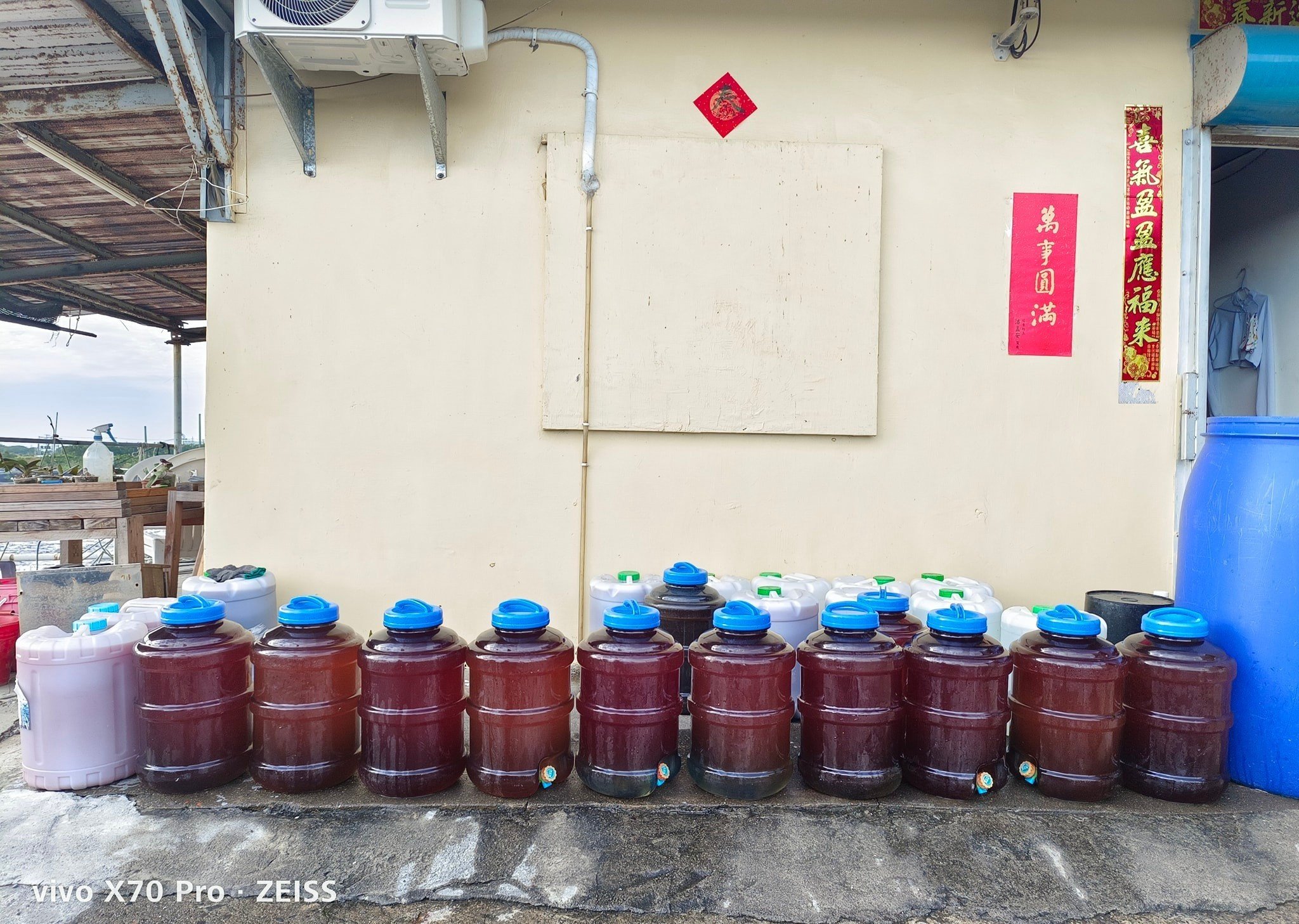
Mix 20 liters of purple bacteria with 20 liters of nutrient medium in clean water to make a 1000L solution. Ferment for 7 - 10 days under sufficient light conditions, stirring continuously daily. Use red or LED agricultural lamps at night. Cover to avoid rain when necessary.

Instructions for Use:
Use 1000L of purple bacteria biomass for 50,000-100,000 m3 to treat aquaculture water, depending on the organic matter content and farming practices. The product can be used in freshwater, brackish water, and saltwater environments. It can be applied directly in the morning or combined with sugar cane molasses in the evening.

Usage Notes:
Do not use pond water to propagate purple bacteria biomass. Bioreactors for biomass cultivation need to be cleaned regularly.
Application Methods:
1. Reduce the concentration of toxic gases H2S, NH3, NO2 (better when combined with EM products).
2. Support the growth of beneficial algae with mineral supplementation.
3. Prevent the growth of harmful algae.
4. Inhibit harmful bacteria such as Vibrio spp., Aeromonas spp... in aquaculture ponds.
5. Decompose suspended organic matter in water, clean aquaculture water.
6. Color the water, improve water quality.
Product Introduction and Composition:
Purple bacteria biopreparations consist of microorganisms belonging to the Rhodopseudomonas spp. group, purple non-sulfur bacteria (PNSB) widely distributed in nature, mainly in anaerobic aquatic environments, with sufficient light such as lakes, soil, marshes, and seas.
Rhodopseudomonas spp. are versatile microorganisms, most of which exhibit four metabolic modes: photoautotrophic, photoheterotrophic, chemoheterotrophic, and chemoautotrophic, transitioning between modes depending on available conditions. This metabolic flexibility allows purple bacteria to use inorganic and organic compounds as carbon and energy sources in anaerobic or microaerobic conditions.
Therefore, Rhodopseudomonas is widely used in aquaculture and wastewater treatment. Purple bacteria are rich in biologically active substances, including proteins, vitamins, polysaccharides, pantothenic acid, and folic acid, which can be added to animal feed. It can also reduce CO2 levels in aquaculture water, stabilize pH, and clean the aquaculture water environment. It has the ability to reduce the concentration of toxic gases H2S, NH3, NO2. Currently, supplementing Rhodopseudomonas in aquaculture water can enhance productivity, disease resistance, and water quality simultaneously.
Ngày đăng : 29/04/2024
5689 View


Other Articles
Ca Mau, Can Tho and An Giang Play a Leading Role in Vietnam’s Shrimp Industry
Protecting rice-shrimp yields against environmental fluctuations caused by prolonged rain
AQUA MINA Turbo Blower: Quiet, Energy-Efficient Air Supply for Aquaculture Ponds
AQUA MINA has accompanied the experimental tank system project at Can Tho University from its very early days
AQUA MINA AMONG 20 OUTSTANDING PRESENTATIONS AT THE WORKSHOP ON APPLYING SCIENCE AND TECHNOLOGY TO IMPROVE THE QUALITY OF VIETNAM’S AQUATIC PRODUCTS
Vietnam’s Shrimp Farming Industry Enters the High-Tech Race
The U.S. market relies heavily on imported shrimp to bridge its domestic supply gap
The 2028 supply crisis: The shrimp industry is projected to face a 400,000-ton material shortage
High profits from high-tech shrimp farming come with persistent risks
Intensifying El Niño Effect: Climate Change Risks Threaten the Global Shrimp Supply Chain
Evaluating Gaps in the Circular Economy Value Chain of the Shrimp Industry
A Comprehensive Overview of the Vietnamese Shrimp Industry


.jpg)