


7 Interesting Facts and Current Trends in Shrimp Export
The high value of shrimp exports can also contribute to foreign exchange earnings for Indonesia. Additionally, shrimp production activities, from cultivation, harvesting, and distribution, to selling in the global market, can create economic opportunities and employment for the local population.
Here are some interesting facts and the latest trends in shrimp export that you should know before starting your vannamei shrimp export!
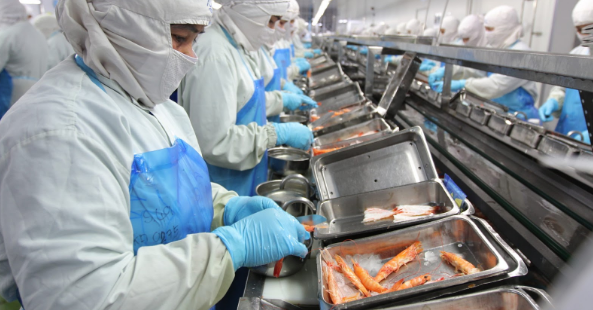
Interesting Facts and Current Trends in Shrimp Export
1. Asian Dominance as Key Players
Indonesia, India, Vietnam, China, and Thailand lead shrimp exports globally. However, the emergence of Ecuador is also something Asian countries, especially Indonesia, should be cautious about.
Moreover, Ecuadorian shrimp is relatively cheaper than Asian shrimp. Therefore, shrimp farmers and producers must remain vigilant and stay updated on current shrimp export trends.
2. Rapid Growth of the Shrimp Industry
The shrimp industry has experienced rapid growth in the last few decades. The continually increasing global demand for seafood products, coupled with technological innovations in shrimp aquaculture, has accelerated the expansion of this industry.
The increase and innovation in research and shrimp farming technology are also crucial in boosting the export volume of each country.
3. Focus on Sustainability and the Environment
Sustainability focus is a current trend in shrimp exports that is gaining significant attention from consumers. It is an effort to address the negative impacts of vannamei shrimp cultivation. Producers are now competing to adopt environmentally friendly and sustainable shrimp farming practices.
Sustainable vannamei shrimp cultivation is also supported by adequate certifications such as Best Aquaculture Practice (BAP), Global Seafood Alliance (GSA), HACCP, and CBIB certification, enhancing consumer trust in the produced products.
4. Primary Destinations for Shrimp Export
Advanced countries such as the United States, Japan, and European Union countries are the main destinations for global shrimp exports. This is because these countries are not suitable for year-round vannamei shrimp farming due to their subtropical climate.
However, to penetrate these markets, each country must comply with the standards set by each importing country.
5. Impact of the Pandemic on the Shrimp Industry
Like many other sectors, the COVID-19 pandemic has significantly impacted the shrimp industry. Decreased demand, suboptimal supply chains, and price reductions are the main issues that producers and exporters have had to face.
Therefore, after the pandemic has improved, shrimp farmers, producers, and exporters are now rising and reorganizing from scratch to regain their previous market targets.
6. Product Innovation and Value Addition
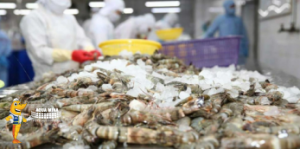
Shrimp-exporting countries, including Indonesia, are currently focusing on developing processed shrimp products with added value. Shrimp is not only exported in fresh or frozen form but is also processed into ready-to-eat foods, packaged dishes, seasoning, etc.
Certainly, with this approach, shrimp producers and exporters can be more innovative and enhance the added value of their products.
7. Importance of Research and Innovation
The last trend in shrimp export is the increasing emphasis on research and innovation in cultivation. This is to ensure the long-term sustainability and growth of the shrimp industry in Indonesia.
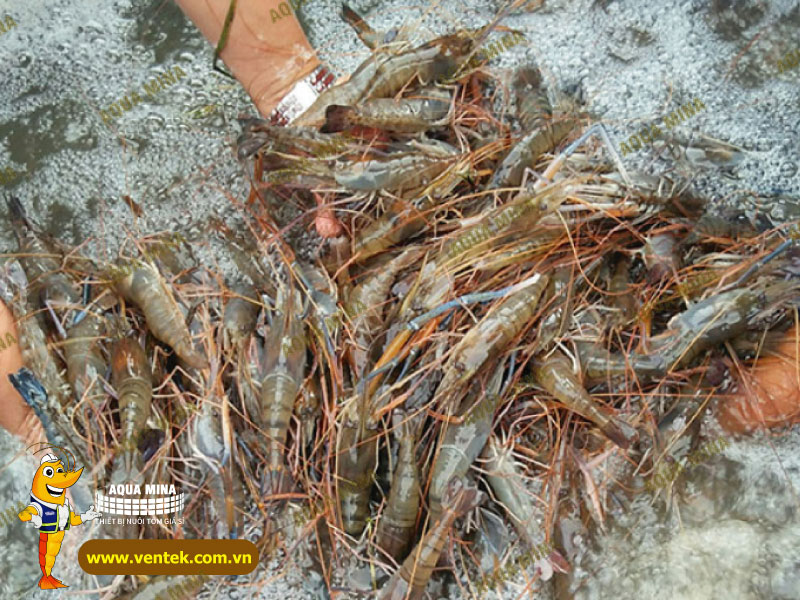
The development of more efficient shrimp farming technology, environmentally friendly processing methods, and new approaches to managing marine resources are crucial in facing future challenges.
Cre: DELOS Aqua


AQUA MINA | CELEBRATING THE 67TH ANNIVERSARY OF VIETNAM’S TRADITIONAL FISHERIES DAY
Restructuring seed production to enhance the competitiveness of the aquaculture industry
AQUA MINA COMMITS TO NO PRICE INCREASE – 15% OFF PVC Knife Gate Valves, Double Flanges, and Elbow Flanges TO SUPPORT SHRIMP AND FISH FARMERS
Global shrimp prices – Week 12: Ecuador shrimp prices recover, while India and Indonesia remain stable
The global surimi market is projected to grow strongly.
Cà Mau: Expanding the RAS-IMTA model toward sustainable, zero-discharge shrimp farming.
From seed stock to farming equipment, high-tech aquaculture attracts strong interest in Ho Chi Minh City
Shrimp industry enterprises proactively adapt to global fluctuations
DAY 3 – AQUA MINA | STRONG CONNECTIONS – A MEMORABLE CLOSING AT VIETSHRIMP AISA 2026
DAY 2 – AQUA MINA | DEEP INSIGHTS & SMART SOLUTIONS FOR MODERN AQUACULTURE
DAY 1 – AQUA MINA | A POWERFUL OPENING AT VIETSHRIMP ASIA 2026
OFFICIAL OPENING of the International-Scale Aquaculture Exhibition Series | See You Again with AQUA MINA at VietShrimp Asia 2026





.jpg)