


Situation of Whiteleg Shrimp Farming in Southeast Asian Countries
However, in recent years, the whiteleg shrimp production sector in Southeast Asia has faced numerous challenges, ranging from disease outbreaks and climate change to intense competition from other countries in the global market. As a result, farming output and export turnover have experienced significant fluctuations.
Vietnam – Accelerating Aquaculture Development
Over the past year, Vietnam achieved remarkable growth, surpassing its targets with shrimp export turnover increasing by 11.2% compared to 2021, accounting for nearly 40% of the total seafood export value — the highest level ever recorded in the country’s shrimp export history.
According to a report by the Directorate of Fisheries under the Ministry of Agriculture and Rural Development, in 2022 the total brackish water shrimp farming area reached 747,000 hectares. Of this, whiteleg shrimp farming covered more than 117,000 hectares, with output exceeding 743,000 tons, up more than 11% compared to 2021.
However, although Vietnam ranks third globally in shrimp exports, the industry still faces bottlenecks in both input supply and market access. Long-term solutions are needed to ensure sustainable development and maintain its competitive position.
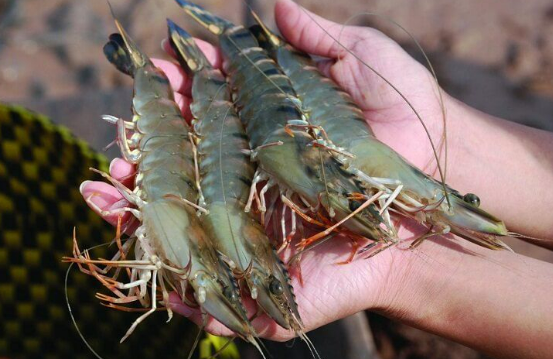
It is forecast that Vietnamese shrimp farmers will continue to face considerable challenges due to competition from major shrimp-producing countries such as Indonesia, Ecuador, and China, all of which are aiming to expand production. Ecuador’s projected shrimp output exceeds 1.5 million tons — more than double Vietnam’s whiteleg shrimp production (over 700,000 tons).
According to the national shrimp production plan, total shrimp farming area is expected to reach 750,000 hectares, of which whiteleg shrimp accounts for 120,000 hectares. Total shrimp output is targeted at 1.08 million tons, with export turnover exceeding USD 4.3 billion. Market demand is forecast to recover from the second quarter, although at lower price levels compared to previous years.
Indonesia – Toward Sustainable Aquaculture
According to VASEP, Indonesia’s shrimp production has declined in recent years, with survival rates falling from an average of 68.64% in 2021 to approximately 55.83%. Nevertheless, shrimp exports increased from 187,726 tons in 2021 to 200,975 tons.
The year ahead is expected to be challenging as shrimp prices, market demand, and farming productivity continue to decline. In West Java — the country’s main shrimp farming region — shrimp prices in January 2023 fell by 5–25% year-on-year for medium and large sizes.
With whiteleg shrimp production ranging between 210,000–220,000 tons, Indonesia’s output is comparable to Thailand’s, ranking behind Ecuador, India, and Vietnam.
To meet future demand, Indonesia has set a target of producing 2 million tons of shrimp annually by expanding farming areas to 2.9 million hectares. However, achieving this goal requires addressing infrastructure limitations, restricted access to capital, weaknesses in management and processing capacity, and lengthy, decentralized licensing procedures.
Philippines – Shrimp Production in the “New Normal”
Over the past nine years, the Philippine shrimp industry has grown by 16%. The highest growth was recorded in 2019 at 12.7%, with production reaching 64,577 tons, according to the Philippine Statistics Authority (PSA). In 2020, PSA reported a 2.9% decline to 62,705 tons, while the Bureau of Fisheries and Aquatic Resources (BFAR) recognized a lower figure of 60,000 tons.
As shrimp demand was impacted by COVID-19, Robins McIntosh (AAP, 2021) projected production at 57,000 tons. Ganancial (2021), based on lower broodstock imports, estimated production at 48,000 tons. In 2020, the Philippine shrimp industry generated approximately PHP 14.3–18.3 billion (USD 279.3–357.15 million).
Philippine shrimp exports remain modest compared to regional peers. In 2020, export turnover declined by PHP 70 million (USD 1.36 million) to PHP 20 billion (USD 389 million) due to the pandemic. Nevertheless, the country maintained traditional markets including Japan, the United States, South Korea, Taiwan, and France.
In the medium term, BFAR aims to produce 10,000 tons of whiteleg shrimp and 2,000 tons of black tiger shrimp annually, increasing to 20,000 tons and 5,000 tons respectively during the 2031–2040 period.
Source: Tep Bac
AQUA MINA CO., LTD
– Address: 685 Le Duc Anh Street, Quarter 39, Binh Hung Hoa Ward, Ho Chi Minh City
– Phone: 1800 6071 (Toll-free hotline)
– Email: sales@aquamina.com.vn or oversea@aquamina.com.vn
– Aqua Mina’s Official Distributor in Japan: REX INDUSTRIES CO., LTD
– Address: 1-9-3 Hishiya-Higashi, Higashi-Osaka 578-0948, JAPAN
– Email: kimakubo@rexind.co.jp
– Phone: +81-(0)72-961-9893
– Website: www.rexind.co.jp/e/

WE WORK FOR THE SUCCESS
Ngày đăng : 22/02/2026
1115 View


Other Articles
AQUA MINA | CELEBRATING THE 67TH ANNIVERSARY OF VIETNAM’S TRADITIONAL FISHERIES DAY
Restructuring seed production to enhance the competitiveness of the aquaculture industry
AQUA MINA COMMITS TO NO PRICE INCREASE – 15% OFF PVC Knife Gate Valves, Double Flanges, and Elbow Flanges TO SUPPORT SHRIMP AND FISH FARMERS
Global shrimp prices – Week 12: Ecuador shrimp prices recover, while India and Indonesia remain stable
The global surimi market is projected to grow strongly.
Cà Mau: Expanding the RAS-IMTA model toward sustainable, zero-discharge shrimp farming.
From seed stock to farming equipment, high-tech aquaculture attracts strong interest in Ho Chi Minh City
Shrimp industry enterprises proactively adapt to global fluctuations
DAY 3 – AQUA MINA | STRONG CONNECTIONS – A MEMORABLE CLOSING AT VIETSHRIMP AISA 2026
DAY 2 – AQUA MINA | DEEP INSIGHTS & SMART SOLUTIONS FOR MODERN AQUACULTURE
DAY 1 – AQUA MINA | A POWERFUL OPENING AT VIETSHRIMP ASIA 2026
OFFICIAL OPENING of the International-Scale Aquaculture Exhibition Series | See You Again with AQUA MINA at VietShrimp Asia 2026



.jpg)