


U.S. Anti-Dumping Duties Reduced, Vietnamese Shrimp Still Facing Increasing Competitive Pressure
According to data from Vietnam Customs in 2025, Vietnam’s shrimp exports reached a record high, with total export turnover hitting USD 4.6 billion, up 19% compared to 2024. Of this, the United States continued to play a key role, with export value reaching USD 796 million, up 5.4% and accounting for 17.2% of the country’s total shrimp export turnover.
However, in December 2025 alone, shrimp export value to the United States reached only USD 45.2 million, down 16.4% year-on-year. This development reflects a slowdown in purchasing demand among U.S. importers at the end of the year, as they proactively reduced inventories and adjusted procurement strategies amid policy and tariff uncertainties.
U.S. ANTI-DUMPING DUTIES “COOL DOWN”
In 2025, Vietnamese shrimp exported to the United States faced multiple types of tariffs, including reciprocal tariffs, countervailing duties, and anti-dumping duty risks. These factors caused fluctuations in trade remedy costs, prompting U.S. importers to be more cautious in price negotiations, risk-sharing terms, and delivery schedules.
According to the Vietnam Association of Seafood Exporters and Producers (VASEP), the U.S. Department of Commerce (DOC) has announced the final results of the 19th administrative review (POR19) of the anti-dumping duty order on frozen warmwater shrimp from Vietnam, covering the period from February 1, 2023 to January 31, 2024.
In the final results, the DOC identified two mandatory respondents subject to duties: Soc Trang Seafood Joint Stock Company (STAPIMEX) and Thong Thuan Company Limited/Thong Thuan Cam Ranh Joint Stock Company (considered a single entity “Thong Thuan/TTCR”). The DOC applied total adverse facts available (AFA) with a dumping margin of 25.76% and adjusted the cash deposit rate to 25.46% after deducting a 0.30% export subsidy offset.
For companies eligible for a separate rate but not individually examined, the DOC assigned a margin of 4.58% and a cash deposit rate of 4.28% (after deducting the same 0.30% export subsidy offset).
Compared to the preliminary results announced on June 7, 2025, the final POR19 results show positive improvement. Previously, the preliminary rate applied to STAPIMEX was 35.29%, and this rate was also applied to 22 companies in the separate-rate group that were not individually examined. Under the final results, the “separate rate” group was reduced to 4.58%, corresponding to a 4.28% cash deposit rate.
The reduction in cash deposit rates for the separate-rate group helps redefine risk expectations when signing contracts. At 4.28%, companies can offer more competitive pricing, especially for program-based or seasonal contracts. This also supports Vietnam’s ability to maintain stable supply to the U.S. market, particularly for customers prioritizing delivery reliability and compliance standards.
Regarding developments related to anti-dumping duties, VASEP stated it is considering appropriate legal actions under U.S. regulations, coordinating with businesses and relevant parties to demonstrate that Vietnamese shrimp is not dumped. The goal is to protect the legitimate interests of enterprises, farmers, and the entire Vietnamese shrimp supply chain.
INDIA GAINS TAX ADVANTAGE IN THE U.S.
Recently, U.S. President Donald Trump signed an executive order formalizing a trade agreement with India following discussions with Prime Minister Narendra Modi. Under the agreement, the United States reduced reciprocal tariffs on Indian goods from 25% to 18% and removed an additional 25% tariff imposed since August 2025. The U.S. Customs and Border Protection (CBP) agency will also refund duties where applicable.
India is one of the leading shrimp suppliers to the U.S. market. Previously, total tariffs of up to 50% caused Indian shrimp exports to the United States to decline sharply in the second half of 2025. Although the highest tariff level has been removed, Indian shrimp still faces an 18% reciprocal tariff along with existing U.S. anti-dumping and countervailing duties.
Despite trade fluctuations, India’s shrimp industry continues to grow strongly. In the first 11 months of 2025, India exported 734,593 tons of shrimp worth approximately USD 5.23 billion, up 10% in volume and 17% in value year-on-year. This indicates that U.S. tariff measures primarily redirected trade flows to other markets rather than reducing overall demand.
VIETNAMESE SHRIMP UNDER COMPETITIVE PRESSURE
VASEP assesses that India’s trade shifts during 2025–2026 are creating increasingly visible competitive pressure on Vietnam’s shrimp industry—not only in the U.S. market but especially in the EU, traditionally considered an advantage thanks to the EU–Vietnam Free Trade Agreement (EVFTA).
In the EU, if Indian shrimp benefits from equivalent or lower tariffs, its price advantage will become more pronounced due to large-scale farming and lower production costs. As a result, raw shrimp and standard product segments in the EU will face fiercer competition.
Meanwhile, India is gradually regaining market share in the United States through new trade agreements, increasing pressure in key export markets. This makes direct competition based on price or volume more challenging for Vietnamese shrimp exporters.
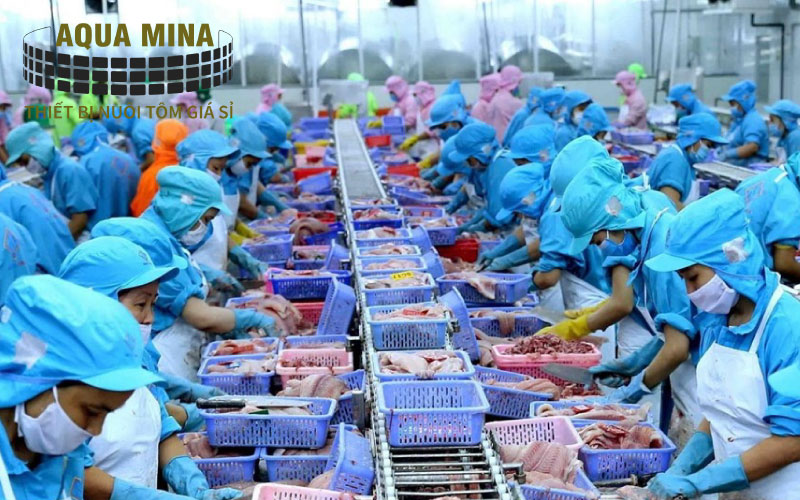
However, Vietnam maintains significant strengths in deep-processed and high value-added products. Quality standards, traceability capabilities, compliance with sustainability requirements, and experience meeting strict EU regulations remain strong advantages. These factors provide a foundation for Vietnamese companies to maintain their position in mid- to high-end segments rather than engaging in a low-price race.
In an increasingly competitive environment, the appropriate strategy for Vietnamese shrimp enterprises is to increase the proportion of deep-processed products, reduce dependence on frozen raw shrimp, and maximize tariff advantages under EVFTA. At the same time, expanding into potential markets such as Japan, South Korea, and CPTPP member countries will help diversify export destinations and reduce concentration risks.
In addition, strong investment in sustainability standards, ESG (Environmental, Social, and Governance), traceability, and “green” certifications will become strategic differentiators. In the coming period, Vietnam’s competitive advantage in the shrimp industry will no longer lie in scale or low costs, but in value addition, branding, and sustainable quality—key factors determining the long-term position of Vietnamese shrimp in the global market.
Source: vneconomy
AQUA MINA CO., LTD
– Address: 685 Le Duc Anh Street, Quarter 39, Binh Hung Hoa Ward, Ho Chi Minh City
– Phone: 1800 6071 (Toll-free hotline)
– Email: sales@aquamina.com.vn or oversea@aquamina.com.vn
– Aqua Mina’s Official Distributor in Japan: REX INDUSTRIES CO., LTD
– Address: 1-9-3 Hishiya-Higashi, Higashi-Osaka 578-0948, JAPAN
– Email: kimakubo@rexind.co.jp
– Phone: +81-(0)72-961-9893
– Website: www.rexind.co.jp/e/

WE WORK FOR THE SUCCESS
Ngày đăng : 25/02/2026
1210 View


Other Articles
AQUA MINA AT VIETSHRIMP 2026 – GET UP TO 40 MILLION VND IN DISCOUNTS WHEN PURCHASING AQUA MINA TURBO AQUACULTURE BLOWERS
22 kW Turbo Blower with Pneumatic Suspension vs. Suplang Blower – Which Is the Better Choice for Shrimp Ponds? Contact: 1800.6071 (Toll-free)
TURBO BLOWER FOR AQUACULTURE AND TRADITIONAL SUPLANG BLOWER – OPERATIONAL PERFORMANCE COMPARISON Hotline: 1800.6071 (Toll-free)
AQUA MINA 7.5 kW SUSPENDED AERATION BLOWER FOR AQUACULTURE – DISTINCT PERFORMANCE COMPARED TO TRADITIONAL SUPLANG BLOWERS IN SHRIMP FARMS
TURBO BLOWER – ADVANCED AERATION TECHNOLOGY THAT SAVES ENERGY COMPARED TO SUPLANG BLOWERS IN SHRIMP FARMING
15 kW TURBO BLOWER FOR AQUACULTURE – WHAT MAKES IT DIFFERENT? A COMPARISON WITH TRADITIONAL BLOWERS
Tensions in the Strait of Hormuz: Vietnam’s USD 401 Million Seafood Exports Enter a Challenging Zone
The Middle East Erupts in Tension, Import–Export Department Issues a Series of Urgent Recommendations
Benefits of Exogenous Protease in Whiteleg Shrimp Farming
Comparison of Aquaculture Turbo Blower Specifications vs Traditional Roots Blower | HOTLINE: 1800.6071
Securing an FTA with the EU: Indian shrimp puts pressure on Vietnam's market share

.jpg)