


Indoor shrimp farming in Europe: Investment challenges and the race to find a viable model
Rising Costs and Investment Disruptions
At the Global Shrimp Forum 2025 in the Netherlands, many experts noted that indoor shrimp farming in Europe is entering a slowdown phase. Despite advantages in biosecurity, reduced antibiotic use, and independence from land constraints, these closed systems have yet to achieve a real breakthrough. According to Matt Craze, founder of Spheric Research, investment in land-based recirculating aquaculture systems (RAS) has surged over the past five years but has been almost entirely directed toward salmon. In the first half of this year alone, of the USD 1.6 billion invested in RAS, 98% went to salmon, while shrimp accounted for only a very small share.
The reason is that RAS technology for shrimp has not yet proven sufficiently convincing, while the shrimp sector does not face the same supply shortages as salmon, making price premiums less attractive to investors. Additionally, companies operating these models have not clearly defined their positioning—whether focused on cost optimization or premium products—making it difficult for both the market and investors to properly assess the sector’s value.
According to Spheric, in 2024 there were 35 indoor shrimp projects producing over 5 tons per year, but by 2025 this number had fallen to 26, with only one new project still at the concept stage. The downward trend is expected to continue into 2026. Many businesses have been forced to withdraw due to excessive energy costs and prolonged technical issues. SwissShrimp has entered liquidation, while HansenGarnelen (Germany) declared bankruptcy in July—both clear examples of how vulnerable the model is without sufficient scale and the ability to absorb high operating costs.

European-farmed shrimp also faces a major price disadvantage: whole shrimp from RAS farms are sold at USD 40–50 per kg, nearly double the price of pond-raised shrimp from Ecuador and Southeast Asia. When processed into value-added products, prices can exceed USD 100 per kg, making competition in mainstream retail channels nearly impossible.
Nevertheless, Craze notes that some positive signals remain. Oceanloop recently secured a €35 million loan from the European Investment Bank to expand its project in Germany, while Aquapurna continues to advance plans for a 400-ton-capacity farm. Even so, these projects must still prove their profitability in a highly volatile market environment.
Surviving Through Niche Markets and Closed-Loop Production
While most projects struggle, some companies remain resilient by targeting premium niche markets. A prime example is White Panther Produktion GmbH in Austria. The company operates a clear-water RAS model considered efficient and well-structured at small scale. The farm has an annual commercial output of 60 tons and runs its own hatchery producing 2 million post-larvae per month, supplying more than 40 customers across Europe, Saudi Arabia, and parts of Africa.
Its fully integrated model—encompassing hatchery, grow-out, processing, and a biomass plant located on the same site—significantly reduces operating costs. Notably, the company owns its own hydropower plant, providing a rare competitive advantage in an industry heavily dependent on energy.
White Panther sells 80% of its production as fresh whole or peeled shrimp, delivered within one day of harvest. The average price reaches €80 per kg, a level accepted within the premium Central European market segment. According to CEO Eva Keferböck, the company deliberately keeps production below maximum capacity to protect pricing and avoid oversupply. Its primary customers include high-end restaurants and environmentally conscious young consumers who prioritize local, sustainable products. The company is also investing in full automation and expanding value-added product lines to maximize utilization of each shrimp. The goal is profit optimization rather than volume expansion.
However, Keferböck believes that Europe still lacks a truly dedicated market for locally produced fresh shrimp. She argues that the sector can continue to develop if companies focus on storytelling and differentiation rather than attempting to compete directly with low-cost imported shrimp.
Shifting Momentum Toward China and Emerging Markets
While Europe contracts, emerging markets—particularly China—are accelerating. According to Spheric Research, China is deploying unprecedented large-scale RAS shrimp complexes to replace greenhouse systems, which currently account for around 30% of domestic shrimp production. Massive, fully automated RAS facilities reaching volumes of 200,000 m³ are being heavily invested in by major feed corporations such as Tongwei and Haid Group.
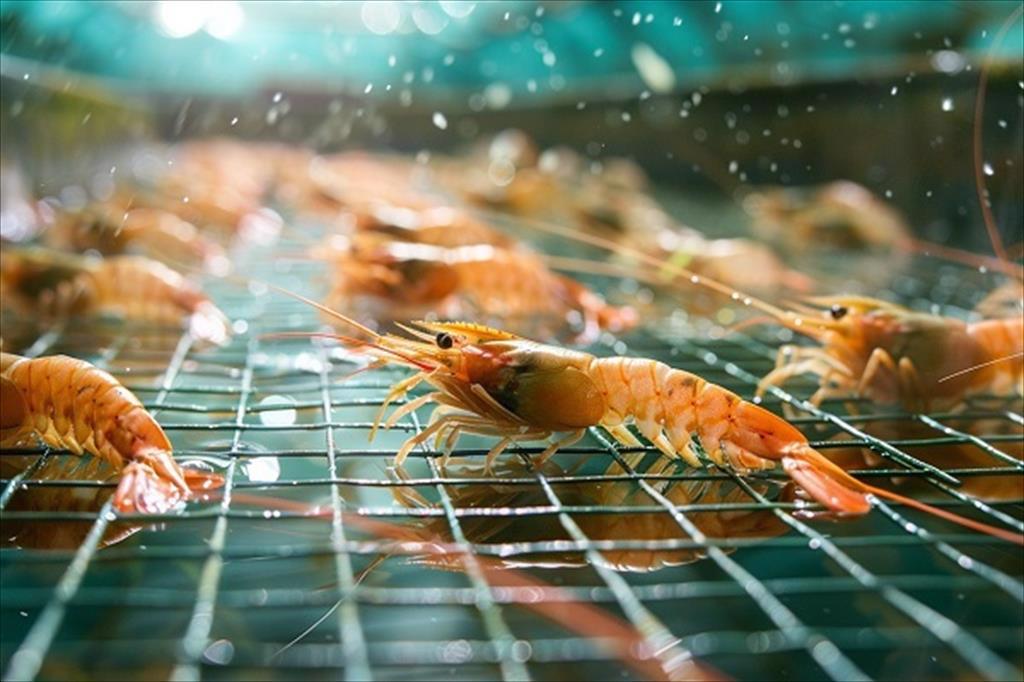
Matt Craze emphasized: “For me, this elevates the entire industry to a new level. When you have Haid’s R&D team of 4,000 people, including 137 PhDs, working together to solve this challenge, it will be fascinating to see what happens next—whether these projects continue to fail or whether they break the traditional limits of RAS shrimp farming.”
Beyond China, regions such as the Middle East and Africa are also beginning to explore indoor shrimp farming as a way to secure domestic supply and reduce import dependence. Although prospects in Europe remain limited, these global shifts indicate that indoor shrimp farming is still in a phase of searching for an optimal model. The answer to its long-term viability may ultimately come from projects that combine sustainability, reasonable operating costs, and the emergence of new consumer markets over the next decade.
AQUA MINA CO., LTD
– Address: 685 Le Duc Anh Street, Quarter 39, Binh Hung Hoa Ward, Ho Chi Minh City
– Phone: 1800 6071 (Toll-free hotline)
– Email: sales@aquamina.com.vn or oversea@aquamina.com.vn
– Aqua Mina’s Official Distributor in Japan: REX INDUSTRIES CO., LTD
– Address: 1-9-3 Hishiya-Higashi, Higashi-Osaka 578-0948, JAPAN
– Email: kimakubo@rexind.co.jp
– Phone: +81-(0)72-961-9893
– Website: www.rexind.co.jp/e/

WE WORK FOR THE SUCCESS
Ngày đăng : 13/02/2026
1355 View


Other Articles
AQUA MINA | CELEBRATING THE 67TH ANNIVERSARY OF VIETNAM’S TRADITIONAL FISHERIES DAY
Restructuring seed production to enhance the competitiveness of the aquaculture industry
AQUA MINA COMMITS TO NO PRICE INCREASE – 15% OFF PVC Knife Gate Valves, Double Flanges, and Elbow Flanges TO SUPPORT SHRIMP AND FISH FARMERS
Global shrimp prices – Week 12: Ecuador shrimp prices recover, while India and Indonesia remain stable
The global surimi market is projected to grow strongly.
Cà Mau: Expanding the RAS-IMTA model toward sustainable, zero-discharge shrimp farming.
From seed stock to farming equipment, high-tech aquaculture attracts strong interest in Ho Chi Minh City
Shrimp industry enterprises proactively adapt to global fluctuations
DAY 3 – AQUA MINA | STRONG CONNECTIONS – A MEMORABLE CLOSING AT VIETSHRIMP AISA 2026
DAY 2 – AQUA MINA | DEEP INSIGHTS & SMART SOLUTIONS FOR MODERN AQUACULTURE
DAY 1 – AQUA MINA | A POWERFUL OPENING AT VIETSHRIMP ASIA 2026
OFFICIAL OPENING of the International-Scale Aquaculture Exhibition Series | See You Again with AQUA MINA at VietShrimp Asia 2026


.jpg)