


Vietnamese shrimp and catfish choose a sustainable path in global competition
Vietnamese shrimp doesn't grow quickly through price, but through sustainable quality.
According to data from Vietnam Customs, from the beginning of the year to the end of November 2025, Vietnam's shrimp export turnover reached US$4.3 billion, an increase of 21% compared to the same period last year. It is projected that Vietnam's shrimp exports for the whole year of 2025 will surpass US$4.6 billion, setting a new record for the industry.
In the first 11 months of 2025, whiteleg shrimp dominated with $2.8 billion, equivalent to 64.8% of total export value. Processed shrimp products achieved good growth thanks to demand from Japan, the EU, and Australia. Black tiger shrimp reached $426 million, an increase of 4%, mainly due to stable contributions from Asian markets and partly from the EU, but still faced significant competitive pressure from cheaper sources.
Ông Trần Đình Luân, Cục trưởng Cục Thủy sản và Kiểm ngư (Bộ Nông nghiệp và Môi trường) cho biết, tôm và cá tra là trụ cột quan trọng cho tăng trưởng xuất khẩu thủy sản Việt Nam. Ảnh: Hồng Thắm.
Mr. Tran Dinh Luan, Director of the Fisheries and Fisheries Inspection Department ( Ministry of Agriculture and Environment ), said that shrimp and pangasius are important pillars for the growth of Vietnam's seafood exports. Photo: Hong Tham .
The most notable highlight in 2025 was the breakthrough growth of the other shrimp product group, with export value exceeding $1 billion, an increase of 74%. This result stemmed from the boom in lobster exports to China, particularly in the live lobster and premium product segments.
Mr. Ho Quoc Luc, Chairman of the Board of Directors of Sao Ta Food Joint Stock Company (Fimex VN), emphasized: Vietnamese shrimp does not grow quickly through price, but sustainably through quality and reputation. However, saying it is easy, but doing it still faces many challenges, requiring the awareness and determination of the entire shrimp industry community.
According to Mr. Tran Dinh Luan, Director of the Fisheries and Fisheries Inspection Department (Ministry of Agriculture and Environment), shrimp plays a particularly important role in the structure of Vietnam's fisheries industry, contributing over 45% of the total export turnover of the entire industry annually.
Notably, in the context of climate change, droughts, and increasing saltwater intrusion in the Mekong Delta, which severely impact many aquaculture sectors, shrimp farming stands out as one of the industries with a clear advantage for development.
The achievements over the years demonstrate that the shrimp industry has clearly affirmed Vietnam's value, role, and position in the international market. Not only are Vietnamese shrimp products diverse in terms of models and varieties, but they are also increasingly developing towards deep processing, with many products being ecological and environmentally friendly.
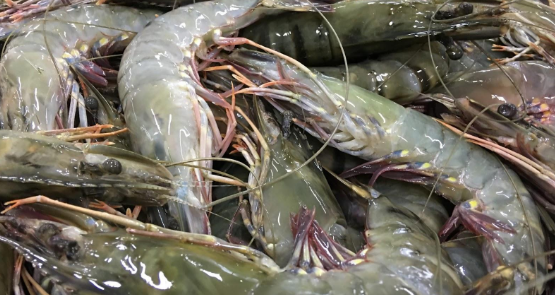
This achievement is largely due to the contributions of the business community, shrimp farmers, and local authorities in building the image of Vietnamese shrimp in the international market today, Mr. Luan emphasized.
According to Mr. Ho Quoc Luc, Chairman of the Board of Directors of Sao Ta Food Joint Stock Company (Fimex VN), in the context of Ecuador and India rapidly increasing production and offering low prices, Vietnamese shrimp is no longer the leading producer in terms of scale or cost competitiveness. However, viewed comprehensively, Vietnamese shrimp still maintains a unique position and high value in the global market.
The irreplaceable advantage of Vietnamese shrimp lies in its quality, consistency, and ability to meet the demands of discerning market segments. Vietnam has long-standing experience in deep processing, diversifying value-added products, maintaining good fod safety and hygiene control, ensuring traceability, and adhering to the standards of high-end markets such as Europe, the United States, and Japan. These are factors that not every country with large production volume can excel at.
Pangasius fish strengthens its position in the global market.
The popularity of pangasius and the efforts of the Vietnamese business community to bring pangasius to all five continents have helped this industry bring in a large amount of foreign currency each year. With export turnover of 1.5 - 2.4 billion USD/year, pangasius alone accounts for 16 - 26% of Vietnam's total seafood export value.
According to data from the Vietnam Association of Seafood Processing and Export (VASEP), by the end of November 2025, the total export value of Vietnamese pangasius had exceeded US$2 billion, an increase of 9% compared to the same period in 2024. It is projected that for the whole year of 2025, pangasius exports will reach over US$2.1 billion, thanks to the positive recovery in consumer demand in Asian markets, especially China.
Chart showing the growth of Vietnam's shrimp and pangasius export turnover from 2020 to 2025. Graphic: Hong Tham .
According to Mr. Luan, in 2025, the pangasius industry will continue to record many positive results, both in production and export. Notably, the industry has been gradually organized in a more systematic and professional manner, from managing aquaculture facility codes and forming concentrated farming areas to perfecting the processing plant system linked to the value chain.
It can be affirmed that pangasius is one of the pioneering industries in developing a circular economy, making the most efficient use of products and by-products. With the results achieved this year, the pangasius industry is continuing to maintain and consolidate its stable development momentum, Mr. Luan emphasized.
Mr. Luan believes that, based on leveraging existing advantages, along with increasingly advanced scientific and technological capabilities and the gradual and effective application of technology in processing, deep processing, and the development of value-added products, the Vietnamese pangasius industry chain will continue to make new strides and firmly consolidate its position on the global seafood map.
Anopportunity for ethical businesses.
Mr. Ho Quoc Luc noted that 2025 will be a challenging year, but it will also demonstrate the resilience and fortitude of Vietnam's shrimp industry. In the context of slow global demand recovery, low selling prices, fierce competition, and numerous barriers, the shrimp industry has maintained production, preserved its market share, and is gradually restructuring towards greater sustainability. Notable achievements include maintaining and increasing shrimp production, albeit by single digits, and achieving double-digit growth in export revenue, exceeding expectations.
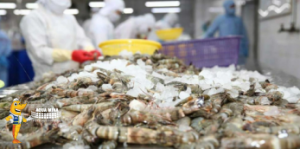
Lợi thế 'không thể thay thế' của tôm Việt Nam nằm ở chất lượng, độ ổn định và khả năng đáp ứng các phân khúc khó tính. Ảnh: Hồng Thắm.
The irreplaceable advantage of Vietnamese shrimp lies in its quality, consistency, and ability to meet the demands of discerning market segments. Photo: Hong Tham .
Looking ahead to 2026, Mr. Luc believes that the Vietnamese shrimp industry will still face many great opportunities as demand in traditional markets gradually stabilizes. Shrimp is becoming an increasingly popular and beloved food source, no longer a luxury item, thus increasing purchasing power.
Vietnamese businesses have become increasingly familiar with the new rules of the game regarding taxation (especially in the US), environment, and sustainability (especially in Europe). The consumer trend prioritizing responsible products is becoming increasingly evident, particularly in Europe.
Although challenges remain and are becoming increasingly significant, opportunities for businesses that operate in a proper and ethical manner will grow, Mr. Luc emphasized.
Regarding the pangasius industry, the leaders of the Fisheries and Fisheries Inspection Department frankly acknowledge that, alongside the positive results achieved, this sector is still facing many difficulties and challenges.
One of the major bottlenecks currently facing the pangasius industry lies in the broodstock stage, where the survival rate during the nursery phase remains low. However, in recent years, the State has invested in numerous research and breeding programs, and initial results show a significant improvement in the quality of broodstock, with survival rates rising from below 10% to approximately 30-40%. This is considered a positive sign, creating an important foundation for the pangasius industry to gradually overcome difficulties and move towards more stable and sustainable development in the future.
The popularity of pangasius fish and the efforts of the Vietnamese business community to bring it to all five continents help this industry bring in a large amount of foreign currency each year. Photo: Hong Tham .
“In addition, we are aiming to strengthen coordination between businesses and people in adjusting and innovating feed formulas, in order to reduce the feed conversion ratio and limit the use of animal meal. This approach not only contributes to improving production efficiency but also helps reduce the amount of waste released into the environment, thereby making a positive contribution to environmental protection in general,” Mr. Luan added.
Another important issue, according to Mr. Luan, is the organization of supply chain linkages. Currently, for the pangasius industry, the supply chain linkage model has been formed and is operating relatively effectively. “However, we hope that all people and businesses involved in the pangasius industry will implement close and continuous linkages from the breeding stage to the processing plant, in order to ensure full traceability, proactive control over production volume and quality, and meet the diverse requirements of each market.”
With such synchronized linkages, factories and processing businesses will be more proactive in securing raw materials, thereby opening up opportunities to expand markets, seek new markets, and develop new products for the pangasius industry, Mr. Luan emphasized.
Assessing Vietnam's seafood export performance in 2025, Mr. Luan said that shrimp and pangasius will continue to play a key role, maintaining their position in the international market and forming an important pillar for the growth of Vietnam's seafood exports.
With the flexible and timely guidance of the Government, the Prime Minister, the leaders of the Ministry of Agriculture and Environment and other ministries and sectors, along with the proactive involvement of the business community and people in adjusting the structure of processed products, adapting to the import and export market and reorganizing domestic production, the results achieved show that we have proactively seized and dominated the export market, in accordance with the requirements and context of each different period .
In 2025, we faced numerous challenges regarding tariffs, trade barriers, and technical barriers, directly impacting overall production results. However, practical experience shows that the figure of $11 billion can be considered a new 'threshold' in the industry's export performance, Mr. Luan further shared.
Source: vietnam
AQUA MINA CO., LTD
– Address: 685 Le Duc Anh Street, Quarter 39, Binh Hung Hoa Ward, Ho Chi Minh City
– Phone: 1800 6071 (Toll-free hotline)
– Email: sales@aquamina.com.vn or oversea@aquamina.com.vn
– Aqua Mina’s Official Distributor in Japan: REX INDUSTRIES CO., LTD
– Address: 1-9-3 Hishiya-Higashi, Higashi-Osaka 578-0948, JAPAN
– Email: kimakubo@rexind.co.jp
– Phone: +81-(0)72-961-9893
– Website: www.rexind.co.jp/e/

WE WORK FOR THE SUCCESS
Ngày đăng : 03/01/2026
1424 View


Other Articles
AQUA MINA | CELEBRATING THE 67TH ANNIVERSARY OF VIETNAM’S TRADITIONAL FISHERIES DAY
Restructuring seed production to enhance the competitiveness of the aquaculture industry
AQUA MINA COMMITS TO NO PRICE INCREASE – 15% OFF PVC Knife Gate Valves, Double Flanges, and Elbow Flanges TO SUPPORT SHRIMP AND FISH FARMERS
Global shrimp prices – Week 12: Ecuador shrimp prices recover, while India and Indonesia remain stable
The global surimi market is projected to grow strongly.
Cà Mau: Expanding the RAS-IMTA model toward sustainable, zero-discharge shrimp farming.
From seed stock to farming equipment, high-tech aquaculture attracts strong interest in Ho Chi Minh City
Shrimp industry enterprises proactively adapt to global fluctuations
DAY 3 – AQUA MINA | STRONG CONNECTIONS – A MEMORABLE CLOSING AT VIETSHRIMP AISA 2026
DAY 2 – AQUA MINA | DEEP INSIGHTS & SMART SOLUTIONS FOR MODERN AQUACULTURE
DAY 1 – AQUA MINA | A POWERFUL OPENING AT VIETSHRIMP ASIA 2026
OFFICIAL OPENING of the International-Scale Aquaculture Exhibition Series | See You Again with AQUA MINA at VietShrimp Asia 2026


.jpg)