


Guidelines for Treating Ponds with White Spot Disease in Shrimp Farming
How to Treat Ponds Affected by White Spot Disease
When dealing with white spot disease in shrimp ponds, it’s crucial to treat both earthen ponds and tarpaulin-lined ponds to prevent any pathogens from persisting. The following steps outline the treatment for each type of pond.
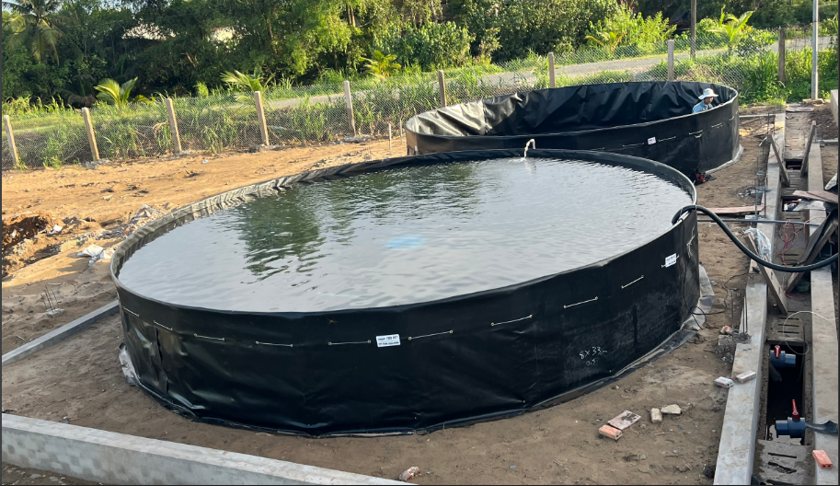
Treatment for Earthen Shrimp Ponds with White Spot Disease
- Prepare the Pond Bottom: Till and plow the pond bottom, then spread agricultural lime at a rate of 500 kg per 1000 m². Mix the lime into the soil to help eliminate pathogens. Let it dry in the sun for 3–4 days. After this, level the soil and let it dry for another 2–3 days.
- Flood and Drain the Pond Bottom: Add enough water to cover the pond bottom by approximately 5 cm, allowing it to soak for 2–3 days before draining. Then, let it dry in the sun for an additional 3–5 days.
- Disinfect Entire Pond Area: Treat the entire bottom and sides of the pond to eradicate the white spot pathogen completely, including any entry points. Once drying is complete, refill the pond with 5–10 cm of water, then apply disinfectants using one of the following methods:
1. Potassium Permanganate: Use 4–5 kg per 1000 m², applying in the evening and treating the pond bottom, walls, and pathways.
2. Chlorine: Use 5 kg per 1000 m², also applied in the evening to cover the bottom, sides, and access paths.
3. Formalin: Use 4–5 liters per 1000 m², soaking the bottom and spraying on the sides and pathways.
- Final Disinfection and Water Change: After a 2–3 day soak, drain all the water and refill the pond to a depth of 1 meter. Add chlorine (25 kg per 1000 m²) and aerate to ensure even distribution, effectively sanitizing any surfaces of equipment. Finally, drain the water and refill with fresh water to begin the new farming cycle.
Treatment for Tarpaulin-Lined Shrimp Ponds with White Spot Disease
This treatment differs slightly from that for earthen ponds:
- Empty and Clean the Pond: Drain all water and clean thoroughly. Disassemble and clean any oxygenation equipment, such as paddle wheels and bottom aeration systems, then allow them to dry in the sun for 1–2 days.
- Apply Disinfectants: After cleaning, refill the pond with 5–10 cm of water and use one of the following disinfectants:
1. Potassium Permanganate: Apply 4–5 kg per 1000 m² in the evening to soak the bottom, sides, and access paths.
2. Chlorine: Apply 5 kg per 1000 m² in the evening for the bottom, sides, and pathways.
3. Formalin: Apply 4–5 liters per 1000 m² to soak the bottom and spray the walls and paths.
- Final Steps and Refill: After soaking for 2–3 days, drain the water, refill to a depth of 1 meter, and add 25 kg of chlorine per 1000 m². Aerate to ensure thorough disinfection. After this, drain the treated water, refill the pond, and proceed with the new shrimp farming cycle.
With these steps, you can effectively manage ponds affected by white spot disease in shrimp farming, ensuring thorough disinfection and preparation for future use.
Contact AQUA MINA for consultation and supply of aquaculture round tanks and aquaculture equipment for high-tech shrimp farming.
- Address: 685 National Highway 1A, Binh Hung Hoa Ward, Binh Tan District, Ho Chi Minh City
- Phone: 1800 6071 (Toll-free hotline)
- Email: sales@aquamina.com.vn or oversea@aquamina.com.vn
Aqua Mina's distributor in Japan: REX INDUSTRIES CO., LTD
- Address: 1-9-3 Hishiya-Higashi, Higashi-Osaka 578-0948 JAPAN
- Email: kimakubo@rexind.co.jp
- Phone: +81-(0)72-961-9893
- Website: http://www.rexind.co.jp/e/
Ngày đăng : 23/11/2024
2579 View


Other Articles
Ca Mau, Can Tho and An Giang Play a Leading Role in Vietnam’s Shrimp Industry
Protecting rice-shrimp yields against environmental fluctuations caused by prolonged rain
AQUA MINA Turbo Blower: Quiet, Energy-Efficient Air Supply for Aquaculture Ponds
AQUA MINA has accompanied the experimental tank system project at Can Tho University from its very early days
AQUA MINA AMONG 20 OUTSTANDING PRESENTATIONS AT THE WORKSHOP ON APPLYING SCIENCE AND TECHNOLOGY TO IMPROVE THE QUALITY OF VIETNAM’S AQUATIC PRODUCTS
Vietnam’s Shrimp Farming Industry Enters the High-Tech Race
The U.S. market relies heavily on imported shrimp to bridge its domestic supply gap
The 2028 supply crisis: The shrimp industry is projected to face a 400,000-ton material shortage
High profits from high-tech shrimp farming come with persistent risks
Intensifying El Niño Effect: Climate Change Risks Threaten the Global Shrimp Supply Chain
Evaluating Gaps in the Circular Economy Value Chain of the Shrimp Industry
A Comprehensive Overview of the Vietnamese Shrimp Industry


.jpg)