



Crab exports to the United States account for more than 80%.
Statistics from Vietnam Customs show that Vietnam’s crab export value in the first 11 months of 2025 increased by 9% compared to the same period in 2024. The U.S. market alone reached nearly USD 67 million, up 15% year-on-year. According to the Vietnam Association of Seafood Exporters and Producers (VASEP), this overwhelming share indicates that the United States is dominating Vietnam’s crab exports, but it also exposes the industry to significant risks if the U.S. changes its policies. In particular, regulations such as the Marine Mammal Protection Act (MMPA) could become a critical variable for the period from 2026 onward. VASEP’s analysis shows that in November 2025 alone, total crab exports reached nearly USD 10 million, with the U.S. accounting for more than 86% of the value, representing a 17% increase compared to November 2024. Demand in the U.S., especially for pasteurized crab meat products, continues to be a key driver, as this market relies heavily on imported supply.
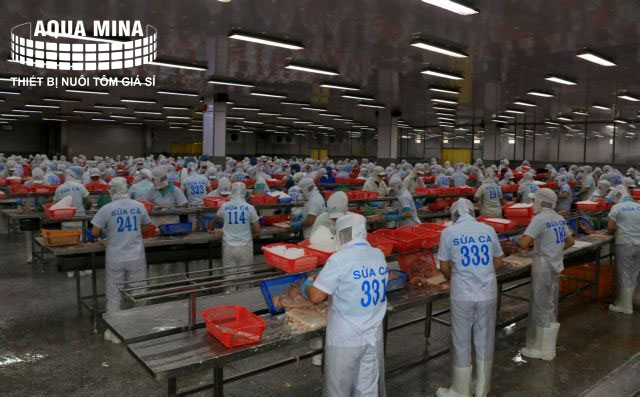
The National Oceanic and Atmospheric Administration (NOAA) of the United States has determined that seafood products imported from fisheries that are not “comparably recognized” will be banned from entering the U.S. starting January 1, 2026.At the same time, NOAA has noted that under the seafood certification mechanism for products eligible for export to the U.S., even if a shipment is not subject to a direct ban, but shares the same Harmonized Tariff Schedule (HTS) code and country of origin as a banned group, it may be required to carry certification proving it is not linked to a prohibited fishery from January 1, 2026. This regulation could increase compliance costs and extend customs clearance times for shipments entering the U.S.In a recent development, the U.S. Court of International Trade officially issued a stay order in the lawsuit between the National Fisheries Institute (NFI), the National Restaurant Association (NRA), and several U.S. seafood companies against the U.S. Government regarding the enforcement of the Marine Mammal Protection Act (MMPA). Under this order, the effective date of January 1, 2026, for the import ban on crab from Vietnam, the Philippines, Indonesia, and Sri Lanka has been temporarily postponed until NOAA/NMFS completes its review of “comparability findings,” namely assessments of whether exporting countries provide marine mammal protection measures equivalent to those of the United States.According to VASEP, this postponement does not mean that risks have disappeared. Instead, it represents a “golden window” for Vietnam to complete documentation, strengthen evidence of compliance, and standardize traceability systems.
Source: VinaNet

WE WORK FOR THE SUCCESS


AQUA MINA | CELEBRATING THE 67TH ANNIVERSARY OF VIETNAM’S TRADITIONAL FISHERIES DAY
Restructuring seed production to enhance the competitiveness of the aquaculture industry
AQUA MINA COMMITS TO NO PRICE INCREASE – 15% OFF PVC Knife Gate Valves, Double Flanges, and Elbow Flanges TO SUPPORT SHRIMP AND FISH FARMERS
Global shrimp prices – Week 12: Ecuador shrimp prices recover, while India and Indonesia remain stable
The global surimi market is projected to grow strongly.
Cà Mau: Expanding the RAS-IMTA model toward sustainable, zero-discharge shrimp farming.
From seed stock to farming equipment, high-tech aquaculture attracts strong interest in Ho Chi Minh City
Shrimp industry enterprises proactively adapt to global fluctuations
DAY 3 – AQUA MINA | STRONG CONNECTIONS – A MEMORABLE CLOSING AT VIETSHRIMP AISA 2026
DAY 2 – AQUA MINA | DEEP INSIGHTS & SMART SOLUTIONS FOR MODERN AQUACULTURE
DAY 1 – AQUA MINA | A POWERFUL OPENING AT VIETSHRIMP ASIA 2026
OFFICIAL OPENING of the International-Scale Aquaculture Exhibition Series | See You Again with AQUA MINA at VietShrimp Asia 2026







.jpg)