


Thailand sets a target to increase shrimp production to 400,000 tons by 2026.
The Thai Shrimp Association has proposed a series of policy changes aimed at increasing annual shrimp production from the current 250,000–270,000 tons to 400,000 tons. This target is largely based on recent developments in the U.S. market, where high import tariffs are putting India—the most competitive shrimp producer—at a disadvantage, potentially creating a market gap of up to 300,000 tons, according to The Nation.
After peaking at more than 600,000 tons in 2011, Thailand’s shrimp production has declined sharply in recent years, mainly due to prolonged disease outbreaks and intense international price competition.
According to the President of the Thai Shrimp Association, Mr. Ekapoj Yodpinit, the production downturn has caused Thailand to lose 650 billion baht (USD 20.3 billion / EUR 17.5 billion) over the past 13 years.
The association now wants to turn 2026 into a “recovery year,” especially as India currently faces U.S. import tariffs of over 60%, while Thai shrimp is subject to a tariff of only 19%—a significant competitive advantage.
“This is an unprecedented opportunity for Thai shrimp to gain substantial market share in the U.S.,” Mr. Yodpinit stated.
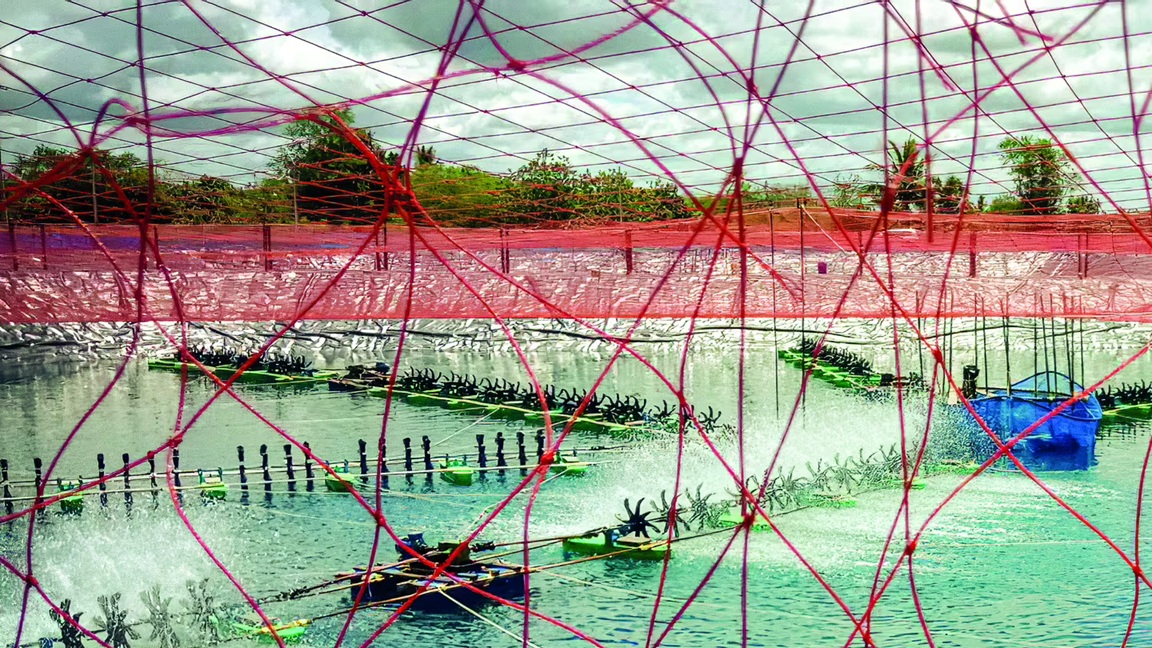
To capitalize on this opportunity, the association is calling on the government to implement a “National Agenda Program” aimed at restoring production to at least 400,000 tons per year.
Key proposals include accelerating negotiations on free trade agreements (FTAs) with the EU, the UK, and South Korea; reducing import tariffs on feed ingredients such as soybeans; providing low-interest loans to help farmers upgrade outdated equipment; and increasing research funding for systematic disease control.
“We have been stuck at around 270,000 tons for far too long. In 2026, the market will open up, and we must have sufficient production to seize the opportunity,” he said.
However, Mr. Will Wiangchai, Export Manager at Siam Canadian (Thailand), described the 400,000-ton target as “very optimistic,” particularly given that Thailand has not exceeded 300,000 tons for more than a decade.
Beyond ongoing disease issues, he noted that several structural constraints continue to hinder growth, including high production costs, outdated farming systems, and environmental and climate impacts.
“With these combined barriers, reaching 400,000 tons would only be possible with major reforms—well beyond disease control alone,” he said.
Although the Thai government has introduced measures signaling support for the shrimp industry, in practice these policies have delivered limited improvement over the past decade.
Many producers remain concerned about the lack of preferential loans to upgrade farms, insufficient tax incentives on feed to reduce production costs, inadequate public investment in disease research, and the absence of subsidies to help farmers modernize operations. At the same time, slow progress in trade negotiations—including the loss of GSP preferences with the EU—has limited export support, according to Wiangchai.
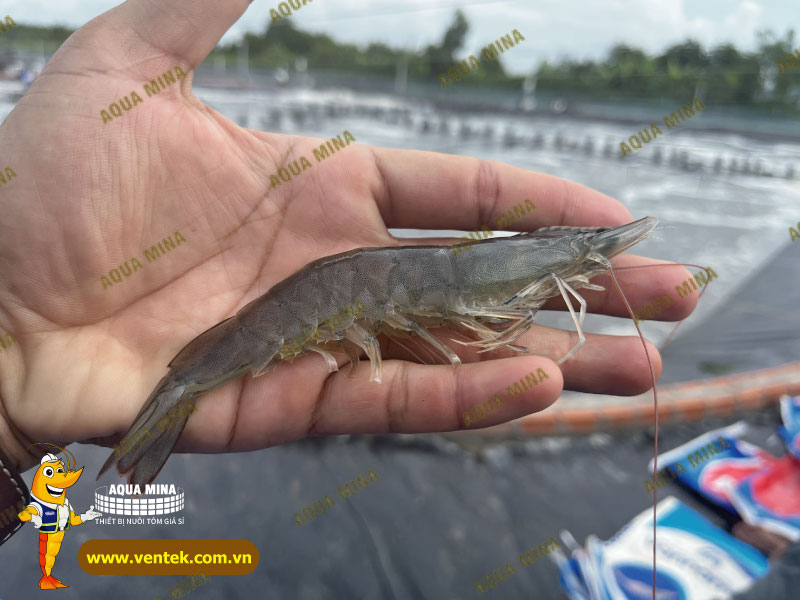
He also noted that despite India’s disadvantage, Thailand has yet to regain market share in the U.S., as Indonesia and Vietnam remain more competitive suppliers, while Thailand’s production and export costs stay relatively high. If the U.S. and India reach a tariff-reduction agreement in 2026, Thailand’s advantage in the U.S. market could narrow further.
Nevertheless, Wiangchai pointed to a potential secondary benefit for Thailand: India is currently diverting large volumes of shrimp to Canada and Asian markets because the U.S. has become less attractive due to high tariffs. If U.S. tariffs are reduced, India may redirect shipments back to the U.S., easing competitive pressure on Thai shrimp in secondary markets.
For 2025, Thailand’s shrimp production is forecast to remain at around 270,000 tons, unchanged from the previous year. From January to October, exports reached 112,000 tons, up 6% year-on-year. For the full year, exports are projected to reach 126,000 tons, valued at approximately 30 billion baht (USD 939 million / EUR 806.5 million), representing a decline of 4–5%, according to the Bangkok Post.
AQUA MINA CO., LTD
– Address: 685 Le Duc Anh Street, Quarter 39, Binh Hung Hoa Ward, Ho Chi Minh City
– Phone: 1800 6071 (Toll-free hotline)
– Email: sales@aquamina.com.vn or oversea@aquamina.com.vn
– Aqua Mina’s Official Distributor in Japan: REX INDUSTRIES CO., LTD
– Address: 1-9-3 Hishiya-Higashi, Higashi-Osaka 578-0948, JAPAN
– Email: kimakubo@rexind.co.jp
– Phone: +81-(0)72-961-9893
– Website: www.rexind.co.jp/e/

WE WORK FOR THE SUCCESS
Ngày đăng : 24/12/2025
1467 View


Other Articles
AQUA MINA | CELEBRATING THE 67TH ANNIVERSARY OF VIETNAM’S TRADITIONAL FISHERIES DAY
Restructuring seed production to enhance the competitiveness of the aquaculture industry
AQUA MINA COMMITS TO NO PRICE INCREASE – 15% OFF PVC Knife Gate Valves, Double Flanges, and Elbow Flanges TO SUPPORT SHRIMP AND FISH FARMERS
Global shrimp prices – Week 12: Ecuador shrimp prices recover, while India and Indonesia remain stable
The global surimi market is projected to grow strongly.
Cà Mau: Expanding the RAS-IMTA model toward sustainable, zero-discharge shrimp farming.
From seed stock to farming equipment, high-tech aquaculture attracts strong interest in Ho Chi Minh City
Shrimp industry enterprises proactively adapt to global fluctuations
DAY 3 – AQUA MINA | STRONG CONNECTIONS – A MEMORABLE CLOSING AT VIETSHRIMP AISA 2026
DAY 2 – AQUA MINA | DEEP INSIGHTS & SMART SOLUTIONS FOR MODERN AQUACULTURE
DAY 1 – AQUA MINA | A POWERFUL OPENING AT VIETSHRIMP ASIA 2026
OFFICIAL OPENING of the International-Scale Aquaculture Exhibition Series | See You Again with AQUA MINA at VietShrimp Asia 2026


.jpg)