


Cold stress: Effects on the plasma characteristics of whiteleg shrimp.
Study Design
The study was conducted at the National Demonstration Center for Experimental Aquaculture Science Education, Shanghai Ocean University (China). Healthy whiteleg shrimp (Penaeus vannamei) with an average weight of 9.06 ± 0.23 g and a length of 10.0 ± 0.4 cm were obtained from the Nantong Institute of Oceanography and Fisheries (Jiangsu, China). Prior to the experiment, shrimp were acclimated in indoor tanks for seven days. A total of 300 shrimp were randomly selected and distributed into three 1,000-L PVC tanks (three replicates), followed by a two-day environmental acclimation period.

The experiment started at 24°C (control, CK), after which the temperature was automatically reduced at a rate of 2°C every two hours until reaching the preset temperatures (22, 20, 18, 16, 14, and 12°C). At each target temperature, the cooling system was paused and maintained for 22 hours. Sampling temperatures included 24°C (CK), 20°C (T1), 18°C (T2), 14°C (T3), and 12°C (T4). Shrimp were randomly sampled at each temperature point and rapidly anesthetized with ice for 10–15 seconds. Shrimp plasma was collected at each temperature and immediately processed for physiological analysis. The overall procedure is illustrated in Figure 1.
Experimental Procedure
Control group (CK/24°C), treatment group 1 (T1/20°C), treatment group 2 (T2/18°C), treatment group 3 (T3/14°C), and treatment group 4 (T4/12°C).
(A) After acclimation, the initial experimental temperature was 24°C, and samples collected at this temperature were defined as the control group (CK) before cooling. Tank temperatures were automatically reduced using a chiller at a rate of 2°C per 2 hours. Cooling was paused when the preset temperatures were reached (22, 20, 18, 16, 14, and 12°C) and maintained for 22 hours, followed by sampling.
(B) After centrifugation, serum from three shrimp per tank was collected at CK, T1, T2, T3, and T4 for physiological analysis. Hemocytes and plasma from six shrimp per tank were collected at CK, T2, and T4 for omics analysis.
Results and Discussion
Overall, the results indicate that cold stress induces significant changes in enzyme activity, gene expression, and metabolite levels in whiteleg shrimp (Figure 2).
In crustaceans, plasma not only transports nutrients, waste products, hormones, and neuropeptides, but also plays a crucial role in immune responses. Therefore, maintaining plasma homeostasis is essential for animal health. As temperature decreases, changes in metabolite concentrations may be directly influenced by altered gene expression, while metabolites themselves can regulate gene activity through feedback mechanisms. Up- or down-regulation of specific genes under low temperature may activate or inhibit corresponding metabolic pathways, leading to changes in related metabolites and forming a bidirectional interaction between the genome and metabolism.
Under prolonged cold stress, shrimp tend to prioritize energy conservation. Transcriptomic analysis revealed that the gluconeogenesis pathway, which plays a key role in synthesizing glucose from non-carbohydrate carbon sources, was strongly suppressed in hemocytes. The expression of two key enzymes in this pathway decreased significantly, indicating a marked reduction in glucose synthesis capacity under cold conditions.
Cold stress also caused substantial disturbances in amino acid metabolism. Metabolomic data showed significant changes in multiple metabolites involved in these pathways, suggesting that shrimp shift toward using amino acids as alternative energy sources when carbohydrate utilization is impaired. Meanwhile, essential amino acids required for growth and specialized physiological functions tended to decrease, potentially affecting growth, development, and immunity. In contrast, amino acids such as alanine, proline, D-ornithine, and L-glutamine increased markedly as temperature declined.
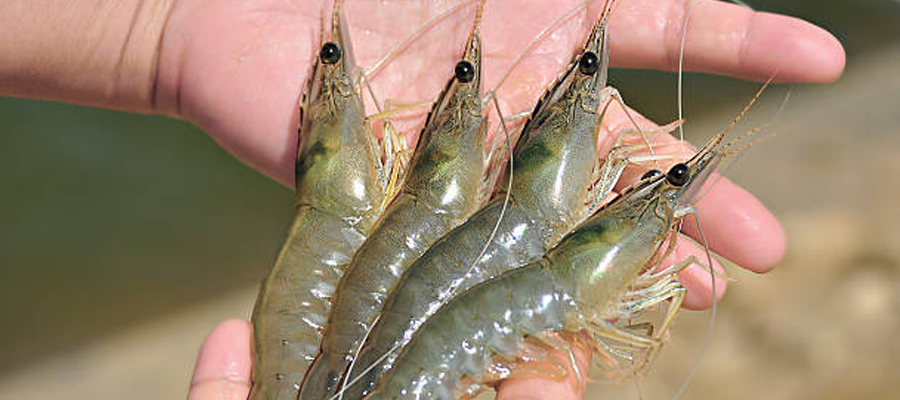
The accumulation of proline and alanine is a common adaptive mechanism in many invertebrates, particularly whiteleg shrimp under cold stress. Proline protects cells, maintains osmotic balance, and provides antioxidant capacity, while also serving as an energy source when converted into alanine. Elevated proline levels enhance cold tolerance, stabilize osmotic pressure, and sustain cellular energy. Additionally, serum triglycerides (TG) decreased significantly with declining temperature, indicating metabolic adjustments in lipid utilization to supply energy under harsh conditions.
Cold stress also disrupted nucleotide metabolism, leading to energy imbalance and reduced RNA and DNA synthesis, thereby negatively affecting multiple physiological processes. As temperature decreases, metabolic rates slow, resulting in weakened immune function. Although shrimp immune systems can be activated by oxidative stress, the activities of key immune enzymes such as AKP and ACP were significantly reduced under cold stress. This suggests impairment of the non-specific immune barrier, making shrimp more susceptible to pathogen invasion. Transcriptomic analysis further revealed down-regulation of multiple immune-related genes, weakening immune recognition and response capacity.
In summary, cold stress triggers multi-level alterations spanning genes, enzymes, and metabolites, leading to disrupted energy metabolism, reduced antioxidant capacity, and suppressed immunity in whiteleg shrimp (P. vannamei). These changes are key factors contributing to the increased vulnerability of shrimp during prolonged cold events in aquaculture systems.
Source: Nguoi Nuoi Tom
AQUA MINA CO., LTD
– Address: 685 Le Duc Anh Street, Quarter 39, Binh Hung Hoa Ward, Ho Chi Minh City
– Phone: 1800 6071 (Toll-free hotline)
– Email: sales@aquamina.com.vn or oversea@aquamina.com.vn
– Aqua Mina’s Official Distributor in Japan: REX INDUSTRIES CO., LTD
– Address: 1-9-3 Hishiya-Higashi, Higashi-Osaka 578-0948, JAPAN
– Email: kimakubo@rexind.co.jp
– Phone: +81-(0)72-961-9893
– Website: www.rexind.co.jp/e/

WE WORK FOR THE SUCCESS
Ngày đăng : 27/12/2025
1478 View


Other Articles
AQUA MINA | CELEBRATING THE 67TH ANNIVERSARY OF VIETNAM’S TRADITIONAL FISHERIES DAY
Restructuring seed production to enhance the competitiveness of the aquaculture industry
AQUA MINA COMMITS TO NO PRICE INCREASE – 15% OFF PVC Knife Gate Valves, Double Flanges, and Elbow Flanges TO SUPPORT SHRIMP AND FISH FARMERS
Global shrimp prices – Week 12: Ecuador shrimp prices recover, while India and Indonesia remain stable
The global surimi market is projected to grow strongly.
Cà Mau: Expanding the RAS-IMTA model toward sustainable, zero-discharge shrimp farming.
From seed stock to farming equipment, high-tech aquaculture attracts strong interest in Ho Chi Minh City
Shrimp industry enterprises proactively adapt to global fluctuations
DAY 3 – AQUA MINA | STRONG CONNECTIONS – A MEMORABLE CLOSING AT VIETSHRIMP AISA 2026
DAY 2 – AQUA MINA | DEEP INSIGHTS & SMART SOLUTIONS FOR MODERN AQUACULTURE
DAY 1 – AQUA MINA | A POWERFUL OPENING AT VIETSHRIMP ASIA 2026
OFFICIAL OPENING of the International-Scale Aquaculture Exhibition Series | See You Again with AQUA MINA at VietShrimp Asia 2026




.jpg)