


Shrimp Pond Water Color: The Role and Practical Applications of Artificial Coloring
In nature, an appropriate water color serves as a good natural food source for shrimp, helps shade the pond bottom, regulates light and temperature, and reduces stress for shrimp. However, establishing and maintaining water color is not always easy. Currently, there are two common methods: natural coloring and artificial coloring.
1. What is artificial color?
Artificial color refers to pond water color created without relying on the development of phytoplankton. Artificial color is not algae, does not grow, does not participate in the food chain, but supports environmental management under certain conditions.
2. Why use artificial color?
Due to certain reasons, natural color development may fail. In urgent cases where rapid coloring is needed before stocking shrimp, or in algae-free shrimp farming systems, artificial color becomes an option.
Some situations where artificial color should be used:
Newly filled ponds with clear water
Nutrient-poor ponds where natural color is difficult to develop
Ponds with snails, clams, or filter-feeding organisms that keep the water clear
Frequent water exchange causing algae loss
To control unwanted algae growth
Advantages of artificial color
Compared to natural color, artificial color develops quickly and uniformly; carries no risk of harmful algae outbreaks; generates almost no organic matter, keeping water clean; and causes minimal fluctuations in pH and dissolved oxygen.
In contrast, natural coloring develops slowly, is difficult to control, and may lead to harmful algae blooms. Dense algae can cause pH fluctuations and nighttime oxygen depletion. When algae collapse, they create large amounts of organic matter, accumulate toxic gases, and increase the risk of gut problems in shrimp.
Benefits of artificial color
Artificial color reduces water transparency, preventing phototaxis in post-larvae shrimp and reducing stress.
It shades sunlight, reduces heat absorption during hot seasons, controls the growth of filamentous algae, benthic algae, and fungi.
It contributes to environmental stability (such as pH and transparency), keeps water clean, limits dead algae residues, and maintains stable water color over a certain period.
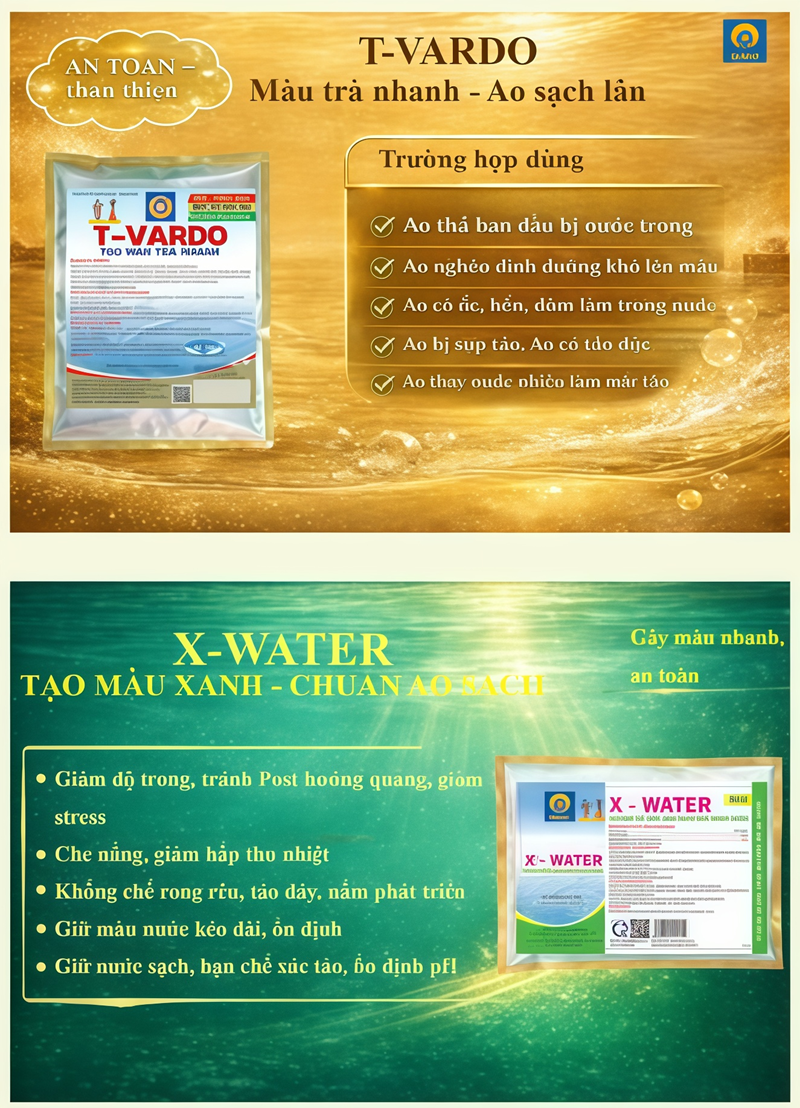
Color development and selecting the appropriate coloring solution play an important role in a successful shrimp crop. Understanding this, SANDO has introduced artificial coloring products T-VARDO and X-WATER, modeled after beneficial natural water colors to help maintain clean water and healthy shrimp.
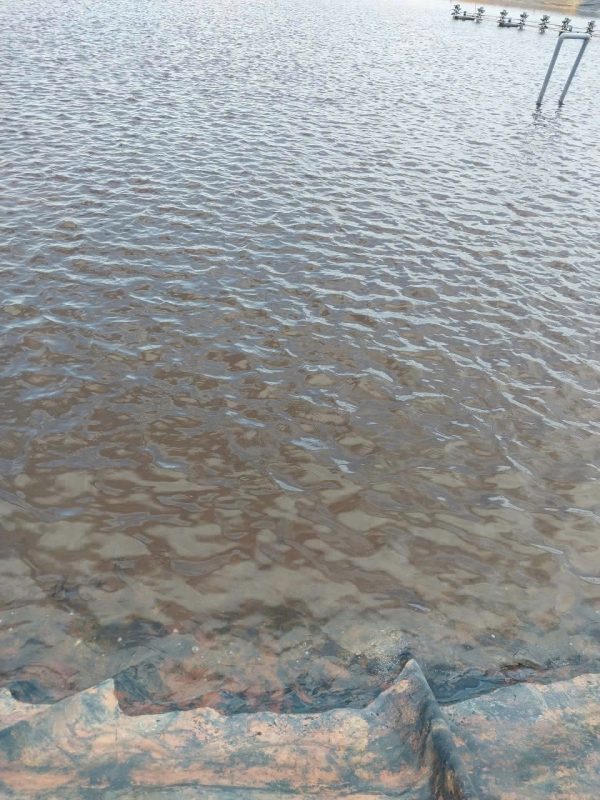
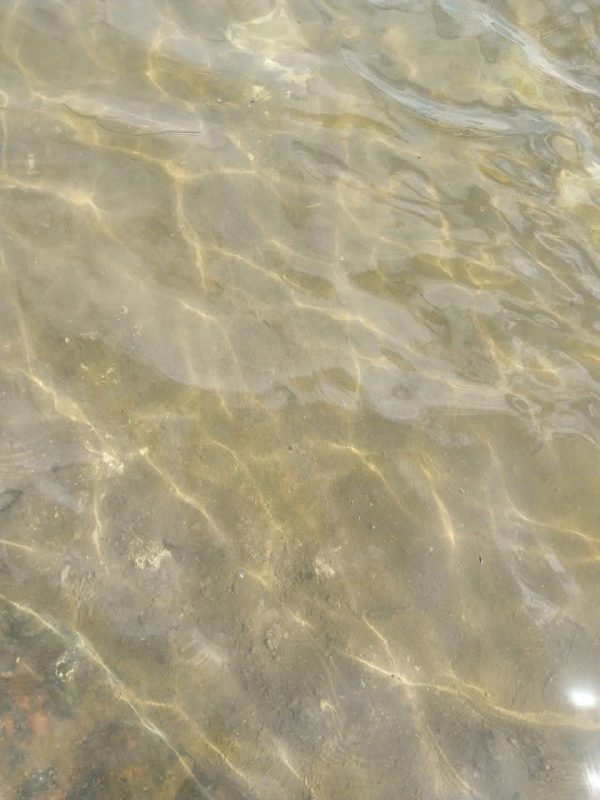
T-VARDO resembles ponds dominated by diatoms, helping maintain clean water and environmental stability.
X-WATER produces a safe green color similar to green algae, helping reduce pond water temperature and protect cultured shrimp.
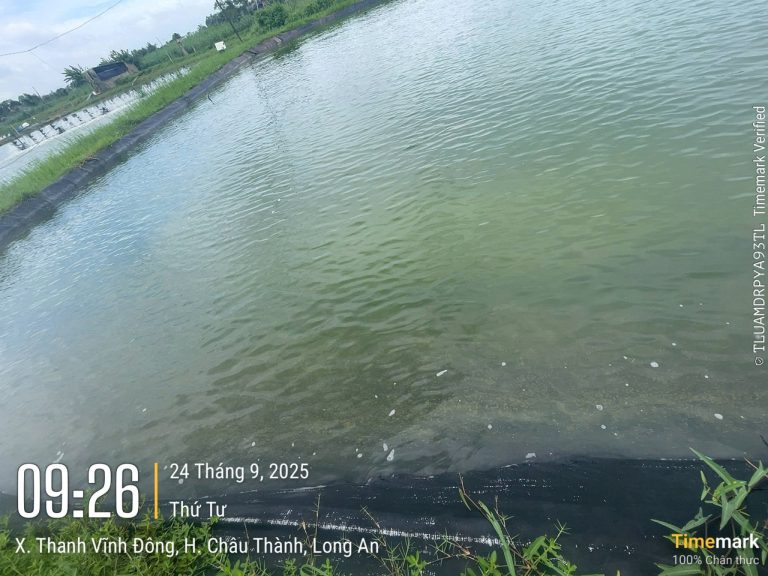
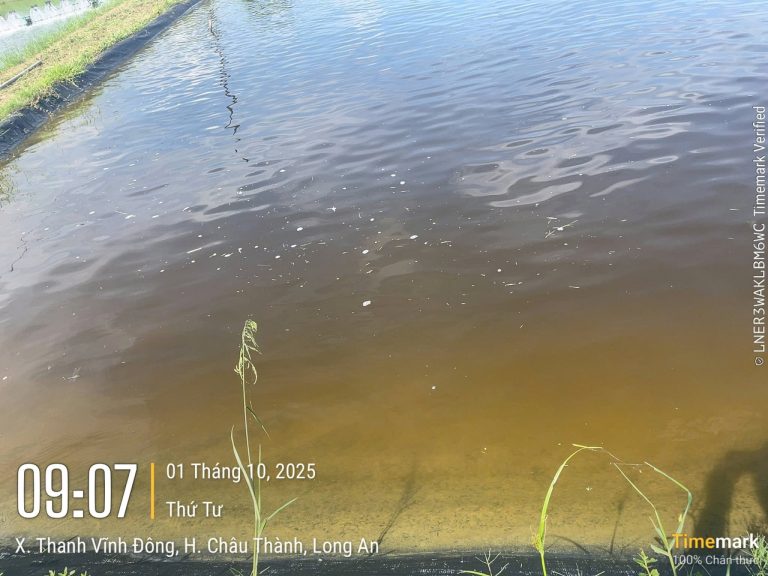
These products have been widely and successfully applied in many commercial farms.
For example, at Mr. Đấu’s pond (Châu Thành, Long An), applying T-VARDO tea-color solution at a dosage of 1 kg per 1,500 m³ of water before stocking resulted in an attractive tea color, appropriate transparency, and stable color for more than 10 days.
Similarly, Mr. Út Gái’s pond (Nhà Bè, Ho Chi Minh City) applied T-VARDO at 3 kg per 3,500 m³ of water, achieving a stable dark tea color suitable for stocking.
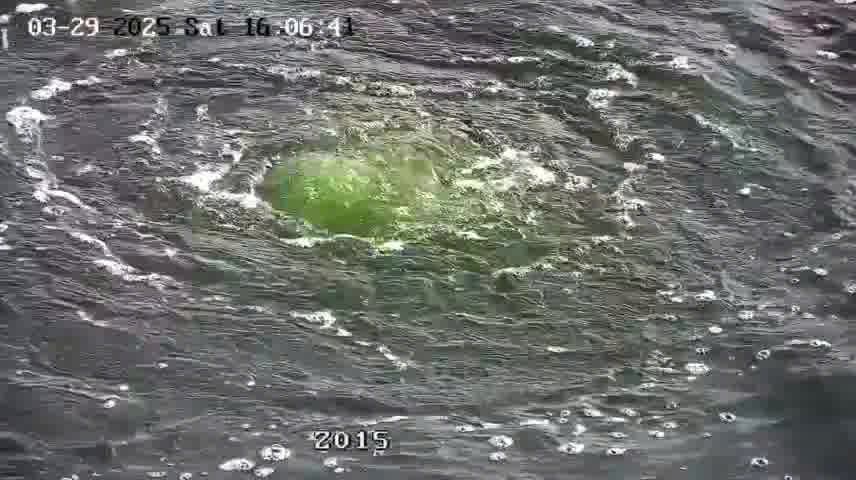
At Mr. Dũng’s pond (Nhà Bè, Ho Chi Minh City), applying X-WATER green solution at 300 g per 1,800 m³ of water before shrimp transfer produced a safe green color with appropriate transparency and no adverse impact on shrimp.
Creating and maintaining stable water color is crucial for shrimp farming success. Artificial color is not a replacement for natural systems, but it is an essential technical support tool when used correctly and at the right time.
Source: nguoinuoitom
AQUA MINA CO., LTD
– Address: 685 Le Duc Anh Street, Quarter 39, Binh Hung Hoa Ward, Ho Chi Minh City
– Phone: 1800 6071 (Toll-free hotline)
– Email: sales@aquamina.com.vn or oversea@aquamina.com.vn
– Aqua Mina’s Official Distributor in Japan: REX INDUSTRIES CO., LTD
– Address: 1-9-3 Hishiya-Higashi, Higashi-Osaka 578-0948, JAPAN
– Email: kimakubo@rexind.co.jp
– Phone: +81-(0)72-961-9893
– Website: www.rexind.co.jp/e/

WE WORK FOR THE SUCCESS
Ngày đăng : 03/03/2026
1228 View


Other Articles
OFFICIAL OPENING of the International-Scale Aquaculture Exhibition Series | See You Again with AQUA MINA at VietShrimp Asia 2026
VietShrimp Asia & Aquaculture Vietnam 2026 | Smart Aquaculture – The AI Revolution in Aquaculture
AQUA MINA AT VIETSHRIMP 2026 – GET UP TO 40 MILLION VND IN DISCOUNTS WHEN PURCHASING AQUA MINA TURBO AQUACULTURE BLOWERS
22 kW Turbo Blower with Pneumatic Suspension vs. Suplang Blower – Which Is the Better Choice for Shrimp Ponds? Contact: 1800.6071 (Toll-free)
TURBO BLOWER FOR AQUACULTURE AND TRADITIONAL SUPLANG BLOWER – OPERATIONAL PERFORMANCE COMPARISON Hotline: 1800.6071 (Toll-free)
AQUA MINA 7.5 kW SUSPENDED AERATION BLOWER FOR AQUACULTURE – DISTINCT PERFORMANCE COMPARED TO TRADITIONAL SUPLANG BLOWERS IN SHRIMP FARMS
TURBO BLOWER – ADVANCED AERATION TECHNOLOGY THAT SAVES ENERGY COMPARED TO SUPLANG BLOWERS IN SHRIMP FARMING
15 kW TURBO BLOWER FOR AQUACULTURE – WHAT MAKES IT DIFFERENT? A COMPARISON WITH TRADITIONAL BLOWERS
Tensions in the Strait of Hormuz: Vietnam’s USD 401 Million Seafood Exports Enter a Challenging Zone
The Middle East Erupts in Tension, Import–Export Department Issues a Series of Urgent Recommendations
Benefits of Exogenous Protease in Whiteleg Shrimp Farming

.jpg)