


Towards Building Brand Value for the Shrimp Industry
Export Shrimp Prices Rise, Farmers Encouraged
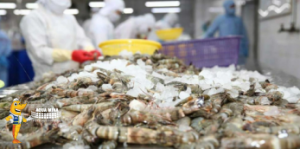
By the end of 2025, shrimp continued to play a leading role in the overall growth of the fisheries sector, generating nearly USD 4.65 billion in export value, up 20% compared to 2024 and accounting for the largest share of total export turnover. Favorable export conditions have also helped shrimp prices recover from the end of last year through the beginning of this year.
Mr. Thien’s shrimp pond has reached a density of 28 shrimp per kilogram. With shrimp prices remaining high, he decided to continue farming to achieve larger sizes. Currently, black tiger shrimp sized at 20 shrimp per kilogram are priced at up to VND 320,000. Shrimp farmers across the Mekong Delta hope prices will continue to rise or remain stable, helping them recover and sustain production after a prolonged period of hardship.
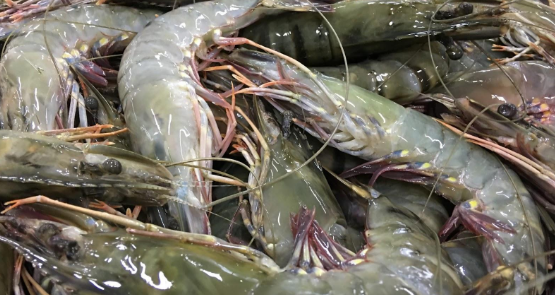
Nguen Van Thien, a farmer in Vinh Hau Commune, Ca Mau Province, shared: “We farm at controlled densities. A pond of white-leg shrimp yields about 1.6 to 1.7 tons, while black tiger shrimp yields around 800 kg to 1.2 tons. Black tiger shrimp bring higher profits. If everything goes well, profits can exceed half of revenue; for example, earning VND 150 million from VND 300 million in sales.”
Typically, shrimp prices rise toward the end of the year as enterprises increase raw material purchases. At the same time, restaurants and supermarket chains boost demand for oxygen-packed shrimp to serve consumers. As a result, farmers often schedule harvests near the Lunar New Year to maximize profits. Current shrimp prices are 30%–50% higher than the same period last year, allowing farmers to earn profits of around VND 100,000 per kilogram—one of the highest margins in many years.
Building Brand Value for the Shrimp Industry
In reality, shrimp produced under clean and ecological farming models consistently attract market attention and enjoy stable outlets. These models not only enhance product value but also contribute to environmental protection and sustainable livelihoods. Recently, farmers in the Mekong Delta have gradually shifted from traditional aquaculture to an economic-oriented approach, helping build brand value for this key aquatic species.
Applying science and technology has become the preferred choice for farmers like Mr. Lai. With a zero-discharge recirculating farming model, he has reduced labor, electricity, and chemical treatment costs by up to 50%. Environmental conditions are better controlled, while profits have increased by nearly 20% compared to previous intensive farming methods.
Ngo Van Lai from Phu Tan Commune, Ca Mau Province, explained: “Shrimp grow faster, risks are lower, and farming cycles are shorter. Previously, it took three months; now it takes only about 80 days, significantly reducing electricity and feed costs.”
Ca Mau currently has the largest shrimp farming area in the country, covering nearly 430,000 hectares, of which around 300,000 hectares use improved extensive farming models such as shrimp–forest and shrimp–rice systems. These nature-based models avoid chemicals and antibiotics, ensuring product quality while preserving ecosystems.
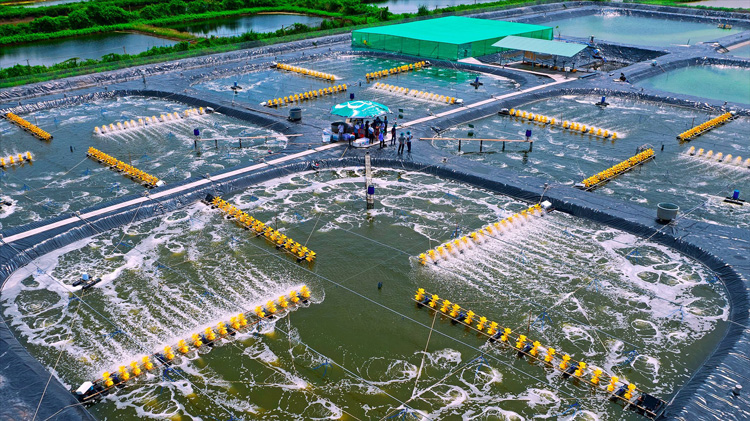
Enterprises are willing to pay 10%–15% higher prices for shrimp from ecological and safe farming models. Through changes in mindset and effective farming practices, shrimp from Ca Mau and the Mekong Delta are steadily increasing in value, aligning with modern aquaculture trends and reaffirming a green, sustainable agricultural pathway.
Breakthrough Development Path for the Shrimp Industry
Although shrimp exports have reached record levels, the industry has yet to achieve its USD 10 billion target set for 2025. Recognizing this, local authorities are implementing specific strategies, alongside investments in irrigation infrastructure, seed quality, and disease management.
In 2025, Ca Mau’s total export turnover exceeded USD 2.6 billion, largely driven by shrimp products. Notably, clean and ecological shrimp accounted for over 40% of export value for many enterprises, serving as a key factor in maintaining international market share amid volatility.
To realize long-term goals, Ca Mau is reorganizing farming zones to meet ASC, BAP, VietGAP, and organic standards, expanding shrimp–forest and eco-shrimp models linked to international certifications. Strengthening cooperation among enterprises, cooperatives, and farmers is considered a critical solution to ensure quality control and stabilize raw material supplies.
AQUA MINA CO., LTD
– Address: 685 Le Duc Anh Street, Quarter 39, Binh Hung Hoa Ward, Ho Chi Minh City
– Phone: 1800 6071 (Toll-free hotline)
– Email: sales@aquamina.com.vn or oversea@aquamina.com.vn
– Aqua Mina’s Official Distributor in Japan: REX INDUSTRIES CO., LTD
– Address: 1-9-3 Hishiya-Higashi, Higashi-Osaka 578-0948, JAPAN
– Email: kimakubo@rexind.co.jp
– Phone: +81-(0)72-961-9893
– Website: www.rexind.co.jp/e/

WE WORK FOR THE SUCCESS
Ngày đăng : 06/02/2026
1218 View


Other Articles
AQUA MINA | CELEBRATING THE 67TH ANNIVERSARY OF VIETNAM’S TRADITIONAL FISHERIES DAY
Restructuring seed production to enhance the competitiveness of the aquaculture industry
AQUA MINA COMMITS TO NO PRICE INCREASE – 15% OFF PVC Knife Gate Valves, Double Flanges, and Elbow Flanges TO SUPPORT SHRIMP AND FISH FARMERS
Global shrimp prices – Week 12: Ecuador shrimp prices recover, while India and Indonesia remain stable
The global surimi market is projected to grow strongly.
Cà Mau: Expanding the RAS-IMTA model toward sustainable, zero-discharge shrimp farming.
From seed stock to farming equipment, high-tech aquaculture attracts strong interest in Ho Chi Minh City
Shrimp industry enterprises proactively adapt to global fluctuations
DAY 3 – AQUA MINA | STRONG CONNECTIONS – A MEMORABLE CLOSING AT VIETSHRIMP AISA 2026
DAY 2 – AQUA MINA | DEEP INSIGHTS & SMART SOLUTIONS FOR MODERN AQUACULTURE
DAY 1 – AQUA MINA | A POWERFUL OPENING AT VIETSHRIMP ASIA 2026
OFFICIAL OPENING of the International-Scale Aquaculture Exhibition Series | See You Again with AQUA MINA at VietShrimp Asia 2026


.jpg)