



Sharing How to Supplement Vitamin C in Shrimp Farming
1. Role of Vitamin C in Shrimp Farming:
Vitamin C acts as an antioxidant, stimulates the immune system, supports iron absorption, helps prevent common anemia, and reduces stress.
Shrimp cannot synthesize Vitamin C due to the lack of the enzyme L-gulono-lactone oxidase and typically absorb it from food.
A deficiency in Vitamin C can lead to symptoms such as black death disease, where the body turns dark and causes high mortality rates in shrimp larvae, along with increased metamorphosis time. Larval shrimp require more Vitamin C compared to adults.
.png)
2. Signs of Vitamin C Deficiency in Shrimp:
* Symptoms and distribution of black spot syndrome in shrimp due to Vitamin C deficiency:
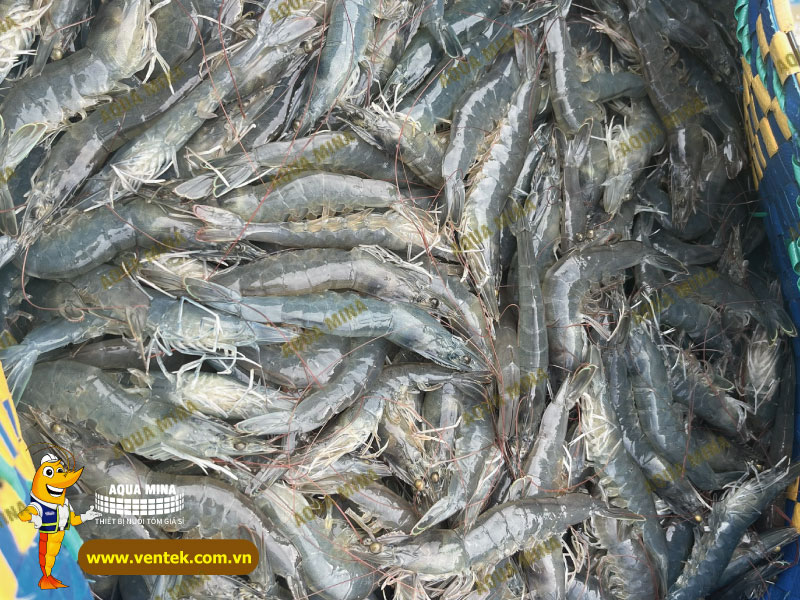
Black spots first appear on the underside of the exoskeleton in the abdomen, thorax, and the joints between segments.
In severe cases, the black spots spread to the gills and gut. Shrimp may stop eating and grow slowly.
The affected shrimp population may suffer daily mortality rates of 1-5%, with total loss rates potentially reaching 80-90%.
The disease resembles shell erosion but differs in that the exoskeleton remains intact.
3. Vitamin C Requirements and Supplementation Regimen:
The amount of Vitamin C required depends on several factors, including the shrimp's habit, size, growth rate, farming method, feed production process, water quality, physiological condition, and developmental stage.
The need for Vitamin C varies with developmental stages. Larvae require more Vitamin C than adults and broodstock (e.g., larvae need 200 mg Vitamin C/kg of feed, while juvenile shrimp need 100 mg/kg of feed).
When shrimp are sick, their Vitamin C needs are higher than those of healthy shrimp.
To minimize Vitamin C loss, it is essential to protect the nutrient before adding it to the feed in different forms. Encapsulated Vitamin C is a preferred form because it retains about 80-90% of its potency and can be stored for several months.
4. When and How Much to Supplement Vitamin C for Shrimp:
In aquaculture, Vitamin C should be regularly added to shrimp feed during weather changes or when disease outbreaks occur around the farm.
The dosage depends on the type of Vitamin C, typically ranging from 500 to 1,000 mg/kg of feed. It is recommended to supplement every 3-5 days per month. During sickness, the dosage should be increased, with continuous supplementation for 5-7 days.
Contact AQUA MINA for consultation and supply of aquaculture round tanks and aquaculture equipment for high-tech shrimp farming.
- Address: 685 National Highway 1A, Binh Hung Hoa Ward, Binh Tan District, Ho Chi Minh City
- Phone: 1800 6071 (Toll-free hotline)
- Email: sales@aquamina.com.vn or oversea@aquamina.com.vn
Aqua Mina's distributor in Japan:
REX INDUSTRIES CO., LTD
- Address: 1-9-3 Hishiya-Higashi, Higashi-Osaka 578-0948 JAPAN
- Email: kimakubo@rexind.co.jp
- Phone: +81-(0)72-961-9893
- Website: http://www.rexind.co.jp/e/
WE WORK FOR YOUR SUCCESS!
Ngày đăng : 28/11/2024
3020 View


Other Articles
Ca Mau, Can Tho and An Giang Play a Leading Role in Vietnam’s Shrimp Industry
Protecting rice-shrimp yields against environmental fluctuations caused by prolonged rain
AQUA MINA Turbo Blower: Quiet, Energy-Efficient Air Supply for Aquaculture Ponds
AQUA MINA has accompanied the experimental tank system project at Can Tho University from its very early days
AQUA MINA AMONG 20 OUTSTANDING PRESENTATIONS AT THE WORKSHOP ON APPLYING SCIENCE AND TECHNOLOGY TO IMPROVE THE QUALITY OF VIETNAM’S AQUATIC PRODUCTS
Vietnam’s Shrimp Farming Industry Enters the High-Tech Race
The U.S. market relies heavily on imported shrimp to bridge its domestic supply gap
The 2028 supply crisis: The shrimp industry is projected to face a 400,000-ton material shortage
High profits from high-tech shrimp farming come with persistent risks
Intensifying El Niño Effect: Climate Change Risks Threaten the Global Shrimp Supply Chain
Evaluating Gaps in the Circular Economy Value Chain of the Shrimp Industry
A Comprehensive Overview of the Vietnamese Shrimp Industry







.jpg)